Trump signed plenty of contracts in the Middle East, but he’s no closer to the two ‘deals’ he really wants
- Written by: Shahram Akbarzadeh, Director, Middle East Studies Forum (MESF), Deakin University
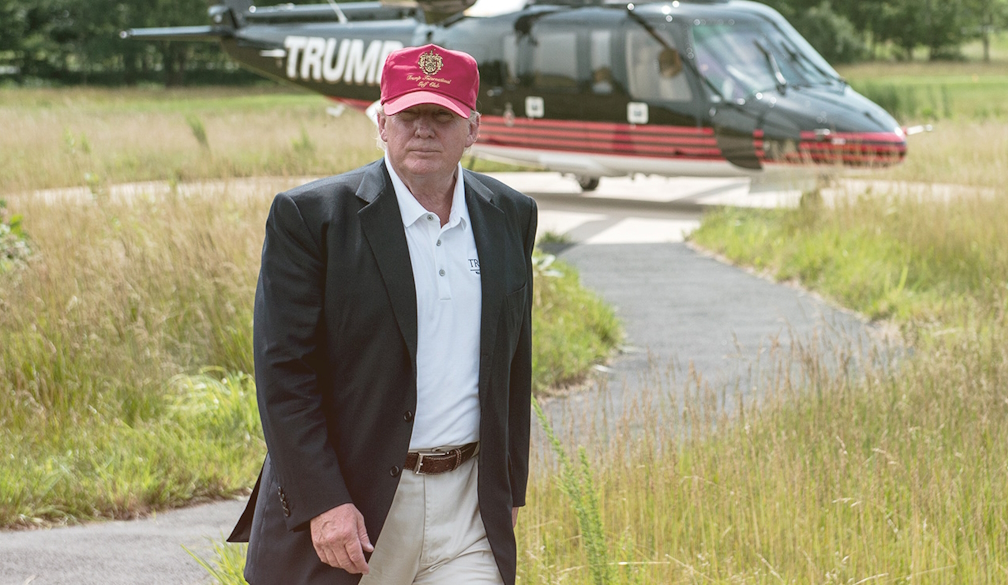
US President Donald Trump’s visit to Arab states in the Middle East this week generated plenty of multibillion-dollar deals. He said more than US$1 trillion (A$1.5 trillion) worth of deals had been signed with Saudi Arabia alone, though the real total[1] is likely much lower than that.
Qatar also placed an order for 210 Boeing aircraft[2], a deal worth a reported US$96 billion (A$149 billion). Trump will no doubt present these transactions as a major success for US industry.
The trip also helped counter concerns about US disengagement from the Middle East. For more than a decade, local elites have viewed Washington’s attention as shifting away from the region.
This trip was a reaffirmation of the importance of the Middle East – in particular the Gulf region – to US foreign policy. This is an important signal to send to Middle Eastern leaders who are dealing with competing interests from China and, to a lesser extent, Russia.
And from a political standpoint, Trump’s lifting of sanctions on Syria and meeting with the former rebel, now president, Ahmed al-Sharaa was very significant – both symbolically and practically.
Until recently, al-Sharaa was listed by the United States as a terrorist with a US$10 million (A$15 million) bounty[3] on his head. However, when his forces removed dictator Bashar al-Assad from power in December, he was cautiously welcomed by many in the international community.
The US had invested considerable resources in removing Assad from power, so his fall was cause for celebration, even if it came at the hands of forces the US had deemed terrorists.
This rapid turn-around is dizzying. In practice, the removal of sanctions on Syria opens the doors to foreign investment in the reconstruction of the country following a long civil war.
It also offers an opportunity for Saudi Arabia and Qatar, as well as Turkey, to expand their influence in Syria at the expense of Iran.
For a leader who styles himself a deal-maker, these can all be considered successful outcomes from a three-day trip.
However, Trump avoided wading into the far more delicate diplomatic and political negotiations needed to end Israel’s war against Hamas in Gaza and find common ground with Iran on its nuclear program.
No solution in sight for the Palestinians
Trump skirted the ongoing tragedy in Gaza and offered no plans for a diplomatic solution to the war, which drags on with no end in sight.
The president did note his desire[4] to see a normalisation of relations between Arab states and Israel, without acknowledging the key stumbling block.
While Saudi Arabia and United Arab Emirates have no love for Hamas, the Gaza war and the misery inflicted on the Palestinians have made it impossible for them to overlook the issue. They cannot simply leapfrog Gaza to normalise relations with Israel.
In his first term, Trump hoped the Palestinian issue could be pushed aside to achieve normalisation of relations between Arab states and Israel. This was partially achieved with the Abraham Accords[5], which saw the UAE and three other Muslim-majority nations normalise relations with Israel.
Trump no doubt believed the Israel-Hamas ceasefire agreed to[6] just before his inauguration would stick – he promised as much during the US election campaign.
But after Israel unilaterally broke the ceasefire[7] in March, vowing to press on with its indiscriminate bombing of Gaza, he’s learned the hard way the Palestinian question cannot easily be solved or brushed under the carpet.
The Palestinian aspiration for statehood needs to be addressed as an indispensable step towards a lasting peace and regional stability.
It was telling that Trump did not stop in Israel this week. One former Israeli diplomat says[8] it’s a sign Israeli Prime Minister Benjamin Netanyahu has lost his leverage with Trump.
There’s nothing that Netanyahu has that Trump wants, needs or [that he] can give him, as opposed to, say, the Saudis, the Qataris, [or] the Emiratis.
More harsh rhetoric for Iran
Trump also had no new details or initiatives to announce on the Iran nuclear talks, beyond his desire to “make a deal[9]” and his repeat of past threats.
At least four rounds of talks have been held between Iran and the United States since early April. While both sides are positive about the prospects, the US administration seems divided on the intended outcome.
The US Middle East special envoy Steve Witkoff and Secretary of State Marco Rubio have called for the complete dismantling of Iran’s capacity to enrich uranium[10] as a sure safeguard against the potential weaponisation of the nuclear program.
Trump himself, however, has been less categorical. Though he has called for the “total dismantlement[11]” of Iran’s nuclear program, he has also said[12] he’s undecided if Iran should be allowed to continue a civilian enrichment program.
Iran’s capacity to enrich uranium, albeit under international monitoring, is a red line for the authorities in Tehran – they won’t give this up.
The gap between Iran and the US appears to have widened this week following Trump’s attack[13] on Iran as the “most destructive force” in the Middle East. The Iranian foreign minister, Abbas Araghchi[14] called Trump’s remarks “pure deception”, and pointed to US support for Israel as the source of instability in the region.
None of this has advanced the prospects of a nuclear deal. And though his visit to Saudi Arabia, Qatar and the UAE was marked by pomp and ceremony, he’ll leave no closer to solving two protracted challenges than when he arrived.
References
- ^ real total (www.afr.com)
- ^ order for 210 Boeing aircraft (www.aljazeera.com)
- ^ US$10 million (A$15 million) bounty (edition.cnn.com)
- ^ note his desire (www.usatoday.com)
- ^ Abraham Accords (www.usatoday.com)
- ^ agreed to (theconversation.com)
- ^ unilaterally broke the ceasefire (theconversation.com)
- ^ says (edition.cnn.com)
- ^ make a deal (www.9news.com.au)
- ^ enrich uranium (www.theguardian.com)
- ^ total dismantlement (www.wsj.com)
- ^ also said (www.wsj.com)
- ^ Trump’s attack (abcnews.go.com)
- ^ Abbas Araghchi (www.presstv.ir)