Why did Israel defy Trump – and risk a major war – by striking Iran now? And what happens next?
- Written by: Amin Saikal, Emeritus Professor of Middle Eastern and Central Asian Studies, Australian National University; and Vice Chancellor's Strategic Fellow, Victoria University
Alarmed by an intelligence assessment[1] that Iran will be able to produce nuclear weapons within months if not weeks, Israel has launched a massive air campaign aiming to destroy the country’s nuclear program.
Israel’s air strikes hit Iran’s main nuclear enrichment facility at Natanz, as well as its air defences and long-range missile facilities.
Among the dead are Hossein Salami, the chief of Iran’s powerful Revolutionary Guards Corps; Mohammad Bagheri, the commander-in-chief of the military; and two prominent nuclear scientists.
Iranian Supreme Leader Ayatollah Ali Khamenei has promised “severe punishment[2]” in response. Iran could potentially target Israel’s own nuclear sites and US bases across the Persian Gulf. Israel claimed Iran launched 100 drones[3] towards it just hours after the attack.
The Middle East is yet again on the precipice of a potentially devastating war with serious regional and global implications.
Stalled nuclear talks
The Israeli operations come against the backdrop of a series of inconclusive nuclear talks between the United States and Iran. These negotiations began[4] in mid-April at President Donald Trump’s request and aimed to reach a deal within months.
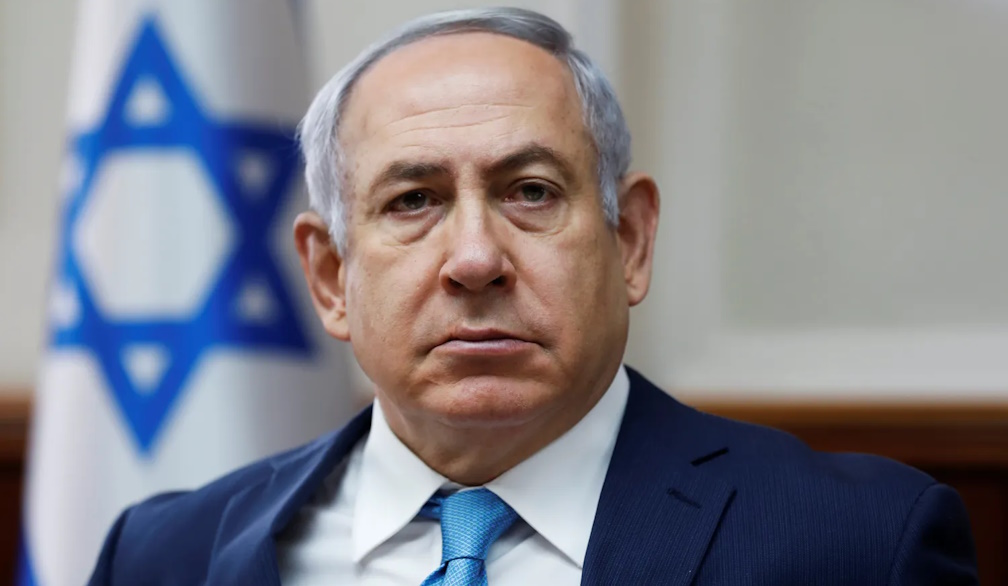
Israeli Prime Minister Benjamin Netanyahu opposed the talks, pressing for military action instead as the best option to halt Iran’s nuclear program.
The diplomatic efforts had stalled in recent weeks over Trump’s demand that Iran agree to a zero-uranium enrichment posture and destroy its stockpile[5] of some 400 kilograms of enriched uranium at a 60% purity level. This could be rapidly enriched further to weapons-grade level.
Tehran refused to oblige, calling it a “non-negotiable[6]”.
Netanyahu has long pledged to eliminate what he has called the Iranian “octopus[7]” – the regime’s vast network of regional affiliates, including Hamas in Gaza, Hezbollah in Lebanon, the regime of former Syrian leader Bashar al-Assad, and the Houthi militants in Yemen.
Following Hamas’ attack on Israel on October 7 2023, Israel’s military has considerably degraded these Iranian affiliates, one by one. Now, Netanyahu has now gone for beheading the octopus.
Trump keeping his distance
Netanyahu has in the past urged Washington to join him in a military operation against Iran. However, successive US leaders have not found it desirable to ignite or be involved in another Middle East war, especially after the debacle in Iraq and its failed Afghanistan intervention.
Despite his strong commitment to Israel’s security and regional supremacy, Trump has been keen to follow this US posture, for two important reasons.
He has not forgotten Netanyahu’s warm congratulations[8] to Joe Biden when he defeated Trump in the 2020 US presidential election.
Nor has Trump been keen to be too closely aligned with Netanyahu at the expense of his lucrative relations with oil-rich Arab states. He recently visited[9] Saudi Arabia, Qatar and the United Arab Emirates on a trip to the Middle East, while bypassing Israel.
Indeed, this week, Trump had warned[10] Netanyahu not to do anything that could undermine the US nuclear talks with Iran. He has been keen to secure a deal[11] to boost his self-declared reputation as a peace broker, despite not having done very well so far on this front.
But as the nuclear talks seemed to be reaching a dead end, Netanyahu decided now was the moment to act.
The Trump administration has distanced itself[12] from the attack, saying it had no involvement. It remains to be seen whether the US will now get involved to defend Israel if and when Iran retaliates.
What a wider war could mean
Israel has shown it has the capacity to unleash overwhelming firepower, causing serious damage to Iran’s nuclear and military facilities and infrastructure. But the Iranian Islamic regime also has the capability to retaliate, with all the means at its disposal.
Despite the fact the Iranian leadership faces serious domestic issues[13] on political, social and economic fronts, it still has the ability to target Israeli and US assets in the region with advanced missiles and drones.
It also has the capability to close the Strait of Hormuz, through which 20–25%[14] of global oil and liquefied natural gas shipments flow. Importantly, Iran has strategic partnerships with both Russia and China, as well.
Depending on the nature and scope of the Iranian response, the current conflict could easily develop into an uncontrollable regional war, with none of the parties emerging as victor. A major conflict could not only further destabilise what is already a volatile Middle East, but also upend the fragile global geopolitical and economic landscape.
The Middle East cannot afford another war. Trump had good reasons to restrain Netanyahu’s government while the nuclear negotiations were taking place to see if he could hammer out a deal.
Whether this deal can be salvaged amid the chaos is unclear. The next round of negotiations was due to be held on Sunday in Oman, but Iran said it would not attend[15] and all talks were off until further notice.
Iran and the US, under Barack Obama, had agreed a nuclear deal before – the Joint Comprehensive Plan of Action. Although Netanyahu branded it “the worst deal of the century[16]”, it appeared to be holding until Trump, urged by Netanyahu, unilaterally withdrew from it in 2018.
Now, Netanyahu has taken the military approach to thwart Iran’s nuclear program. And the region – and rest of the world – will have to wait and see if another war can be averted before it’s too late.
References
- ^ intelligence assessment (x.com)
- ^ severe punishment (www.afr.com)
- ^ launched 100 drones (www.timesofisrael.com)
- ^ began (www.dw.com)
- ^ stockpile (www.reuters.com)
- ^ non-negotiable (www.channelnewsasia.com)
- ^ octopus (www.gov.il)
- ^ warm congratulations (www.axios.com)
- ^ visited (www.abc.net.au)
- ^ had warned (www.axios.com)
- ^ keen to secure a deal (www.msnbc.com)
- ^ distanced itself (www.theguardian.com)
- ^ domestic issues (theconversation.com)
- ^ 20–25% (www.eia.gov)
- ^ would not attend (www.nytimes.com)
- ^ the worst deal of the century (carnegieendowment.org)