Hamas and Israel are on the verge of a ceasefire. What’s being left unsaid, though, could scupper the deal
- Written by: Martin Kear, Sessional Lecturer, Department of Government and International Relations, University of Sydney
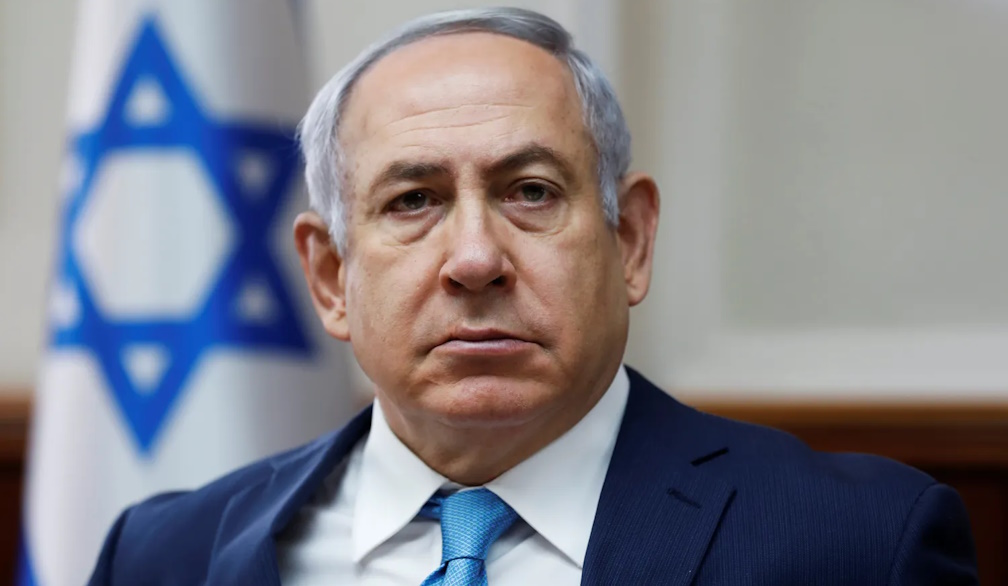
Hamas announced that it has accepted[1] several parts of the peace plan put forth by US President Donald Trump and Israeli Prime Minister Benjamin Netanyahu to finally end Israel’s war on Gaza.
Hamas has agreed to release the remaining Israeli captives it holds and is willing to hand over administration of Gaza to a technocratic committee proposed by the plan.
However, Hamas did not say it would disarm. Nor did it agree to withdraw from Palestinian politics fully. Instead, it said the future of the Gaza Strip and legitimate rights of the Palestinian people should be decided on the basis of a “collective national position” and relevant international laws and resolutions.
With ceasefire talks resuming[2] in Egypt on Monday, Netanyahu said he expected the hostages to be quickly released[3] and Trump said he believes Hamas is “ready for a lasting peace[4]”.
However, there are many reasons for Hamas to be reticent about supporting a plan that is replete with ambiguity and robs Palestinians of agency to decide their own political fate.
A future governance plan sidelining Palestinians
So, why does Hamas seem reticent?
First, the plan envisages[5] Israel’s continuing military occupation of Gaza until it can hand over responsibility to an “international stabilisation force” at some point in the future.
Then there is the plan’s proposed governance structure.
Under the plan, Gaza would be administered through a transitional period by “a technocratic, apolitical Palestinian committee”. This would be responsible for delivering basic services to millions of starving, traumatised, homeless and jobless Gazans.
Yet, this committee would also include international experts, which will dilute Palestinians’ voices and their ability to decide the fate of Gazans. Again, many details remain unknown, including who will sit on the committee, when it will be formed and how many members would be Palestinian.
A new international transitional body called the “Board of Peace” would also be formed, headed by Trump and purportedly including former British Prime Minister Tony Blair. Importantly, the plan does not specifically say the board would include any Palestinians.
The board would be responsible for the committee’s “oversight and supervision”. It would also oversee the reconstruction of Gaza until the Palestinian Authority (PA), which is currently dominated by the Fatah party, has undergone reforms[6] and is able to take back control of Gaza.
Many questions remain unanswered here, too. These include:
- a timeline for new elections for the Palestinian Authority
- whether Gazans can take part in an election
- which political factions would be permitted to run candidates
- whether these candidates would be screened by the board, and
- who decides whether the PA has reformed sufficiently.
This leaves an open-ended political process exposed to differing interpretations that Hamas may fear will take power out of the hands of Palestinians.
After Hamas’ statement was released, a senior Hamas official outright rejected[7] the idea of the “Board of Peace”, saying:
We will never accept anyone who is not Palestinian to control the Palestinians.
The plan also stipulates that Hamas “and other factions” (left unstated and open to interpretation) will not have a role in the future governance of Gaza. And it mandates that Gaza be demilitarised. But how this would be achieved and by whom, again, remains unknown.
What Palestinians say they want
These stipulations not only deprive the Palestinians of agency. They ignore the reality of Palestinian politics[8] and the legitimacy that Palestinians attach to resisting Israeli occupation and the Netanyahu government’s stated goal of denying Palestinian statehood[9].
This highlights the greatest challenge for the “Board of Peace” – a reformed Palestinian Authority under the control of the Fatah party would struggle to gain legitimacy[10] among Palestinians.
In a poll of 1,270 respondents in the Occupied Territories in May, Fatah garnered[11] only 21% of popular support, compared with 32% for Hamas, and 12% for third parties.
When asked what the PA should be doing, most respondents nominated forming a unity government comprising all Palestinian factions to negotiate with Israel and the international community to rebuild Gaza.
When asked about plans to disarm Hamas, 77% of respondents in both the West Bank and Gaza opposed this action, with 65% of respondents opposed to expelling Hamas leaders from Gaza.
Tellingly, 80% of total respondents believed that if Hamas did disarm, Israel would not end the war and withdraw from Gaza.
The reality is some Palestinians still want Hamas to be a part of any future Palestinian government and remain capable of protecting Gazans from Israel’s military.
The disconnect between the plan’s aspirations and the political reality on the ground means it may have little chance of success, even if Hamas ultimately agrees to it.
It’s also unclear if Netanyahu truly supports the Palestinian Authority running a future Gaza, as the peace plan says. His remarks[12] alongside Trump last week run counter to the plan:
Your plan is consistent with the five principles my government set for the end of the war and the day after Hamas. […] Gaza will have a peaceful civilian administration that is run neither by Hamas nor by the Palestinian Authority.
This suggests that Netanyahu’s primary goal here is dismantling Hamas’ military capabilities and political rule, while also maintaining the political division that currently exists between Gaza and the West Bank and East Jerusalem.
However, this would deny Palestinians the only faction many see as willing to resist Israel’s occupation and its intent of destroying any chance of Palestinians gaining statehood.
Additionally, the establishment of a new civil and military bureaucracy to help Gaza’s transition would take an indefinite period of time. It would also be subject to the political whims of capricious Western leaders.
This would leave the Israeli military occupying Gaza for the foreseeable future. This means there would be nothing to protect the millions of Gazans from further assaults from a military already accused of serious breaches of international humanitarian law[13].
References
- ^ accepted (www.aljazeera.com)
- ^ resuming (www.nytimes.com)
- ^ released (www.bbc.com)
- ^ ready for a lasting peace (www.politico.com)
- ^ envisages (www.bbc.com)
- ^ undergone reforms (theconversation.com)
- ^ rejected (www.aljazeera.com)
- ^ Palestinian politics (www.amazon.com.au)
- ^ goal of denying Palestinian statehood (www.afr.com)
- ^ gain legitimacy (theconversation.com)
- ^ garnered (www.pcpsr.org)
- ^ remarks (new.embassies.gov.il)
- ^ serious breaches of international humanitarian law (theconversation.com)