The US-Israel ceasefire with Iran presses pause on a costly war, but can peace last?
- Written by: Amin Saikal, Emeritus Professor of Middle Eastern Studies, Australian National University; The University of Western Australia; Victoria University
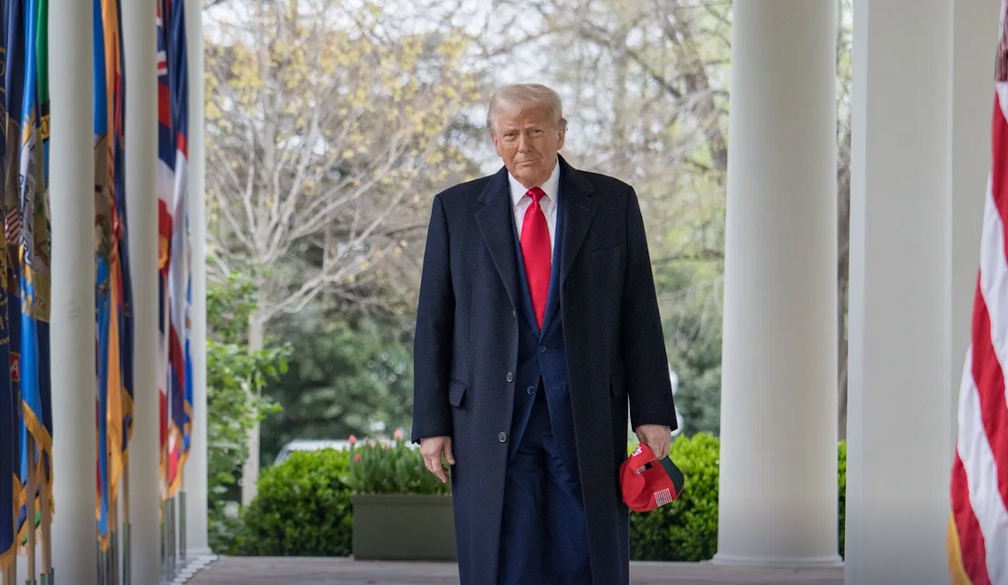
President Donald Trump’s acceptance of a Pakistani proposal for a two-week ceasefire in the war with Iran brings a sigh of relief to the international community.
Just hours before, many had been alarmed by Trump’s threats[1] to bomb Iran back to “the stone age” and destroy its “civilisation”.
The ceasefire provides a breathing space for hammering out a “definitive agreement concerning long-term peace with Iran, and peace in the Middle East”, according to Trump.
However, the road to a final settlement will be complex and bumpy, though not insurmountable.
Underestimating the enemy
After six weeks of escalating war and rhetoric, starting with joint US-Israel attacks on Iran and the latter’s robust response, the three combatants have not only inflicted serious blows on each other. The region and the world have also suffered from a massive oil, liquefied gas and inflationary crisis as Tehran closed the Strait of Hormuz.
This was not something Trump had expected. He initially anticipated the combined US and Israeli military power would rapidly prevail[2]. This would force Tehran, which had suppressed widespread public protests early in the year, to capitulate and thus open the way for favourable regime change.
But the Iranian government proved to be more resilient, entrenched and resourceful than anticipated. The government was also strategic in fighting back by hitting US assets across the Persian Gulf and Israel, as well as closing the strait.
Meanwhile, Trump could not solicit active support from US allies for his joint war endeavours with Israeli Prime Minister Benjamin Netanyahu. Netanyahu is under indictment[3] by the International Criminal Court for war crimes in Gaza.
The allies had not been consulted[4]. They didn’t consider it to be in their individual national interests to participate in a war contrary to international law[5] and the United Nations Charter.
Costing billions
Further, the United States’ global adversaries, Russia and China – both having strategic cooperation agreements with Iran – vehemently opposed the war. They joined scores of other countries around the world in calling for de-escalation and measures to avoid more economic repercussions.
The conflict widened. Israel unleashed a campaign[6] to occupy southern Lebanon in response to attacks from Iran-aligned Lebanese paramilitary group Hezbollah.
The costs of the war then soared for all sides. For the US alone, the price tag amounted to at least US$1billion (A$1.4 billion) a day[7]. This added substantially to the federal debt of close to $40 trillion[8] (A$56.6 trillion).
The situation evolved into a race between missiles and interceptors; it would just be a matter of who ran out first.
It was recently reported[9] that Israel was getting low in interceptors and the Israel Defence Forces (IDF) faced a shortage of manpower.
Unpopular in the US
On the other hand, despite the US and Israeli decapitation of its leadership, air supremacy and bombardment of thousands of military and non-military targets, the Islamic Revolutionary Guard Corps (IRGC) maintained a sustained retaliatory capability. It managed to fire dozens[10] of advanced missiles and drones on a daily basis against targets in the Gulf and Israel.
More importantly, the war proved increasingly unpopular[11] in the United States. As the public felt the effects of it on the rising cost of living and at the petrol stations, some 61%[12] of citizens opposed the war. Trump’s ratings plummeted[13] in the opinion polls.
In view of these variables, Trump could not possibly stand by his promise of escalating Operation Epic Fury to the level of erasing such a sizeable country as Iran. Iranian cultural and patriotic features, as well as the devotion of the country’s many citizens to Shia Islam, mitigated against outside aggression, as in previous occasions in its history.
Long road ahead
This is not to claim that negotiating and concluding a comprehensive agreement for an enduring peace between the US and Iran will be easy.
But a crucial section of Trump’s acceptance of the ceasefire, which gives us an insight into his thinking, is as follows[14]:
we received a 10 point proposal from Iran (in response to the US 15-point proposal), and believe it is a workable basis on which to negotiate. Almost all of the various points of past contention have been agreed to between the United States and Iran, but a two week period will allow the Agreement to be finalized and consummated.
The ten points[15] include a secession of hostilities on all fronts, including Lebanon, though Israel has since claimed[16] Lebanon is not included in the ceasefire.
Some of the other key elements[17] are:
-
the US must fundamentally commit to guaranteeing non-aggression
-
the continuation of Iran’s control over the Strait of Hormuz
-
removal of primary and secondary sanctions on Iran
-
and acceptance of Iran’s right that it can enrich uranium for its nuclear program (for peaceful purposes).
It is now incumbent on Trump to pull into line Netanyahu, who has toiled for a long time not only to destroy the Iranian government, but also to reduce the Iranian state as a regional actor.
If this happens and all the parties negotiate in good faith, there is room for optimism. We could potentially see the dawn of a post-war regional order based more on a localised collective security arrangement than on a regional supremacy of one actor over another.
References
- ^ threats (www.bbc.com)
- ^ rapidly prevail (theconversation.com)
- ^ under indictment (www.icc-cpi.int)
- ^ not been consulted (www.politico.eu)
- ^ contrary to international law (theconversation.com)
- ^ unleashed a campaign (www.aljazeera.com)
- ^ a day (www.aljazeera.com)
- ^ $40 trillion (fiscaldata.treasury.gov)
- ^ recently reported (www.aa.com.tr)
- ^ dozens (www.nbcnews.com)
- ^ increasingly unpopular (yougov.com)
- ^ some 61% (www.pewresearch.org)
- ^ plummeted (www.natesilver.net)
- ^ as follows (www.abc.net.au)
- ^ ten points (www.nytimes.com)
- ^ since claimed (www.abc.net.au)
- ^ key elements (www.abc.net.au)