Victoria’s election is exposing a national crisis of confidence
- Written by: The Times
Housing, borrowing costs, struggling businesses and pressure on public services are feeding an electoral mood that extends well beyond Victoria. For the major parties, the danger is that voters increasingly want someone else to hear them.
Victoria is preparing to vote, but the frustrations shaping its election are familiar across Australia.
A young worker cannot see a practical path from employment to home ownership. A mortgage holder keeps finding more money for repayments. A business owner works longer hours while questioning whether the business remains worth keeping. A patient discovers that access to treatment depends partly on how much they can afford.
These are different experiences with a common political consequence: declining confidence that governments understand ordinary life or can materially improve it.
The Victorian election on November 28 will be decided by Victorian voters, candidates and circumstances. It cannot serve as a precise measure of national voting intentions.
Nevertheless, it is becoming an important test of something larger: how Australians respond when dissatisfaction with their circumstances becomes dissatisfaction with the established political choices.
A warning for both major parties
The scale of Labor’s difficulty is evident in the November DemosAU/PremierNational poll, which placed the Coalition on 33 per cent of the primary vote, One Nation on 21 per cent, Labor on 18 per cent and the Greens on 17 per cent.
Those figures are a snapshot, subject to sampling uncertainty, preferences and the geography of individual seats. They are not an election result.
But they illustrate why the campaign deserves national attention.
In that poll, Labor’s substantial decline since the 2022 election was accompanied by a Coalition primary vote also slightly below its previous election result. The rejection of an incumbent was not translating into an equivalent embrace of the traditional alternative.
That distinction matters. An opposition can benefit from public anger without winning deep public confidence.
For governments elsewhere, the warning is about performance. For oppositions, it is about assuming that disappointment automatically becomes loyalty to them.
Housing has become a test of whether effort pays
Housing sits at the centre of the wider discontent because it affects much more than accommodation.
It influences whether young adults leave home, where workers can accept jobs, when couples have children and whether older Australians approach retirement with security.
For school leavers and young workers, the traditional progression from a job to renting and eventually buying can appear increasingly uncertain. Saving a deposit while paying rent is difficult. Meeting borrowing requirements introduces another hurdle.
Family assistance can make a substantial difference, creating a divide between people with similar incomes but very different access to parental wealth.
Falling property prices do not necessarily resolve that problem. When borrowing costs rise, buyers can lose borrowing capacity even as advertised prices decline. Existing borrowers can face larger repayments while the value of their home falls.
The political consequence is a weakening belief that steady work and careful saving will reliably produce greater security.
Interest rates turn national policy into a household bill
The Reserve Bank’s November increase took the cash rate to 4.85 per cent.
Its task is to return inflation to target. Persistent inflation also damages living standards, particularly for households with little room to absorb higher prices.
But the mechanism creates an unavoidable political tension: reducing inflation involves restraining spending in an economy where many people already feel constrained.
Mortgage holders experience that policy through their repayments. Businesses experience it through finance costs and customers becoming more cautious.
A state government does not set the cash rate. Nor can a premier instruct the independent central bank to reduce it.
Voters, however, experience the combined result of decisions made across the system. Their mortgage, electricity bill, insurance premium, rates notice and grocery spending all come out of the same income.
Constitutional responsibility does not divide the household budget into separate compartments.
Business failures spread pressure through communities
A closed business leaves more than an empty shop.
Employees lose work. Suppliers can lose money. Commercial landlords lose tenants. Owners may lose savings accumulated over decades.
ASIC recorded 14,153 companies entering external administration for the first time in 2025–26. That was about 4 per cent fewer than the previous financial year, an important qualification to claims that failures are rising continuously.
Nevertheless, the number represents substantial disruption. Construction and accommodation and food services accounted for particularly large shares.
For an owner weighing wages, rent, insurance, power, finance and customer spending, national economic growth can feel distant.
Business uncertainty also connects directly with housing anxiety. Taking on a large mortgage becomes a different proposition when employment or trading income feels less dependable.
Health and education make government performance personal
Health is among the clearest tests of whether public spending translates into a service people can use.
The practical questions are immediate: Can someone find a GP? What will the appointment cost? How soon can they see a specialist? What happens if they need hospital treatment?
Private insurance and the ability to pay can expand options, although neither guarantees treatment without further expense.
For households already managing housing costs, another medical bill can reinforce the sense that financial security determines access to essential services.
Education raises similar questions about opportunity.
Parents judge the system through classroom conditions, teacher availability, support for children with additional needs and the costs surrounding attendance. Young people judge it partly through what comes next: university, an apprenticeship, vocational training or employment.
An education system can produce qualifications while families remain anxious about whether those qualifications will lead to an affordable, independent life.
Immigration is also a debate about capacity
Immigration has become entangled with these pressures because population growth affects demand for housing, transport, schools and health services.
Migration also supplies workers, including people who build homes, staff hospitals and care for older Australians. Its effects cannot be reduced to demand alone.
The legitimate policy question is whether the scale and composition of migration are being matched by investment, housing construction and service capacity.
Concerns about concentrated settlement deserve careful treatment. Communities sharing a language, religion or cultural background can develop through family connections, affordability, employment and access to familiar services.
That does not establish that governments are creating suburbs exclusively for particular ethnic groups.
The meaningful questions concern planning, integration and equal access: whether new neighbourhoods have adequate infrastructure, whether residents can participate fully in Australian life and whether public institutions serve everyone fairly.
Migrants also experience expensive housing, crowded transport and pressure on services. Policy scrutiny is most useful when it identifies decisions and consequences precisely.
The pandemic remains part of the political memory
For some Victorians, the pandemic remains an unresolved source of anger.
Restrictions affected businesses, schooling, family contact, employment and confidence in government. Others continue to regard strong intervention as necessary to protect life and the health system.
Those experiences can influence how people assess authority and accountability years later.
But describing the election as revenge for COVID would go beyond what election polling alone can establish. People can carry pandemic grievances while making their present choice primarily on housing, services or government competence.
The lasting issue may be trust: whether people believe the sacrifices they made were acknowledged and the decisions taken were properly examined.
Union influence attracts scrutiny when confidence falls
Labor’s institutional relationship with affiliated unions gives those organisations a formal role in party affairs. Union members also have legitimate interests in wages, safety and working conditions.
The accountability question is how governments manage those relationships when making decisions involving public money.
Voters are entitled to examine procurement, appointments, workplace arrangements and whether organised interests receive preferential treatment.
Claims that unions control governments require evidence about particular decisions. A political relationship alone does not establish improper conduct.
The broader principle applies equally to business donors, developers, lobbyists and other influential organisations: public decisions should withstand scrutiny regardless of who seeks to influence them.
One Nation offers a channel for dissatisfaction
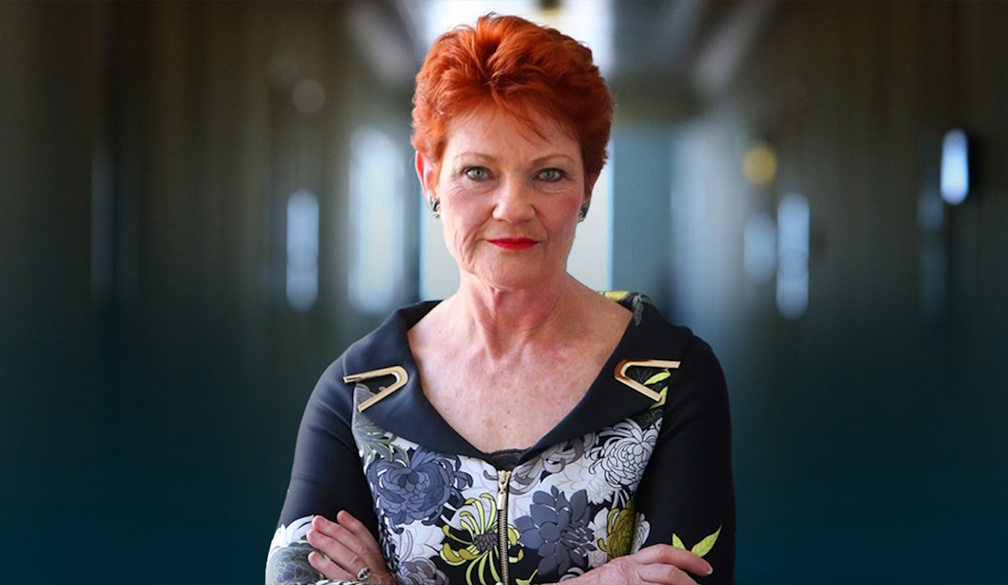
Pauline Hanson’s One Nation gives dissatisfied voters a recognisable way to challenge the established parties.
Its appeal includes its positions on immigration and national identity, but its electoral opportunity also rests on a broader message: that people who feel dismissed can make their dissatisfaction count.
Supporting the party can represent conviction, protest or a mixture of both.
Hanson’s national prominence gives that message visibility. In Victoria, however, voters are electing state representatives. The quality of candidates, the practicality of policies and the way elected members would use parliamentary influence remain central questions.
A substantial vote does not automatically produce an equivalent share of seats. Preferences and local contests matter.
Nor does a protest vote remove the need to assess delivery. A party seeking influence faces the same underlying test as its competitors: what can it improve, at what cost, and within which powers?
The Times View
Victoria’s election is bringing together pressures that Australians experience in different combinations across the country.
The risk for established parties is cumulative. Voters may tolerate difficulty in one area while retaining confidence in the overall direction. Housing insecurity, expensive credit, business uncertainty and difficulty accessing services can collectively weaken that confidence.
The result may be a change of government, a stronger crossbench or a more fragmented electorate.
Whichever form it takes, the question extends beyond Victoria: can political institutions turn public dissatisfaction into practical improvements that people can see in their own lives?