Are the Nationals now the party for mining, not farming? If so, Barnaby Joyce must tread carefully
- Written by: Geoff Cockfield, Professor of Government and Economics, and Deputy Dean, University of Southern Queensland
The return of Barnaby Joyce to the federal National Party’s top job has highlighted tensions within, and dilemmas for, the broader party – particularly on climate change policy and coal.
Joyce and some of his Queensland colleagues unashamedly support the coal industry[1], and the federal party appears broadly opposed[2] to Australia adopting a target of net-zero emissions by 2050.
These are positions at odds with progressive quarters of the party, particularly in Victoria. The divisions came to a head earlier this month when, in response to Joyce’s ascension, Victorian Nationals leader Peter Walsh and deputy Steph Ryan sought to split[3] the state party from its federal counterpart.
The move was unsuccessful. But Walsh later called for the party to have “a constructive discussion about the transition of our energy supplies and how we reduce our impact on the Earth we live on”.
So are the federal Nationals the latter-day party for mining, not farming? If so, what does this mean for the party’s political positioning and prospects? To address this question, we must examine the Nationals’ evolution over the past century.
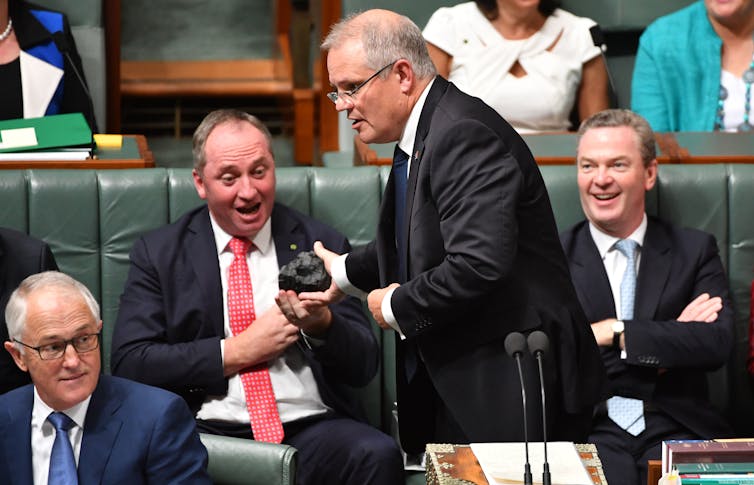 Barnaby Joyce’s support for coal has troubled the Victorian Nationals.
Mick Tsikas/AAP
Barnaby Joyce’s support for coal has troubled the Victorian Nationals.
Mick Tsikas/AAP
Coal as nation-builder
The National Party began federally in 1920 as the Australian Country Party, and traditionally represented farmers and rural communities. But over time, the party evolved to represent and advocate for the broader interests of regional Australia.
Economic nationalism has underpinned the party, especially since the 1950s. Under this ethos, farming, mining and basic manufacturing were considered key foundations for nation-building – a view which persists today. As the Nationals’ Senator Matt Canavan wrote in an opinion piece[4] last month:
The restoration of Barnaby Joyce as deputy prime minister restores a strong advocate for the economically nationalist, Australia-first approach that has always served us well.
Most Nationals candidates come from rural small businesses, finance organisations and social and community services – though many have farming roots or some involvement in farming activities.
Rural communities are under pressure from dwindling populations and limited employment opportunities. In that sense, the mining industry is an important source of jobs and economic activity in Australia’s regions.
Read more: Net zero by 2050? Even if Scott Morrison gets the Nationals on board, hold the applause[5]
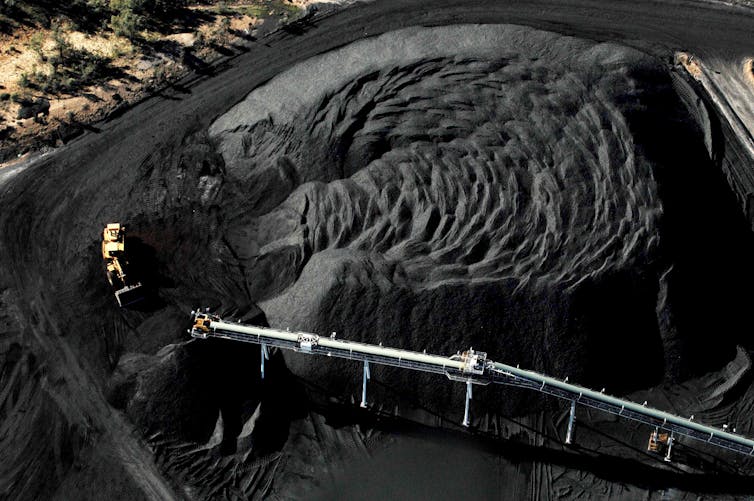 Mining is an important source of jobs in regional Australia.
Dean Lewins/AAP
Mining is an important source of jobs in regional Australia.
Dean Lewins/AAP
The federal party’s vociferous support for mining and opposition to emissions reduction is, in part, values signalling. For many in the Nationals, coal helped build the nation, while climate change action and renewable energy represent a moral and material threat.
Regional differences also exist. Nationals’ support for mining is particularly strong in Queensland – traditionally a mining-dependent state where resource investment has long been considered a means of rural development. At both the Queensland and federal levels, strong political connections exist between mining companies and the Liberal-National Party.
In another sign of the federal party’s contemporary priorities, Joyce’s close party ally Matt Canavan recently told the Guardian[6]:
About 5% of our voters are farmers. It’s about 2% of the overall population. So 95% of our voters don’t farm, aren’t farmers or don’t own farmland.
The Nationals’ apparent support for mining above farming exists partly because because they can get away with it. In many regions, farming and mining co-exist in reasonable harmony, both sectors enjoying the benefits of strong regional centres.
In some cases conflict does arise, such as[7] with gas exploration in cropping country. But in those regions, disenfranchised Nationals voters typically direct their votes to micro-parties rather than Labor or the Greens. These votes often flow back to the Nationals via preferences[8].
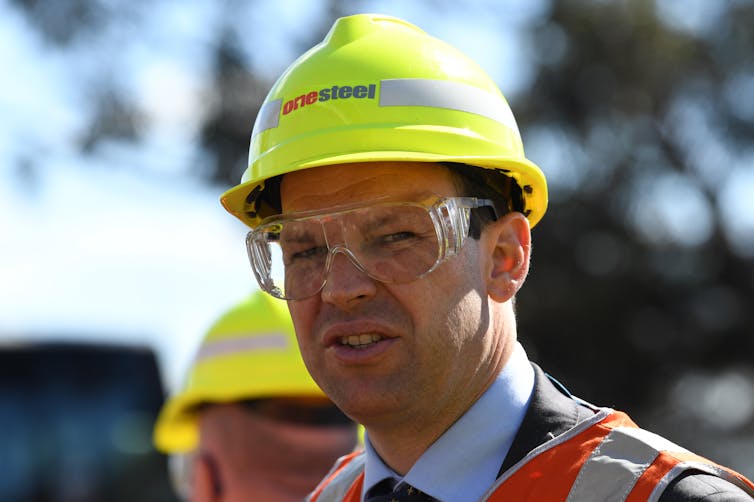 Pro-coal Nationals senator Matt Canavan has downplayed the importance of farmers to the party’s constituency.
Lukas Coch/AAP
Pro-coal Nationals senator Matt Canavan has downplayed the importance of farmers to the party’s constituency.
Lukas Coch/AAP
A questionable strategy
The federal Nationals’ pro-mining, anti-renewables stance may not, however, benefit the party over the long term.
First, mining is at best a very patchy contributor to rural development. Overall, net employment in agriculture is still higher than for mining[9] and is more evenly distributed across the regions. Mining investment can ebb and flow quickly with commodity prices and the stage of project development, leaving communities[10] with falling real estate values and an altered[11] social fabric.
The anti-emissions control stance could also trigger conflict with major farm organisations. Many, such as[12] the National Farmers Federation and Meat and Livestock Association, want to see[13] a strong national emissions reduction plan, under which landowners can benefit financially by participating in land carbon schemes.
Many farmers are also interested in renewable energy as both a source of income and cheaper power. Renewables projects are proliferating in regional areas and even Joyce has been known to turn up in a hard hat[14] to get behind them. So we can look forward to some interesting management of that cognitive dissonance.
Read more: Renewables need land – and lots of it. That poses tricky questions for regional Australia[15]
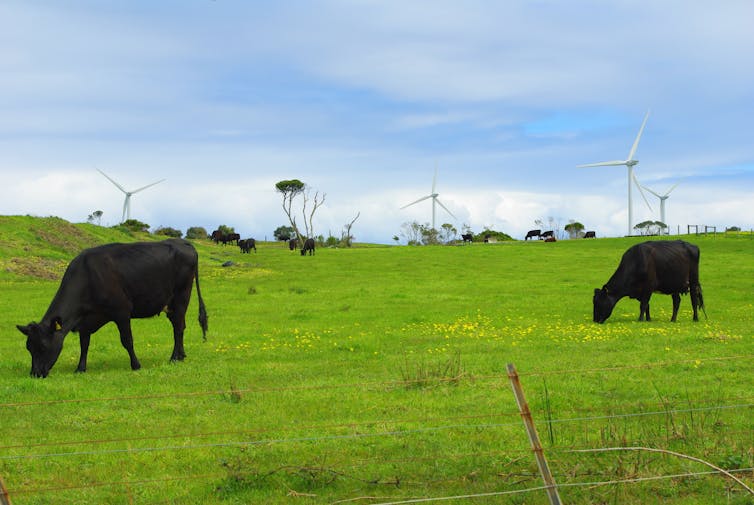 Many farmers are interested in hosting renewables projects.
Shutterstock
Many farmers are interested in hosting renewables projects.
Shutterstock
Trouble ahead
Following Joyce’s return to the federal party leadership, Victorian Nationals leader Peter Walsh said he’s had “a very frank discussion with him about the policy differences on climate change”.
But discontent on climate policy is not confined to Victoria. Across the party, Young Nationals organisations are generally far more open[16] to climate action than their older party colleagues.
And the hardline mining stance will not help the Nationals regain or even retain seats in areas such as Ballina[17] in NSW, where demographic changes have eroded the party’s support.
But the biggest test of the Nationals’ farming-vs-mining rift is perhaps yet to come. The European Union and other jurisdictions are considering imposing[18] tariffs on goods – including agricultural products – from nations such as Australia which lack strong emissions reduction policies.
While helping drive global climate action, such moves would partly be motivated by economic nationalism - boosting the international competitiveness of industries in the country/s applying the tariff. The sight of the Nationals impotently arguing for free trade in this instance will be fascinating political theatre.
Read more: No point complaining about it, Australia will face carbon levies unless it changes course[19]
References
- ^ support the coal industry (www.theguardian.com)
- ^ broadly opposed (theconversation.com)
- ^ sought to split (www.theaustralian.com.au)
- ^ opinion piece (www.theaustralian.com.au)
- ^ Net zero by 2050? Even if Scott Morrison gets the Nationals on board, hold the applause (theconversation.com)
- ^ told the Guardian (www.theguardian.com)
- ^ such as (www.afr.com)
- ^ preferences (theconversation.com)
- ^ than for mining (www.abs.gov.au)
- ^ leaving communities (www.tandfonline.com)
- ^ altered (www.tandfonline.com)
- ^ such as (www.afr.com)
- ^ want to see (www.afr.com)
- ^ turn up in a hard hat (reneweconomy.com.au)
- ^ Renewables need land – and lots of it. That poses tricky questions for regional Australia (theconversation.com)
- ^ far more open (www.smh.com.au)
- ^ Ballina (www.smh.com.au)
- ^ considering imposing (theconversation.com)
- ^ No point complaining about it, Australia will face carbon levies unless it changes course (theconversation.com)