What art are you engaging with in lockdown? Australians are mostly watching TV — but music, singing and dancing do more for your mood
- Written by: Frederic Kiernan, Research Fellow, Creativity and Wellbeing Hallmark Research Initiative, The University of Melbourne
How have you been passing the time during lockdown? Have you been taking an online drawing class, or did you join an online choir? Perhaps you focused on gardening, or finally picked up that guitar in the corner to have a go?
We have long known creative activities help us cope[1] during hard times. Engaging with the arts enhances physical and mental well-being[2], can boost our sense of accomplishment and meaning, and strengthen our resilience to cope with life’s challenges.
The arts help give life beauty.
So we wanted to explore how Australians turned to art during lockdowns in 2020. We wanted to know which art forms most appealed to Australians, and which ones were helping Australians cope with the lows of lockdown.
In our newly published research[3], we found many Australians improved their mood using the arts. But the activities we turned to the most frequently weren’t necessarily the ones which could most improve our sense of well-being.
What makes us feel better?
In an online survey, we asked Australians which artistic creative activities they had been undertaking during the lockdown, and which activities they normally participated in but weren’t under lockdown.
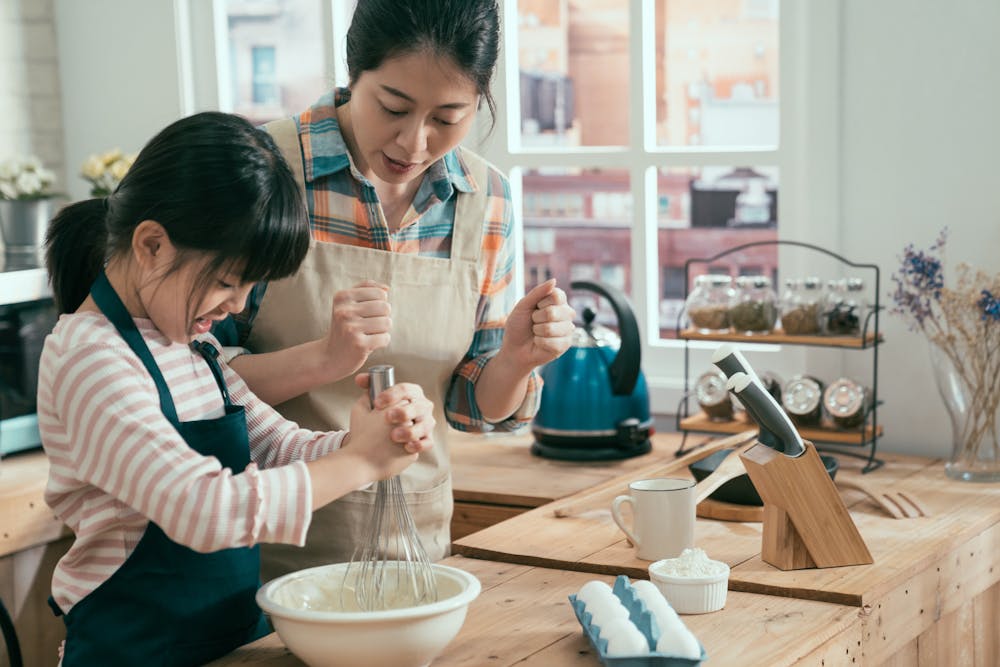 Cooking and baking was one of our favourite lockdown creative activities.
Shutterstock
Cooking and baking was one of our favourite lockdown creative activities.
Shutterstock
We also asked our participants to rank their activities from most to least effective at making them “feel better”. Measures for anxiety, depression, loneliness and emotion regulation were taken to help us identify any relationships between mental health and well-being and arts engagement.
The most popular activities were watching films and television, listening to music and cooking and baking. Listening to music was ranked as the most effective activity at making our participants feel better — but watching films and television ranked more than halfway down the list, at 18 out of 27.
Read more: Great time to try: baking sourdough bread[4]
Of the most effective activities, singing took second place and dancing came in third.
The power of music
Three of the four most frequently undertaken activities (watching films and television, listening to music and reading) are usually considered passive or receptive activities: engaging with the artistic creation of others, rather than creating our own new art.
It comes as little surprise the most prevalent activities were receptive ones, since they could be easily done from home. But passive activities were often not the ones which were effective in helping us through trying times.
Active arts activities are beneficial partly because they involve seeking out novel ideas, experiences and possibilities, which in turn have positive cognitive[5], physical[6], emotional and social[7] effects.
Read more: Great time to try: learning to draw[8]
But listening to music seemed to be different from other passive arts activities.
Music has long been regarded as an effective coping tool[9]. We use music to regulate[10] our emotions and to create a refuge[11] for healing and imaginative play.
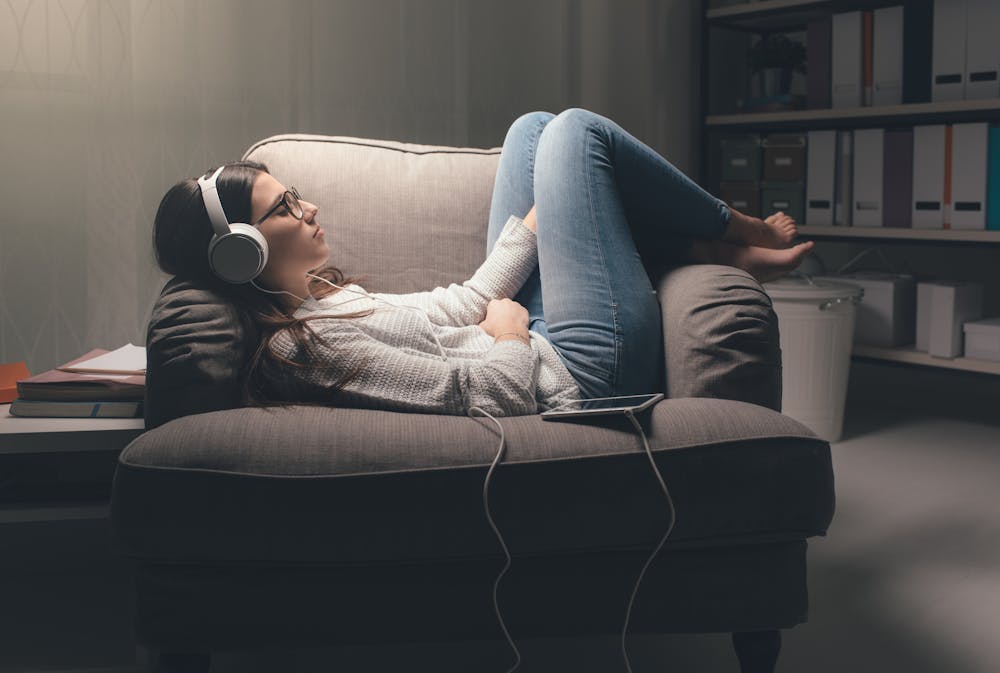 Most passive activities didn’t improve our moods — but listening to music was an exception.
Shutterstock
Most passive activities didn’t improve our moods — but listening to music was an exception.
Shutterstock
Listening to music can also accompany daily activities such as cooking or doing household chores much better than activities such as watching television or reading. Some of music’s well-being benefits may originate in this combination of aesthetic and practical elements.
We also found anxious and depressed Australians seem to be turning to music as a coping mechanism or emotional crutch significantly more than others. People often report[12] specifically listening to sad music to help improve their mood.
While this might seem counter intuitive, listening to sad music while in a negative state can produce a positive outcome as a form of processing or catharsis.
(However, people living with depression should approach listening to sad or negative music with caution. Emerging research[13] indicates those with clinical depression may find the outcome of sad music to be more negativity instead of positive release.)
Get up and moving
Participants who reported exercising more during the pandemic compared to their pre-pandemic routine fared significantly better in terms of mental health and well-being compared to those undertaking less or the same amount of exercise than prior to the pandemic.
This finding supports a growing body[14] of research showing increased physical activity during lockdown is a robust method for maintaining mental wellness.
 Dancing is both art and exercise, and can have a hugely positive impact on our mood.
Ilona Virgin/Unsplash
Dancing is both art and exercise, and can have a hugely positive impact on our mood.
Ilona Virgin/Unsplash
It also indicates why participants found dancing to be so beneficial. Not only is dance a form of artistic expression, it can be more effective than other forms of exercise at reducing body fat[15] and is linked to numerous physical[16] and psychological[17] benefits.
Sadly, dancing was the activity most likely to have ceased under lockdown, followed by theatre rehearsals and performances, and singing.
Your own artistic helper
There are clear public health and safety reasons for why so many people had to stop dancing, singing and making theatre during the COVID-19 pandemic. But these activities are very effective in helping us navigate difficult times.
Read more: Great time to try: knitting your first woolly scarf[18]
With this in mind, artistic creative activities — and in particular active activities such as singing and dancing — warrant additional support and consideration as an important and efficient aspect of Australia’s mental health response to COVID.
For those interested in incorporating singing and dancing into your lockdown routines, there is no shortage of inspiration for how to do so[19] online. The arts always seem to find a way.
References
- ^ help us cope (apps.who.int)
- ^ enhances physical and mental well-being (www.culturehealthandwellbeing.org.uk)
- ^ newly published research (www.frontiersin.org)
- ^ Great time to try: baking sourdough bread (theconversation.com)
- ^ cognitive (onlinelibrary.wiley.com)
- ^ physical (journals.sagepub.com)
- ^ emotional and social (pubmed.ncbi.nlm.nih.gov)
- ^ Great time to try: learning to draw (theconversation.com)
- ^ effective coping tool (www.austmta.org.au)
- ^ regulate (doi.org)
- ^ a refuge (www.routledge.com)
- ^ often report (journals.sagepub.com)
- ^ Emerging research (doi.org)
- ^ growing body (www.jsams.org)
- ^ reducing body fat (onlinelibrary.wiley.com)
- ^ physical (pubmed.ncbi.nlm.nih.gov)
- ^ psychological (www.tandfonline.com)
- ^ Great time to try: knitting your first woolly scarf (theconversation.com)
- ^ how to do so (musicacrossthebalconies.com)