Australia’s economic escape plan is already under pressure
- Written by: The Times
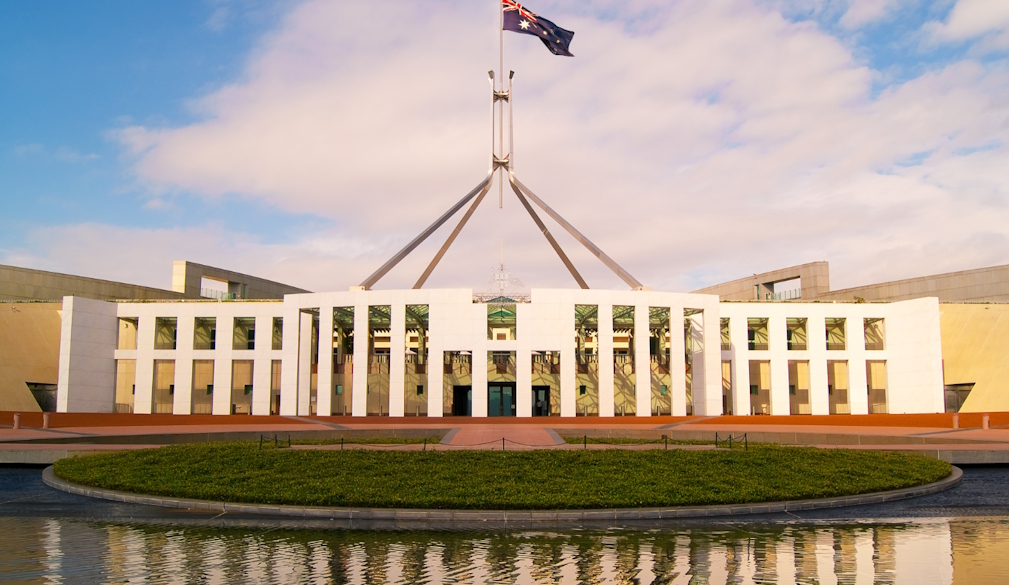
The nation is relying upon stronger productivity to support higher spending, improve living standards and repair the budget. The Reserve Bank has warned that the anticipated gains from artificial intelligence have yet to appear.
Australia has been told that artificial intelligence could transform the economy, lift productivity and help the country manage the growing cost of government.
The promised transformation may eventually arrive.
The difficulty is that Australia is accumulating the bills before it has secured the benefits.
Reserve Bank Governor Michele Bullock has warned that there is not yet clear evidence of artificial intelligence improving Australian productivity. At the same time, the enormous investment required to build the AI economy—including data centres, electricity generation and supporting infrastructure—may itself be adding to inflationary pressure.
That warning arrives at an uncomfortable moment.
The government’s latest long-term projections envisage decades of budget deficits, rising expenditure and growing pressure from health, aged care, disability services and interest payments.
Those projections rely substantially upon Australia achieving stronger productivity growth in the future. Productivity is not an obscure economic statistic in this debate. It is one of the principal assumptions holding the long-term arithmetic together.
Australia is increasingly relying upon tomorrow’s productivity to pay for today’s promises.
The Reserve Bank is warning that tomorrow has not yet arrived.
Another interest rate rise is possible
The immediate concern for households is inflation.
The cash rate is already 4.35 per cent after the Reserve Bank raised rates by 75 basis points earlier this year. Inflation remains above the Bank’s target range, while elevated oil and energy prices arising from the Middle East conflict continue to move through transport, production and household costs.
Bullock has stopped short of committing the Board to another increase at its next meeting. That decision will depend upon the latest evidence and the Board’s assessment of whether demand and inflation are slowing sufficiently.
Financial markets, however, are treating another increase as highly probable.
If the cash rate rises again, borrowers will experience the practical consequence of Australia’s economic imbalance. Mortgage repayments will increase, business finance will become more expensive and discretionary household spending will be squeezed further.
The Reserve Bank does not raise rates because it wants households to suffer. It raises them because demand is exceeding the economy’s capacity to provide goods and services without generating excessive price increases.
That brings the country back to productivity.
Productivity determines how much Australia can afford
Productivity measures how efficiently labour, capital and other resources produce economic value.
When productivity rises, businesses can produce more without increasing every input at the same rate. Over time, that allows wages and living standards to improve without necessarily creating equivalent inflation.
When productivity stagnates, the choices become more difficult.
Governments can spend more, but they must eventually collect more revenue or borrow more money. Employers can increase wages, but without improved output those higher costs may be passed to customers. The economy can grow through population increases, but additional people also require homes, roads, hospitals, schools, electricity and public services.
A larger economy is not automatically a more productive economy.
That distinction is particularly important in Australia. Population growth has supported headline economic growth, but output per person and improvements in living standards have been much less impressive.
The country has added workers and consumers. It has not consistently increased the value produced by each hour of work.
AI may help—but it is not free
Artificial intelligence could eventually become a powerful productivity tool.
It may reduce repetitive administration, improve logistics, accelerate scientific research and allow workers to complete some tasks more quickly. Businesses are already using it to analyse information, generate drafts, assist customers and automate routine processes.
But possessing the technology is not the same as using it productively.
Businesses must reorganise their processes, train workers and determine which applications genuinely improve output. Some AI tools save time; others merely produce additional material that must be checked, corrected or discarded.
There is also an enormous physical economy behind the supposedly weightless digital technology.
Data centres require land, construction materials, imported equipment, water, transmission connections and vast quantities of reliable electricity. Skilled workers and investment capital directed into that construction cannot simultaneously be used elsewhere.
Bullock’s observation is therefore more subtle than an argument that AI has failed. New technologies can initially require heavy investment and workplace disruption before their productivity benefits become visible.
The risk is that governments begin spending against the anticipated dividend before the dividend exists.
The RBA Governor has also raised the possibility that enthusiasm surrounding AI could contain elements of a speculative bubble. That does not mean the technology is without value. Important technologies can be real while investors still overestimate how quickly—or how profitably—they will change the economy.
Inflation now, productivity later
Australia may therefore face an awkward sequence.
The initial AI investment boom could increase demand for electricity, construction, specialised equipment and skilled labour. That may add to costs in an economy already dealing with expensive fuel and constrained capacity.
The productivity benefit, if it comes, may take years to spread through ordinary workplaces.
In other words, Australia could experience some of the inflationary cost now and receive the productivity reward later.
That timing matters to the Reserve Bank. It must set interest rates according to the economy that exists, not the more productive economy that governments and businesses hope will emerge.
It also matters to Treasury.
The Intergenerational Report is not a prediction carved in stone. It is a projection constructed from assumptions about population, participation, productivity, taxation and spending over 40 years. Treasury itself describes these reports as tools for understanding future challenges and supporting policy decisions.
If productivity is weaker than assumed, economic growth will be lower, revenue will be reduced and the burden of government spending will become heavier.
That would leave future governments with choices that today’s political system repeatedly attempts to avoid: reducing expenditure, increasing taxes, reforming major programs or accepting still more debt.
Technology cannot substitute for reform
AI may become part of Australia’s economic solution. It cannot be the entire solution.
Productivity also depends upon whether the country builds infrastructure where it is needed, approves useful investment efficiently, trains people for productive work, maintains affordable and reliable energy, encourages business formation and directs public money towards programs that deliver measurable value.
Technology cannot compensate indefinitely for poor policy.
Nor should population growth be confused with productivity reform. Adding more people may enlarge total GDP, but it does not guarantee improved output or living standards per person—particularly when housing and infrastructure fail to keep pace.
The task is not simply to make Australia bigger or more technologically fashionable. It is to make the economy work better.
The Times View
Yesterday’s warning about 40 years of budget deficits revealed the scale of Australia’s long-term fiscal problem.
Today’s warning from the Reserve Bank exposes the uncertainty within one of the proposed answers.
Artificial intelligence may ultimately help Australians produce more, earn more and support better public services. It would be unwise to dismiss that potential.
It would be equally unwise to treat potential productivity as though it were money already in the bank.
Australia cannot responsibly build permanent spending upon benefits that remain theoretical. The country must improve productivity through practical reform while exercising discipline over the commitments it makes today.
A future technological dividend would be welcome.
It should not become an excuse for postponing the difficult work required in the present.