2 of 3 new federal polls have the Coalition gaining from One Nation, but Labor clearly ahead
- Written by: Adrian Beaumont, Election Analyst (Psephologist) at The Conversation; and Honorary Associate, School of Mathematics and Statistics, The University of Melbourne
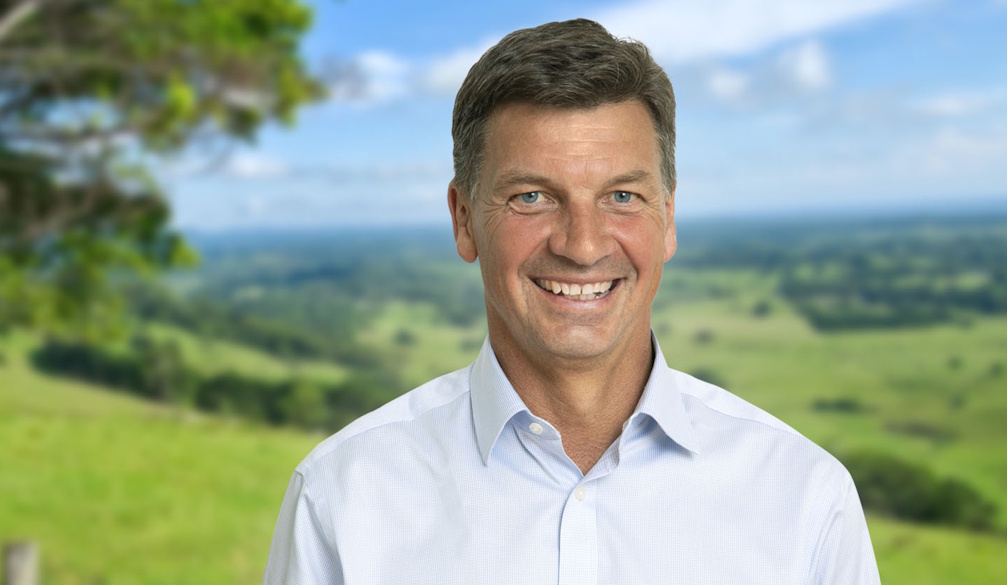
The Morgan and YouGov federal polls have the Coalition gaining from One Nation since Angus Taylor replaced Sussan Ley as Liberal leader. Unlike the DemosAU and Fox & Hedgehog polls that I reported Tuesday[1], these two polls have Labor clearly ahead of the Coalition and One Nation after preferences.
Whereas the combined primary vote for One Nation and the Coalition was 49% in both DemosAU and Fox & Hedgehog, it was just 44.5% in Morgan and 46% in YouGov.
Essential is the other new poll, and that gave the Coalition its first lead over Labor after preferences in a poll since the May 2025 election. Essential’s respondent preferences favour the Coalition more than other polls that use respondent preferences.
After the five federal polls this week, analyst Kevin Bonham’s two-party aggregates[2] that use 2025 election preference flows have Labor leading the Coalition by 53.3–46.7 and One Nation by 53.4–46.6.
YouGov poll
A national YouGov poll[3] for Sky News, conducted February 17–24 from a sample of 1,500, gave Labor 29% of the primary vote (down one since the February 3–10 YouGov poll[4] that was taken before the Liberal leadership spill), One Nation 24% (down four), the Coalition 22% (up three), the Greens 13% (up one), independents 6% (up one) and others 6% (steady).
By respondent preferences, Labor led One Nation by 56–44, a one-point gain for Labor. They led the Coalition by 53–47, a one-point gain for the Coalition.
Anthony Albanese’s net approval was up four points to -14, with 54% dissatisfied and 40% satisfied with his leadership. Taylor’s initial net approval was -5 (38% dissatisfied, 33% satisfied), a large improvement on Ley’s -40 net approval. Albanese led Taylor as better PM by 45–34 (47–25 against Ley).
Cost of living was rated the most important issue by 41%, followed by housing affordability and immigration each on 10%. Respondents were asked which of the Coalition, One Nation, Labor or the Greens they preferred to handle various issues.
Combining Labor/Greens against Coalition/One Nation, right-wing parties led on cost of living by 35–34, on housing by 33–32 and on immigration by 48–28. However, these leads are far narrower than in the recent DemosAU poll[5], where the right led by double digit margins on all these issues.
By 60–40, respondents in this poll did not want immigration restricted from terror-controlled regions. This contrasts with the Fox & Hedgehog poll, where by 59–17, respondents supported an immigration ban from “high risk” areas.
Essential poll
A national Essential poll[6], conducted February 18–22 from a sample of 1,002, gave Labor 30% of the primary vote (down one since the late January Essential poll), the Coalition 26% (up one), One Nation 22% (steady), the Greens 11% (up two), all Others 7% (steady) and undecided 4% (down two).
By respondent preferences, the Coalition had its first two-party lead in any poll since the 2025 election (by 48–47). Essential did not report a two-party estimate for its January poll, which was about the same on primary votes for Labor.

Essential’s respondent preferences have been weaker for Labor than applying the 2025 election preference flows to the primaries, which would give Labor above a 51–49 lead. In contrast, Morgan has generally had better respondent flows to Labor than the 2025 election method.
Albanese’s net approval was up six points since January to -6, with 48% disapproving and 42% approving. By 53–12, respondents thought Australia was becoming more divided[8] over more united, with 35% staying about the same. By 36–32, respondents thought social cohesion in Australia was strong rather than weak.
Morgan poll
A national Morgan poll[9], conducted February 16–22 from a sample of 1,649, gave Labor 31% of the primary vote (down one since the February 13–16 Morgan poll taken after the Liberal spill), the Coalition 24% (up 0.5), One Nation 20.5% (down one), the Greens 12.5% (steady) and all Others 12% (up 1.5).
By respondent preferences, Labor led by 54.5–45.5, a 0.5-point gain for the Coalition. By 2025 election preference flows, Labor led by 54–46, a 0.5-point gain for the Coalition from my estimate[10] of the previous poll).
Morgan shows gains for the Coalition from One Nation since Taylor replaced Ley. In the Morgan poll taken before the spill[11], One Nation led the Coalition by 25–20 on primary votes.
WA DemosAU poll: Labor way ahead
A Western Australian state DemosAU poll[12], conducted February 12–23 from a sample of 969, gave Labor 36% of the primary vote (down five since the November DemosAU poll[13]), the Liberals 21% (down nine), the Nationals 4% (down two), One Nation 17% (not asked previously), the Greens 13% (steady) and all Others 9% (down one).
Labor led the Liberals by 57–43 after preferences, a one-point gain for Labor.
Labor Premier Roger Cook’s net positive rating was down two points to +6 (34% positive, 28% negative). Liberal leader Basil Zempilas’s net positive was unchanged at -3. Cook led Zempilas as preferred premier by 43–30 (47–34 previously).
WA Greens leader Brad Pettitt was at -14 net positive and WA One Nation leader Rod Caddies at -17.
Tasmanian EMRS state poll
A Tasmanian EMRS state poll was reported by Bonham[14]. Conducted February 16–19 from a sample of 1,000, it gave the Liberals 29% of the vote (down eight since November), Labor 23% (down two), the Greens 15% (down two), independents 15% (down four), One Nation 14% (not previously asked) and others 4% (down one).
Tasmania uses a proportional system for its lower house elections, so a two-party estimate is not applicable. One Nation’s 14% is ten points below[15] its federal support in this poll.
References
- ^ reported Tuesday (theconversation.com)
- ^ analyst Kevin Bonham’s two-party aggregates (kevinbonham.blogspot.com)
- ^ YouGov poll (www.skynews.com.au)
- ^ February 3–10 YouGov poll (theconversation.com)
- ^ recent DemosAU poll (theconversation.com)
- ^ Essential poll (essentialreport.com.au)
- ^ Bianca De Marchi/AAP (photos.aap.com.au)
- ^ Australia was becoming more divided (essentialreport.com.au)
- ^ Morgan poll (www.roymorgan.com)
- ^ from my estimate (theconversation.com)
- ^ Morgan poll taken before the spill (theconversation.com)
- ^ Western Australian state DemosAU poll (demosau.com)
- ^ November DemosAU poll (demosau.com)
- ^ reported by Bonham (kevinbonham.blogspot.com)
- ^ ten points below (theconversation.com)