Who is Angus Taylor and could he cut it as opposition leader?
- Written by: Michelle Grattan, Professorial Fellow, University of Canberra
Angus Taylor has all the on-paper qualifications to be opposition leader. But there are big questions over how well he could do the job, when a miracle worker is needed to lift the struggling Liberal Party from its existential crisis.
Taylor’s political story so far is regarded by many observers and not a few colleagues as one of unfulfilled promise.
If he wins the leadership, he would take over with the party at its lowest, considered to have no prospect of victory at the 2028 election. The first realistic chance for Taylor, now 59, of becoming prime minister would be 2031 – a very long time to survive as opposition leader in this poll-driven era.
Taylor is a Rhodes scholar, with strong qualifications in economics, and an impressive business career behind him, which include having been a director at Port Jackson Partners, a business consultancy firm.
Rod Sims, also a Port Jackson director at the time (and later head of the Australian Competition and Consumer Commission) describes Taylor as “extremely intelligent. He was very, very good at what he did, advising boards of some of the largest companies on corporate strategy”.
Few would doubt Taylor, when elected for the NSW regional seat of Hume in 2013, had his eyes on the ultimate prize, a view reinforced by glowing publicity at the time.
Over the years, however, several personal controversies dogged him, ranging from questions over alleged illegal clearing of protected grassland by a company in which his family had a financial interest (he denied any wrongdoing) to the use of a mysterious and misleading document (which he could never explain) to attack Sydney Lord Mayor Clover Moore.
In his maiden speech, condemning political correctness, he made an inaccurate claim about living in the same corridor at Oxford University as feminist writer Naomi Wolf, later to be embarrassed when she said she wasn’t at the university at the time. When in trouble he never seemed able to find his way out of it cleanly.
Taylor’s frontbench experience includes serving as minister for industry, energy and emissions reduction in the Morrison government and as shadow treasurer in Peter Dutton’s opposition.
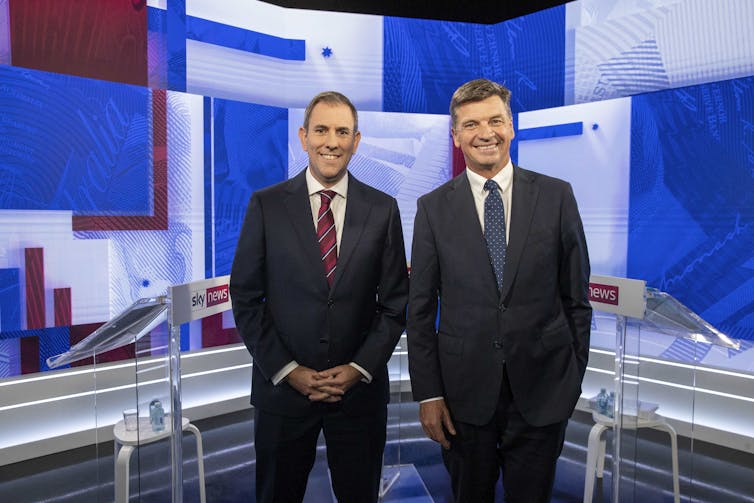
His time in the latter post wasn’t happy. He struggled against Treasurer Jim Chalmers. According to Niki Savva in her book Earthquake, Dutton thought Taylor a “terrible retail politician who produced policies that could not be sold or explained to the public”.
Taylor wanted the opposition to respond to the government’s 2025 budget tax cuts with an alternative tax policy. But Dutton rejected that, and the opposition went into the election (disastrously) giving the government a big break on the tax issue.
Former Liberal treasurer Peter Costello told The Australian’s Troy Bramston, “At the last election, [the Liberals] got themselves into a position where they were proposing to increase income taxes, run bigger deficits, no real plan to reduce debt”.
Regardless, Taylor as leader would be most comfortable talking about the evils of debt and deficit. But today’s voters no longer care so much about those, and want government to do more, not less.
One economist who has observed Taylor over the years describes him as “very smart and a very good economist”, not a hardline dry but with a market approach of the Howard-Costello era. “He’s in the right party – if it were the party of 20 years ago”. But things have changed.
“I’d be stunned if the times suited Angus Taylor,” this source says. “Would we see the Angus Taylor of his convictions, or Angus Taylor pushed around by the populism of the moment? How would he battle One Nation? That’s hard to do from the viewpoint of market economics.”
In economics Taylor is in the Liberal mainstream, but on climate policy he’s been something of a weather vane.
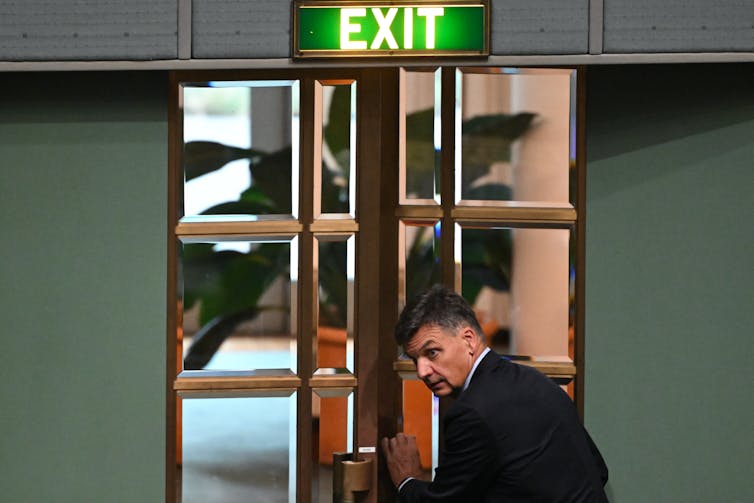
In his business career he was very alive to the climate change issue and a supporter of renewables. But years later, he was against Malcolm Turnbull’s attempt to bring in a National Energy Guarantee (the NEG), a plan to reduce emissions while ensuring the reliability of the grid. Under Scott Morrison he advocated the net zero by 2050 target. In opposition he was one of those opposing it, walking shoulder to shoulder with Andrew Hastie and other conservatives into the party meeting ahead of the dumping of the Liberal commitment to the target.
Turnbull says pointedly, “Angus’ views on energy were more enlightened when he was working for Rod Sims [at Port Jackson] and supported an economy wide carbon price”.
One of Taylor’s strongest supporters is former MP Craig Laundy, who was a close ally of Turnbull.
Laundy entered parliament at the same time as Taylor, and they’ve kept in touch in recent years. When Laundy had ministerial responsibility for deregulation and Taylor oversaw digital policy. Laundy found him “very good to work with”.
Laundy rejects the perception of some that Taylor has a “born to rule” attitude. “It’s harsh and unfair. He was always a very good communicator and I think [if he is leader] he will surprise many on the upside of how he will connect with the community across the board,” Laundy says.
In his personality Taylor is self-confident but reserved. One source notes a certain vulnerability – a nervousness before a speech, afterwards wondering how it went.
Many disagree with Laundy’s assessment that Taylor communicates well, and even fans see a need for improvement. A former parliamentary colleague says, “Like a lot of really bright guys, Angus can sometimes get into over-analysis of things”.
Certainly if he were opposition leader, how well he could communicate with women would be crucial. His views on quotas mean he would likely start with a handicap in the eyes of many women.
He said last year:“We absolutely need more women in the party at every level, whether it’s members of our branches, whether it’s on our executives, whether indeed it is as members of parliament, and I think there’s a huge job for us, [but] I have never been a supporter of quotas”.
One prominent Liberal woman outside the parliamentary party, who likes Taylor personally, says he is a “caricature of a Liberal male – males who have managed to progressively alienate women from the Liberal party”.
Another muses:“He’s very handsome, well read, tall and a good farmer – but entirely lacking in charisma. How can that be possible?”
As leader Taylor would have to reach out across the party in a way he has never needed to before. “Retail politics” can be as important within a party – especially a fractured one – as with the electorate.
As the most senior member of the conservative faction, Taylor saw himself as the logical opposition leader after the 2025 election. In a serious misjudgement, he encouraged the defection from the Nationals of Jacinta Nampijinpa Price as his potential deputy. Taylor lost to Ley (25-29); Price then did not put up her hand.
He assumed Ley would fail, although he did not want to bring on a challenge this soon. But when the pushy Hastie started to force the issue, Taylor was clear: it was his turn next.
References
- ^ Angus Taylor Media Release (www.angustaylor.com.au)
Read more https://theconversation.com/who-is-angus-taylor-and-could-he-cut-it-as-opposition-leader-275400