The mine does not have to explode: how Iran turned uncertainty into a weapon at Hormuz
- Written by: The Times
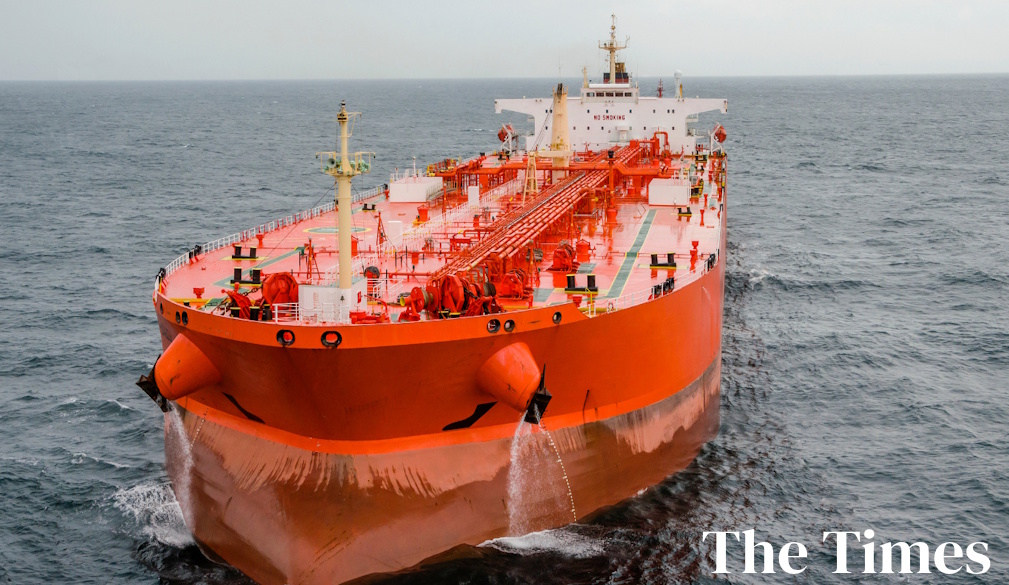
For months, American divers, special forces and unmanned vessels have been clearing mines from the Strait of Hormuz. Their extraordinary operation reveals something easily misunderstood about mine warfare: a mine does not have to destroy a ship to accomplish its purpose. If it persuades the ship not to sail, it has already worked.
The most successful mine in the Strait of Hormuz may be one that never explodes.
It can sit beneath the water.
Nobody has to see it.
Nobody even has to know precisely where it is.
They only have to believe it might be there.
That uncertainty can stop a ship worth more than US$100 million, carrying perhaps two million barrels of oil, crewed by people who reasonably expect to return home alive.
It can cause an insurer to increase a premium.
It can persuade a shipowner to refuse a charter.
It can force a navy to escort commercial vessels.
And it can require some of the world's most sophisticated military forces to spend months proving that a narrow strip of water is safe.
That is the real power of a mine.
The explosion is only one possible consequence. The principal weapon is denial of access.
The extraordinary battle beneath the Strait of Hormuz helps explain why the waterway has remained so difficult to restore to normal operation.
A four-month operation beneath the water
New reporting by the Financial Times has revealed the scale of the American effort to clear the Strait.
For approximately four months, US Navy divers, special operations personnel, robotic surface vessels and underwater vehicles have been conducting dangerous mine-countermeasure operations.
Much of the work was reportedly conducted at night.
The mission followed the laying of mines in and around one of the world's most important commercial waterways after the US-Iran conflict began.
US Central Command publicly announced the beginning of mine-clearance preparations on April 11.
Its objective sounded straightforward: establish a safe passage through Hormuz and allow commercial shipping to resume.
Executing it was anything but straightforward.
Finding something deliberately designed to remain hidden beneath an enormous body of water is painstaking work.
Sonar and unmanned systems can search.
Divers can investigate.
Explosives can destroy mines that are found.
But then comes the difficult question.
Did you find all of them?
About 80 mines can threaten an ocean of commerce
Reports have put the number of mines involved in the critical shipping areas at around 80.
That does not sound particularly formidable beside aircraft carriers, ballistic missiles, fighter aircraft and the enormous military arsenals deployed around the Gulf.
Yet this is precisely why mines are such remarkable weapons.
They are relatively inexpensive instruments capable of imposing extraordinarily expensive consequences.
The Strait of Hormuz is only about 33 kilometres wide at its narrowest point, but commercial shipping does not use every available kilometre.
Ships are channelled through established traffic lanes.
That makes the problem much more concentrated.
Put enough uncertainty into those lanes and the effective navigable area becomes smaller still.
The mine therefore does not have to dominate the entire Strait physically.
It only has to make the routes ships need to use sufficiently dangerous.
This is what mines are designed to do
Mine warfare is frequently misunderstood because attention naturally goes to the explosion.
A vehicle drives over a landmine.
A ship strikes a naval mine.
There is an explosion, destruction and casualties.
That is the visible result.
But mines are fundamentally area-denial weapons.
On land, a minefield can prevent troops or vehicles using an area, funnel them towards another route, slow an advance or force an enemy to devote specialist personnel and equipment to clearance.
At sea, the principle is similar.
A minefield can close a harbour.
It can constrain a fleet.
It can force vessels into predictable channels.
It can slow an amphibious operation.
Or, as Hormuz has demonstrated, it can discourage civilian shipping from entering an economically vital waterway.
Destroying a ship is therefore not necessary for the minefield to succeed.
If the captain turns around, the mine has worked.
If the insurer refuses cover, it has worked.
If the shipowner demands an enormous premium before accepting the voyage, it has worked.
If a navy has to spend four months clearing a route, it has worked.
A cheap weapon creates an expensive response
There is a profound economic asymmetry here.
The mine itself can be relatively unsophisticated.
The response cannot be.
The United States has reportedly used Navy divers, SEALs, autonomous vessels, underwater systems, sonar, aircraft and other military capabilities during the Hormuz operation.
Every suspected object has to be treated seriously.
Every cleared area has to be surveyed sufficiently thoroughly to provide confidence.
And the people conducting the work operate in an environment where another mine is not the only threat.
Iran possesses missiles, drones and other weapons capable of threatening forces conducting clearance operations.
Mine countermeasures consequently become a military operation in their own right.
The attacker does not merely impose the cost of replacing a damaged ship.
It imposes the cost of finding the weapon before the ship ever reaches it.
America says the lanes are clear
In late August, US Central Command commander Admiral Brad Cooper announced an important milestone.
American forces, he said, had successfully cleared Iranian mines from the internationally recognised shipping lanes through Hormuz.
CENTCOM says nearly 1,500 commercial vessels have been assisted through the Strait during the campaign, carrying almost 750 million barrels of crude oil.
That represents an enormous amount of energy successfully moved through a contested waterway.
It also demonstrates that mine clearance can work.
But there is a critical difference between declaring a shipping lane cleared and restoring normal commercial confidence.
The tanker industry itself has warned that mine clearance alone is not enough to return Hormuz shipping to normal.
Ships still face missiles.
They face drones.
They face projectiles of uncertain origin.
They face the possibility of new mines.
And they face uncertainty about mines that may exist outside the surveyed routes.
The United States can clear a corridor.
It cannot clear the entire Gulf every morning.
One new mine can change everything
This is perhaps the most difficult part of mine warfare.
Mine clearance does not permanently solve the problem if an opponent retains the ability to lay another mine.
A channel might take weeks or months to survey and clear.
One vessel operating covertly may be able to create uncertainty again.
Indeed, US forces struck Iranian launchers on Larak Island in late August after CENTCOM said Iranian forces were preparing to deploy additional sea mines.
The significance was greater than the number of mines involved.
After months of clearance, the possibility of renewed mining threatens to restart the psychological process.
Is the lane still clear?
Was another mine deployed?
Where?
What type?
Has it moved?
Does the route need to be surveyed again?
Those questions are themselves part of the weapon.
The insurer has to believe the navy
This is where military strategy becomes economics.
A navy can announce:
The shipping lane is clear.
But a commercial tanker does not sail merely because a government says it can.
The owner has to agree.
The charterer has to agree.
The captain has responsibilities.
The crew has to enter the danger area.
And somewhere behind all of them sits an insurer calculating the probability of losing an extraordinarily valuable asset.
This produces one of the defining realities of the Hormuz crisis:
A navy can declare a channel cleared. It cannot order an insurer to believe it.
Nor can it order a shipowner to accept the remaining risk.
That is why the commercial reopening of Hormuz is much more complicated than the military reopening of Hormuz.
Insurance turns fear into a price
Risk eventually acquires a dollar value.
War-risk premiums rise.
Charter rates increase.
Crews may require additional compensation.
Ships take longer or more complicated routes.
Naval escorts require coordination.
Some vessels wait.
Others simply refuse the voyage.
All of those costs eventually become part of moving a barrel of oil, a cargo of LNG or a shipment of refined fuel.
This helps explain one of the apparent contradictions we have been observing throughout the Hormuz crisis.
Oil is moving.
Yet Hormuz is not normal.
Both can be true.
A sufficiently valuable cargo can move through a dangerous environment if somebody is prepared to accept — and pay for — the risk.
The question is how much that risk costs.
The psychological battlefield
There is another dimension.
Mine warfare creates an unusual relationship between physical reality and information.
If Iran says a particular area is mined, shipping companies must assess the warning even if nobody has independently located a mine.
Ignoring it could have catastrophic consequences.
Conversely, when the United States says a route has been cleared, commercial operators must decide how much confidence to place in that assurance.
Both sides therefore fight over perception as well as territory.
Iran does not necessarily have to physically close every shipping lane.
It benefits if shipowners believe entering the area is dangerous.
The United States does not necessarily have to eliminate every conceivable explosive object from the wider Gulf.
It needs commercial operators to believe designated routes are sufficiently safe to use.
The battle for Hormuz therefore occurs partly beneath the water and partly inside the calculations of thousands of people sitting in shipping companies, commodity trading houses and insurance offices around the world.
Why this matters to Australia
Australia is thousands of kilometres from the Strait of Hormuz.
Our fuel economy is nevertheless connected to what happens there.
Australia imports substantial quantities of refined petroleum products.
Those fuels move through an international system of refineries, tankers, ports, insurers, traders and freight markets.
If a mine makes a tanker owner reluctant to enter Hormuz, that can affect freight.
If insurers increase premiums, that affects the cost of shipping.
If Gulf crude becomes harder to move, Asian refineries must find alternatives.
If diesel becomes scarce in Asia, Australia competes for the available cargoes.
The mine therefore does not have to come anywhere near Australia to impose an economic cost on Australians.
Its influence can travel through the international energy market.
Eventually it can arrive at a service station.
Hormuz may be open and closed at the same time
This is perhaps the most useful way to understand the present Strait of Hormuz.
Militarily, particular shipping lanes may be open.
Physically, substantial quantities of oil are getting through.
Legally, it remains an international waterway.
Commercially, however, parts of the shipping industry still behave as though something is very wrong.
There is no contradiction.
Safety is not binary.
A road can be open while motorists avoid it.
An airport can operate while airlines refuse to fly there.
A shipping lane can be cleared while tanker owners decide the voyage is not worth the risk.
Hormuz does not have to be completely closed to inflict enormous economic damage.
It merely has to remain dangerous enough.
The Times View
The extraordinary American mine-clearance operation in the Strait of Hormuz demonstrates the true nature of the weapon.
A mine is not primarily successful because it explodes.
It succeeds because of what might happen if it does.
That possibility denies access, alters behaviour and forces an opponent to devote disproportionate resources to restoring confidence.
Iran did not need hundreds of sophisticated warships to disrupt one of the most important trading routes on Earth.
It needed to create uncertainty beneath the water.
The United States has spent months clearing that uncertainty from recognised shipping lanes.
The achievement is significant.
But military clearance and commercial confidence are not the same thing.
A naval commander can say the route is clear.
A government can say the Strait is open.
Oil can begin moving again.
Yet somewhere in London, Singapore, Dubai or Tokyo, an insurer still has to put a price on the possibility that one mine was missed — or that another was laid last night.
That is the enduring power of the mine.
Its effectiveness should not be measured by how many ships it sinks.
It should be measured by how many ships it persuades not to sail.