Australia is spending billions to move beyond fossil fuels — is the energy transition worth the price?
- Written by: The Times
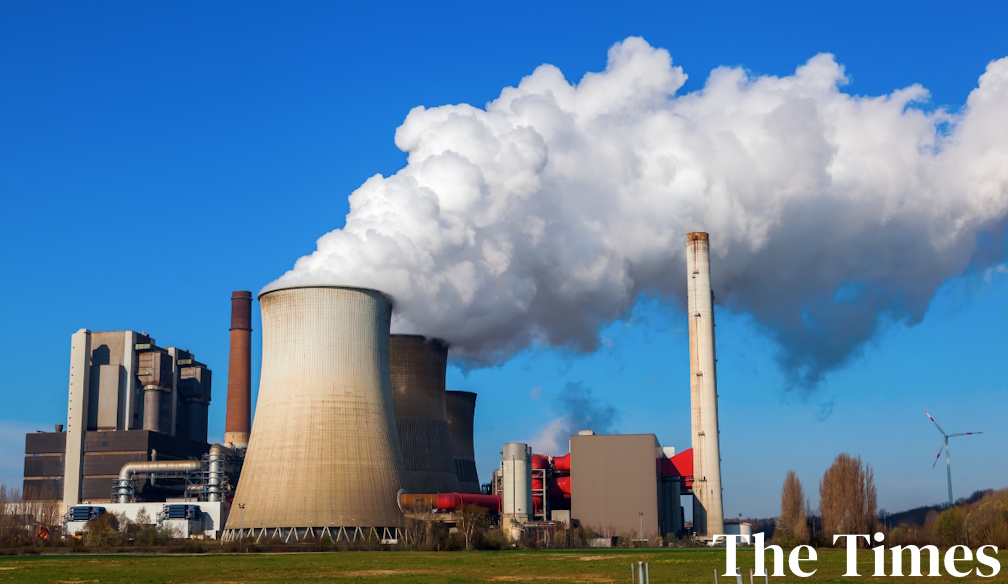
Australia is attempting one of the largest transformations of its essential infrastructure since the electrification of the nation.
Coal-fired power stations that have supplied Australian homes and industry for generations are progressively approaching retirement. In their place Australia is building wind farms, enormous solar installations, batteries, transmission lines and potentially new industries based around hydrogen, critical minerals and low-carbon fuels.
The Australian Government has committed billions of dollars to helping make that transformation happen.
But there are two separate questions.
Can Australia build an electricity system increasingly powered by renewable energy?
The evidence increasingly suggests that it can.
The much more difficult question is:
Are the economic benefits worth what Australia is spending to achieve it — and could some of that money produce greater benefits if spent elsewhere?
That question deserves to be asked without turning the energy debate into a contest between believers and sceptics.
Australia is already changing
This is no longer a theoretical transition.
In calendar 2025, renewable sources generated 39.5 per cent of Australia's total electricity. Solar supplied 19.6 per cent, wind 14 per cent and hydro 4.7 per cent.
Coal remained the country's largest individual electricity source at 42.7 per cent, while gas supplied 16.2 per cent and oil products 1.7 per cent.
Fossil fuels therefore still produced 60.5 per cent of Australia's electricity.
But the direction of travel is unmistakable.
In 1999-2000, renewables accounted for only 8.5 per cent of Australian electricity generation. By 2025 their share had risen to 39.5 per cent.
Coal, meanwhile, has fallen dramatically as a proportion of generation.
Australia is not contemplating an energy transition.
It is already in one.
Where are the billions going?
The transition is much larger than putting solar panels on roofs.
Government support now stretches across electricity generation, transmission, storage, manufacturing, hydrogen, critical minerals and industrial decarbonisation.
One of the largest components is Rewiring the Nation.
The policy involves $20 billion of investment intended to modernise electricity grids and help connect renewable generation — often constructed far from population centres — with consumers. Much of this involves financing rather than simply handing money to developers.
The Clean Energy Finance Corporation has a $19 billion Rewiring the Nation investment allocation directed towards transmission, long-duration storage, distribution infrastructure and distributed energy resources.
That distinction matters.
Government investment, concessional finance, tax incentives and direct expenditure are economically different things. A loan that is repaid is not equivalent to a grant that never returns to government.
Building wind and solar
Another major mechanism is the Capacity Investment Scheme.
Instead of the Commonwealth simply constructing power stations itself, the scheme attempts to encourage private developers to build renewable generation and storage by providing long-term revenue certainty.
The scheme has been expanded to target 40 gigawatts of capacity — 26 GW of renewable generation and 14 GW of dispatchable capacity such as batteries.
The government says the scheme is expected to support approximately $73 billion of investment in Australia's electricity sector. That does not mean taxpayers are writing a $73 billion cheque: much of the capital is private investment encouraged by government underwriting.
The scale is substantial.
The results of one 2026 tender alone selected 19 projects representing 7.8 GW of renewable generation. Eight included batteries, providing another 7.9 GWh of storage.
Another tender selected 15 battery projects providing 4.2 GW of dispatchable capacity.
Why batteries matter
Solar panels produce electricity when the sun shines.
Wind turbines produce electricity when sufficient wind is available.
Consumers, however, expect electricity whenever they turn on a switch.
That creates one of the fundamental engineering challenges of a grid containing large amounts of variable renewable generation.
Batteries can absorb surplus electricity and return it to the grid later.
They are therefore becoming an increasingly important part of the Australian electricity system.
Other technologies can perform similar functions, including pumped hydro, demand management and gas generation.
The future electricity system is consequently not simply:
coal out, solar panels in.
It is an interconnected combination of generation, storage, transmission and flexible demand.
And then there is hydrogen
Australia has also committed substantial resources to renewable hydrogen.
Hydrogen can potentially be used in areas that are difficult to electrify directly, including industrial processes, chemicals, some heavy transport applications and the production of lower-emission iron and steel.
The Commonwealth's Hydrogen Headstart program currently provides up to $2.25 billion in support for large renewable hydrogen projects, including commitments of up to $814 million for the Murchison Green Hydrogen project and $432 million for the Hunter Valley Hydrogen Hub.
There are also substantial hydrogen production tax incentives.
The economic case is more uncertain than for mature wind and solar technology.
Renewable hydrogen remains expensive, and government policy is explicitly attempting to bridge the difference between the cost of producing it and what customers are presently prepared to pay.
That makes hydrogen potentially transformative — but also makes it an area where taxpayers carry technological and commercial risk.
Green metals and Australian manufacturing
Energy policy is increasingly becoming industry policy.
The government's Future Made in Australia strategy has included a $2 billion Green Aluminium Production Credit, a $1 billion Green Iron Investment Fund and incentives for hydrogen, critical minerals and clean-energy manufacturing.
The 2026-27 Budget also provides for up to $1 billion to support lower-emissions, increasingly renewables-powered operations at the Boyne Island aluminium smelter, matched by Queensland and intended to unlock almost $7.5 billion of private investment.
The rationale is straightforward.
If Australia can produce large quantities of relatively inexpensive renewable electricity, instead of exporting raw materials it may be possible to use that energy to process more minerals here.
Australia could export green iron rather than simply iron ore.
Aluminium could increasingly be produced using renewable electricity.
Critical minerals could be refined domestically rather than shipped overseas for processing.
If those industries become internationally competitive, some expenditure on the energy transition could ultimately be regarded not merely as climate expenditure but as industrial investment.
Whether that promise is realised is another matter.
Australia is also investing in alternatives to oil
Electricity receives most of the attention, but oil presents a different problem.
Australia remains heavily dependent upon liquid fuels, particularly for transport.
Aircraft, trucks, agricultural machinery, mining equipment and shipping cannot all simply be connected to the electricity grid.
The Commonwealth is therefore pursuing a $1.1 billion Cleaner Fuels Program supporting domestic production of low-carbon liquid fuels including renewable diesel and sustainable aviation fuel.
This reveals something frequently lost in political arguments about "ending fossil fuels".
The transition is unlikely to mean suddenly eliminating hydrocarbons.
It means progressively finding alternatives where alternatives are technically and economically practical.
Will mankind ever stop needing oil?
Probably not entirely within the foreseeable future.
The more realistic question is whether humanity can dramatically reduce the amount it burns.
Oil is much more than petrol and diesel.
Petroleum is embedded throughout modern civilisation.
Petrochemical feedstocks contribute to plastics, synthetic fibres, paints, solvents, adhesives, lubricants, insulation, electronics, medical equipment, pharmaceuticals, construction materials and countless industrial products.
Electric vehicles can reduce demand for petrol.
They do not make petrochemicals disappear.
Even the International Energy Agency's very aggressive global net-zero scenario does not reduce oil consumption to zero.
Its pathway has global oil demand declining from around 100 million barrels per day in 2022 to approximately 24 million barrels per day in 2050.
That is an extraordinary reduction.
But it is still 24 million barrels every day.
The oil industry may become smaller.
Oil itself is extraordinarily unlikely to become irrelevant.
What about coal?
Coal presents a slightly different question.
Thermal coal is principally burned to generate energy.
That application has readily identifiable competitors: solar, wind, hydro, nuclear, gas and stored electricity.
Its long-term prospects are therefore considerably more vulnerable to technological substitution.
Metallurgical coal is different.
It is used in conventional steelmaking.
Technologies using hydrogen and electric furnaces could progressively reduce that requirement, particularly if green iron develops economically.
But replacing an established global industrial system involving enormous mines, ports, railways, blast furnaces and supply chains will take decades.
Coal could therefore decline dramatically without disappearing.
Why is Australia doing this?
Climate change is the obvious answer, but it is not the only one.
Australia has legislated emissions-reduction objectives and committed internationally to reducing greenhouse emissions.
There is also an energy-security argument.
Sunshine and wind do not have to be imported.
Australia's recent exposure to international fuel markets has demonstrated how geopolitical events thousands of kilometres away can affect Australian businesses and household budgets.
There is an industrial argument as well.
If the global economy moves towards lower-carbon production regardless of what Australia does, countries controlling renewable electricity, critical minerals and processing technology could gain an economic advantage.
Australia possesses enormous quantities of solar and wind resources and many of the minerals required by the new energy economy.
The opportunity is real.
So is the risk of spending badly while pursuing it.
Are renewables actually replacing fossil fuels?
Yes — although considerably more slowly than political slogans sometimes imply.
Australian on-grid fossil-fuel electricity generation declined from 174.2 TWh in 2020-21 to 152.6 TWh in 2025 despite overall electricity demand increasing.
Over the same period solar generation approximately doubled.
That is measurable substitution.
But fossil fuels still generated more than 60 per cent of Australia's total electricity in 2025.
Australia therefore has to manage two realities simultaneously.
It is building the new system while still depending heavily upon the old one.
Removing reliable generation before adequate replacement generation, storage and transmission exist could create electricity shortages or extreme prices.
Keeping obsolete infrastructure operating indefinitely has costs of its own.
The difficulty is sequencing the transition.
The question that rarely receives enough attention: opportunity cost
Every government expenditure has an alternative use.
A billion dollars spent supporting hydrogen cannot simultaneously build hospitals.
Money committed to transmission cannot also be used for aged care, defence, housing, roads, debt reduction or tax relief.
Economists call this opportunity cost.
It should be central to the energy debate.
Australia does not merely need to ask whether a renewable-energy project produces a benefit.
It should ask whether that project produces greater benefit than the best alternative use of the money.
That is a much higher standard.
A project can be environmentally desirable and still represent poor public investment.
Conversely, an expensive transmission project may represent excellent investment if it operates for 50 years, unlocks enormous quantities of low-cost electricity and reduces energy costs across the economy.
The headline price tells us very little by itself.
There is another side to the ledger
Doing nothing is not free either.
Australia's existing electricity system requires enormous continuing investment.
Ageing coal generators require maintenance and ultimately replacement.
Electricity demand is increasing.
Transmission infrastructure needs upgrading regardless of climate policy.
Australia also imports large quantities of refined petroleum, leaving the economy exposed to international oil prices and geopolitical disruption.
The genuine comparison therefore isn't:
spend billions on the transition or spend nothing.
It is:
what is the lowest-cost, most reliable and strategically sensible energy system Australia can build for the next several decades?
That is a considerably more useful question.
Who carries the risk?
This may ultimately be the most important question of all.
If private investors believe a wind farm, battery, hydrogen plant or green-metal facility will be profitable, private capital should be willing to finance it.
Government intervention can nevertheless be justified where enormous initial investment, infrastructure bottlenecks or immature technologies prevent otherwise viable industries developing.
But government guarantees alter the allocation of risk.
If taxpayers absorb too much downside while private investors retain most of the upside, the public receives a poor bargain.
Governments therefore need to demonstrate not merely how much investment their programs attract, but what financial exposure taxpayers have assumed to obtain it.
Success should be measurable
The energy transition should eventually be judged against outcomes rather than announcements.
Did electricity become cheaper?
Did reliability improve?
Did emissions fall?
Did Australian industry become more competitive?
Were permanent industries and jobs created?
Did Australia become less vulnerable to imported energy?
Did taxpayers receive reasonable value for the risks they assumed?
And, critically:
Would Australia have been better off spending some of the money elsewhere?
Those questions should be asked repeatedly over the coming decades.
The Times View
The argument over Australia's energy future is too important to be reduced to "renewables good" versus "fossil fuels good".
Australia is undertaking a profound economic and technological experiment while simultaneously rebuilding infrastructure that would eventually have required replacement anyway.
Renewable electricity is no longer experimental. Solar and wind already produce a substantial and rapidly growing proportion of Australian electricity.
The unresolved questions concern the system around them: transmission, storage, reliability, industrial competitiveness and cost.
Oil presents another reality altogether.
Human civilisation is unlikely to stop using petroleum in the foreseeable future because petroleum is not merely an energy source. It is also an extraordinarily versatile industrial raw material.
Coal may decline much further, particularly in electricity generation, although metallurgical applications could persist considerably longer.
Australia therefore does not need to choose between pretending fossil fuels can disappear tomorrow and pretending the energy system should never change.
It needs disciplined transition.
Spend where the economic, strategic and environmental return can be demonstrated.
Allow technologies to compete.
Demand transparency around subsidies and guarantees.
Do not close reliable infrastructure until replacement capacity actually exists.
And recognise opportunity cost.
A government can spend a dollar only once.
The ultimate measure of Australia's energy transition will not be the number of billions announced or the number of renewable projects opened.
It will be whether, after spending those billions, Australians inherit a cleaner, more reliable, more secure and more affordable energy system than the one they paid to replace.