Labor wants to give the minimum wage a real boost. The benefits would likely outweigh any downsides
- Written by: Chris F. Wright, Professor of Work and Labour Market Policy, University of Sydney
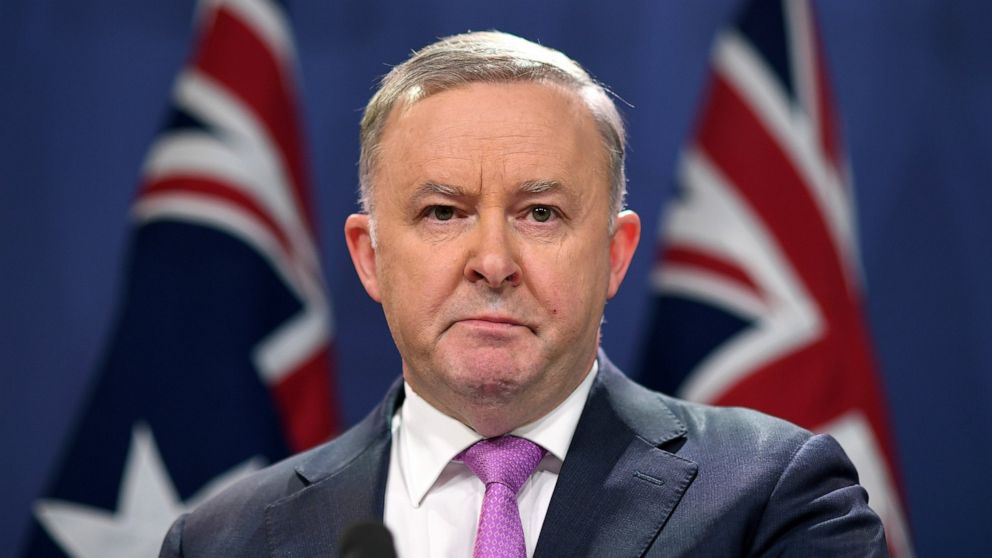
Labor has called for an “economically sustainable real wage increase” for almost 3 million workers who depend on the award system for their wages.
In a submission[1] to the Fair Work Commission’s Annual Wage Review on Wednesday, Labor said a real wage increase above inflation would provide cost-of-living relief for lower-income workers – especially in the early childhood, cleaning and retail sectors.
Opposition Leader Peter Dutton has said[2] he’s not opposed to an increase in minimum wages. Several major business groups have also tentatively endorsed an increase.
But the size of the wage boost is in contention. The Australian Chamber of Commerce and Industry wants an increase to be no higher than headline inflation, saying[3]:
[an] increase in minimum and modern award wages of no more than 2.5% is fair and reasonably responsible in the current economic environment.
Read more: Labor will urge Fair Work Commission to give real wage rise to three million workers[4]
Can the government actually raise wages?
The federal government doesn’t set minimum and award wages directly. That job falls to the Fair Work Commission, Australia’s independent national workplace relations tribunal.
Each year, the commission receives submissions[5] for the Annual Wage Review from “interested parties” such as business groups, trade unions and governments.
Governments almost always make submissions, typically informed by economic logic, to the annual review.
Labor’s submission is consistent with that approach. Prime Minister Anthony Albanese said businesses would benefit[6] overall, because when low-wage workers receive a wage increase, they typically spend rather than save it.
Could a real wage boost fuel inflation?
Labor’s proposal has already attracted concern.
Some economists have argued[8] it could increase inflation. That could make it harder for the Reserve Bank of Australia to deliver further interest rate cuts.
However, this concern was addressed in the OECD’s 2023 Economic Outlook[9] paper, which argued:
in several sectors and countries, there is room for profits to absorb some further increases in wages to mitigate the loss of purchasing power at least for the low paid without generating significant additional price pressures.
In other words, with inflation falling in Australia and other parts of the world, there is scope for wages to increase without a significant risk this will generate inflationary pressure.
The OECD has also stated[10] that much of the recent high global inflation was generated by the impact of the Ukraine war on rising food and energy prices, rather than wages.
Wage growth without productivity growth
A second concern relates to boosting wages in the context of Australia’s languishing levels of labour productivity[11] – output per worker or per hour worked.
On Tuesday, Reserve Bank Governor Michele Bullock said[12] without an increase in productivity:
the rate of nominal wages growth that can be sustained and be in line with the inflation target is lower.
However, as Mark Bray and Alison Preston found in their interim report[13] from the review of the Secure Jobs, Better Pay[14] laws, labour productivity growth has been consistently higher than capital productivity.
According to Bray and Preston:
It is, therefore, difficult to argue that industrial relations systems have a significant, dominant effect on national productivity outcomes.
If anything, a wages boost might be good for productivity. There is evidence to suggest measures to improve the quality of employment – including by increasing wages – can boost productivity[15].
If workers feel they are paid fairly, they are more likely to be satisfied and work harder, and less likely to leave their employer.
Staff turnover, on the other hand, requires employers to recruit and train new employees, which is time-consuming and resource-intensive, and can sap productivity[16].
What about inequality?
It’s important we don’t overlook another important factor in the minimum wage debate. Since its 2022 election victory, addressing inequality has been central to the Albanese government’s labour market reforms.
Before 2022, wages growth was persistently weak[18] for several years, despite the lowest unemployment rate in almost five decades.
Low unemployment is generally assumed to stimulate wages growth, but this didn’t eventuate. This worsened workforce shortages[19], making it hard for employers to attract and retain workers.
Findings from a large body of academic research[20] published before the passage and implementation of the December 2022 Secure Jobs, Better Pay amendments[21] highlighted the need for fairer redistribution in pay settings.
The gender pay gap
This includes addressing gender-based pay inequalities.
Improving job quality – particularly by raising wages – in low-paid sectors is essential to advancing gender equality. The minimum wage and award-reliant segments of the Australian labour market are highly feminised. These include vital frontline roles in the care, cleaning and hospitality sectors.
The latest Workplace Gender Equality Agency scorecard[22], drawing on ABS Labour Force Survey data, shows wage growth in these sectors over the past two years has contributed significantly to reducing the national gender pay gap to its lowest point on record.
Lifting wages and job quality is not only crucial for attracting and retaining workers in these essential frontline roles. It also supports broader labour force participation[23], particularly for working parents.
An “economically sustainable” boost to the minimum wage is therefore unlikely to drive up inflation, or adversely impact productivity. However, it will provide cost-of-living relief to Australia’s lowest-paid workers.
References
- ^ submission (www.alp.org.au)
- ^ said (www.abc.net.au)
- ^ saying (www.workplaceexpress.com.au)
- ^ Labor will urge Fair Work Commission to give real wage rise to three million workers (theconversation.com)
- ^ submissions (www.fwc.gov.au)
- ^ businesses would benefit (www.abc.net.au)
- ^ Lukas Coch/AAP (photos.aap.com.au)
- ^ argued (www.afr.com)
- ^ 2023 Economic Outlook (www.oecd.org)
- ^ stated (www.oecd.org)
- ^ labour productivity (theconversation.com)
- ^ said (www.afr.com)
- ^ interim report (www.dewr.gov.au)
- ^ Secure Jobs, Better Pay (www.fwc.gov.au)
- ^ boost productivity (www.sydney.edu.au)
- ^ sap productivity (www.oecd.org)
- ^ Joel Carrett/AAP (photos.aap.com.au)
- ^ persistently weak (www.smh.com.au)
- ^ worsened workforce shortages (www.sydney.edu.au)
- ^ large body of academic research (www.tandfonline.com)
- ^ Secure Jobs, Better Pay amendments (www.aph.gov.au)
- ^ scorecard (www.wgea.gov.au)
- ^ supports broader labour force participation (treasury.gov.au)