Australia Just Got Its First National Strategy for Social Enterprise. Here's Why It Matters.
- Written by: Jess Moore, CEO, Social Enterprise Australia

Australia is one of the richest countries in the world. Yet for too many Australians, life is hard. Cost-of-living pressure is grinding, the environment is under strain, and decisions that shape life and the future happen elsewhere. The old promise that wealth and voice will make their way to everyone is ringing increasingly hollow right now. Business as usual is making it worse.
Against that backdrop, something significant happened last week. Australia's social enterprise sector launched its first-ever national strategy, a shared plan, built by the sector itself, to grow a different kind of economy. One that puts people and planet first.
Social enterprises are businesses that put people and planet first. They trade like any other, but exist specifically to make the world better. Rather than profit maximisation, they reinvest most of their surplus in their purpose, using commercial discipline to tackle social and environmental problems.
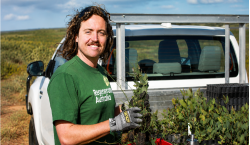
HoMie is a streetwear label that creates paid pathways out of youth homelessness. Australian Spatial Analytics proves that neurodivergent talent is a competitive advantage in the data economy. Community Resources is an Aboriginal-led enterprise that kept almost 19,000 tonnes of waste out of landfill last year and created 960 jobs for people most shut out of work. These aren't charities with a side hustle, they are businesses with purpose baked in.
Yet social enterprise in Australia remains poorly understood. Many people haven’t heard the term, and the systems designed to support conventional business and charities, from taxation to procurement to capital markets, were not built with social enterprise in mind. Even the data is patchy, as current information on the sector remains inconsistent, fragmented or hidden, making it harder for policymakers and investors to understand what social enterprise contributes and what it needs to grow.
That is what this strategy sets out to change.
Co-designed by 497 people from across the ecosystem – social enterprises, intermediaries, funders, researchers, governments, peak bodies, the strategy focuses on five areas where social enterprise can drive the most impact: environmental care, access to decent work, First Nations self-determination, access to goods and services, and communities shaping their own futures.
It also identifies three priorities for collective action: connecting and aligning the ecosystem so people can work together more effectively, building shared knowledge and practice so the sector strengthens what it does, and creating the conditions to grow impact through better access to customers, funding and capital.
That last point deserves special attention. Social enterprises create real value and savings for the government and communities, but they are often not resourced for it. Many bear costs that standard businesses do not; the cost to deliver impact alongside a product or service. And when capital is available, it is frequently the wrong kind: too short-term, or structured around financial returns that don't account for impact. Until that changes, the sector will remain constrained.
It’s critical to note that this is not a government plan or a corporate initiative. It is ecosystem-owned. Its direction was shaped through co-design, debated in workshops and forums, and put to a member vote. That matters because it means the people at the heart of this work set the agenda.
The strategy is shaped by First Nations leadership and knowledge. It includes a sector-wide commitment to shift the systems that marginalise First Nations people and prioritise a First Nations-led roadmap for self-determination.
Now the strategy needs others to step in. It is calling on governments to partner with the sector and open up access to capital, procurement and supportive policy. It is encouraging businesses and public agencies to buy from social enterprises. It is asking investors and funders to provide capital that is fit for purpose. And it is asking everyday Australians to support social enterprises as consumers and advocates, because every dollar spent with a social enterprise does more than buy a product. It fuels impact.
Australia now has, for the first time, a shared path forward and a framework for aligning effort across a sector that has long punched above its weight with too little support.
Social enterprise is not a worthy fringe, but a practical demonstration that business can deliver both economic strength and social and environmental good. The next generation of business must be built to do both, and this strategy is how we start.
Jess Moore is CEO of Social Enterprise Australia, the national peak body for social enterprise.