The DIY Deck Mistake Costing Australians Thousands
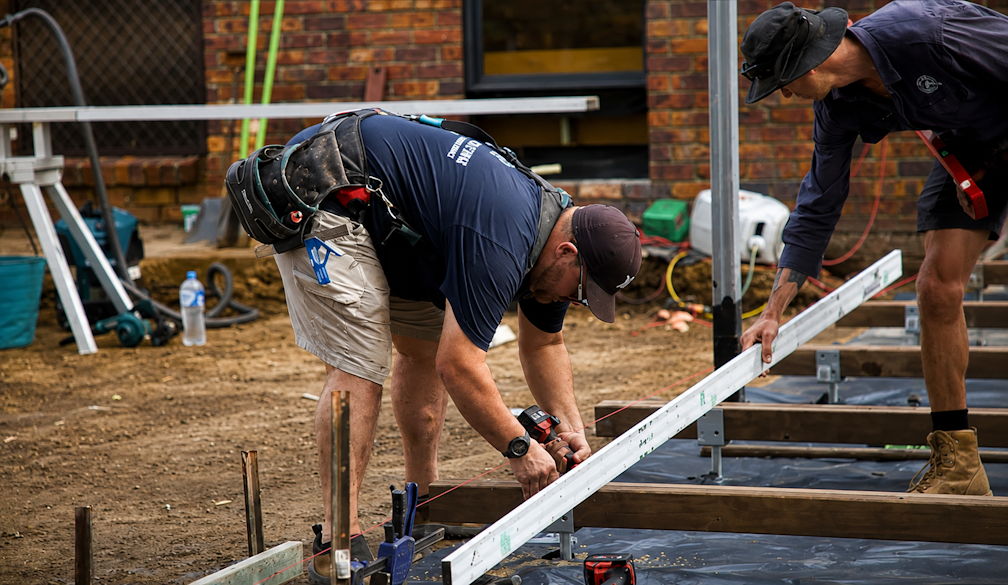
In a country where one in three homes faces termite risk, and most households live within reach of coastal humidity, Australia may be one of the harshest environments in the world for a poorly built timber deck.
With more than $12 billion spent on home renovations annually, decks have become one of the most common DIY projects, and increasingly, one of the most prone to early failure. So what’s actually causing it?
More often than not, it traces back to timber being used in conditions it wasn’t suited for, particularly in low-to-ground applications.
The geography of failure
"Coastal areas are particularly prone to wet rot and decay, and termites are a much bigger problem in the far north," says Brendan King, National Product Manager at Woodhouse Timber. "But Australia as a whole is a tough environment for timber. High humidity, storms, heatwaves, pests, most of the country is dealing with some combination of those in any given year."
What that means for timber is that performance isn’t just about being “suitable for outdoors”, it comes down to how and where it’s used. Different treatment levels are designed for different conditions, and once timber is placed outside of those conditions, its lifespan can drop off quickly.
If you’re in a coastal or termite-prone area, you’ll usually see the impact of poor timber choices a lot sooner, particularly when timber is installed too close to the ground or used in ways it wasn’t designed for.
Where DIY decks go wrong
According to King, there are two mistakes that account for the majority of premature deck failures in Australia, and both come down to timber selection rather than the quality of the build itself.
The first is using untreated timber in an outdoor environment. Even covered outdoor areas are exposed to airborne moisture, condensation, and splashback, and untreated timber in those conditions breaks down much faster. At a minimum, H3-treated timber should be used for any above-ground external application.
The second is using H3 timber on or close to the ground. H3 is an excellent product outdoors, and the industry is not suggesting otherwise, but it has a limitation: under AS/NZS 1604.1:2021, its hazard class assumes the timber will be given an opportunity to dry out between wetting cycles.
That drying window doesn’t exist within 150mm of ground level, where rising moisture from the soil is constant. H4 timber is specifically designed to handle that environment and constant moisture.
"We see H3 used right near or on the ground all the time," says King. "It's a good product in the right setting, but in that low-to-ground environment, it's not built to handle what happens there. That's where H4 needs to be used."
The hidden failure point: joists
The joists are almost always the first to rot. They sit in the part of the structure where moisture tends to collect and linger, and once fungal decay takes hold there, it can spread through the subframe surprisingly quickly.
In some cases, that process can start within just a few years, particularly when the timber hasn’t been treated or installed in a way that suits the conditions. The risk increases even more when timber sits close to the ground. Within about 400mm of ground level, moisture exposure is higher, which can lead to movement, cupping, and gradual weakening long before anything looks wrong from above.
We commonly see homeowners notice a soft board and expect a simple fix, but once the deck is opened up, they’re met with a subframe that’s been slowly deteriorating for years, out of sight and well beyond a quick repair.
If you’re thinking about a DIY deck, here’s what you need to know
The decisions that determine how a deck holds up over time are made before construction begins, and the most important one is matching timber treatment to where each component actually sits.
H3 above ground, H4 within 150mm of it, and nothing untreated outdoors, regardless of how sheltered it seems.
Beyond timber selection, designing for airflow underneath the deck, sealing any cuts or penetrations made during installation, and leaving adequate clearance from adjoining structures for pest inspection access are the details that tend to get skipped at the planning stage and paid for later.
Learn more about choosing the right timber and installing it for decking here.