The Human Connection Challenge in an AI-Powered Workplace
There’s a Friends episode where Monica’s ex-boyfriend Richard complicates her relationship with Chandler. An exasperated Chandler accuses him of the ultimate crime: “You made my girlfriend think!”
Twenty-six years later, being made to think may be something worth protecting.
As a creative person, I’ve noticed something since AI became part of my working life. I used to spend more time sitting with information, joining dots and waiting for the lightbulb moment. Now, because it’s convenient, I can ask AI to help connect those dots for me. The output can be quick, sometimes excellent, yet the experience doesn’t always feel intrinsically rewarding.
That feeling matters.
Across countless audience interactions, I’ve seen what happens when people experience an “aha” moment together. They turn towards each other. They laugh, compare what they saw and discover that someone else perceived the same thing differently. Insight becomes social.
Neuroscience is increasingly exploring this shared dimension of interaction. A 2025 Annual Review of Psychology review describes interpersonal neural synchrony as relevant to social interaction, communication, coordination and learning. Humans don’t simply exchange information; our attention, behaviour and emotional states influence one another.
Yet the way we work is changing the conditions in which those interactions happen.
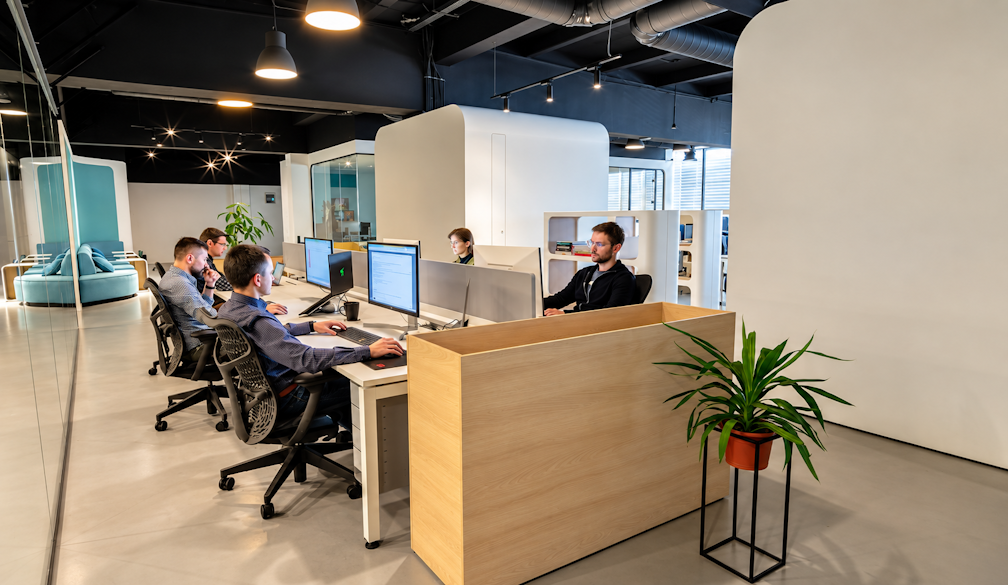
Hybrid work itself is not the enemy. A major randomised trial involving 1,612 employees found two days working from home improved satisfaction and cut attrition by a third without damaging performance. But incidental interactions that once happened simply because people were together are now less automatic.
AI adds another layer: it can reduce the need for intentional interaction too.
Why ask a colleague, “Can you help me?” when AI can answer instantly? Why organise a brainstorm when you can generate twenty ideas alone?
But not all workplace friction is wasted.
“Can you help me?” solves a problem, but also builds interdependence. “What do you think?” gathers information, but also signals that someone’s perspective matters. “I don’t know” reveals a gap, but also creates vulnerability. “Can we work through this?” takes longer, but builds shared understanding.
Research suggests AI may be changing these relationships. A 2026 Acta Psychologica study of 561 technology employees found greater AI use was associated with weaker task-based ties between colleagues, but stronger socio-emotional ties. In other words, AI may be changing what we need other humans for.
That need not mean less connection. Gensler’s 2026 survey of more than 16,400 office workers found heavy AI users reported stronger team relationships, spent less time alone and more time learning and socialising.
The opportunity is not to resist AI, but to be deliberate about the capacity it creates.
PwC’s 2026 AI Performance Study found leading organisations were more likely to incentivise AI experimentation and review what to scale, adapt or stop - creating cultures where curiosity and learning are part of adoption.
Use it as a thinking partner, not simply a thinking substitute. Let it challenge assumptions and expand perspectives, while preserving human curiosity. Ask colleagues what they see that you don’t. Protect the productive social friction of mentoring, shared learning, problem-solving, difficult conversations and being wrong together.
And remember that our behaviour is contagious. Leaders who approach AI with anxiety can spread it. So can leaders who model curiosity, experimentation, humility and learning.
AI is not necessarily disconnecting us. It may be changing the structure of our relationships - removing some practical reasons we once needed one another while making the uniquely human reasons more important.
And in an AI-powered workplace, “you made me think” may be one of the better things a colleague can say, and still gets a laugh.
About the author:
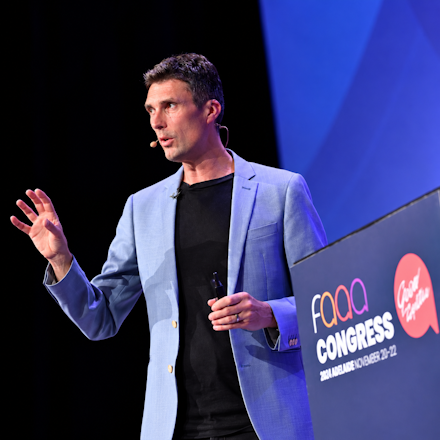
Alex Moffat is an award-winning keynote speaker, NeuroLeadership Institute Facilitator, Certified Brain-Based Coach and award-winning magician. After two decades in global organisations, including senior leadership, he helps leaders and organisations rewire their brains to adapt, inspire, embrace change and achieve lasting, measurable performance improvement. To learn more visit: alexmoffat.au.