
Australia’s Renewable Expansion and the Race to Build Grid Capacity
- Written by: Mr. Arif Aga, Director at SgurrEnergy
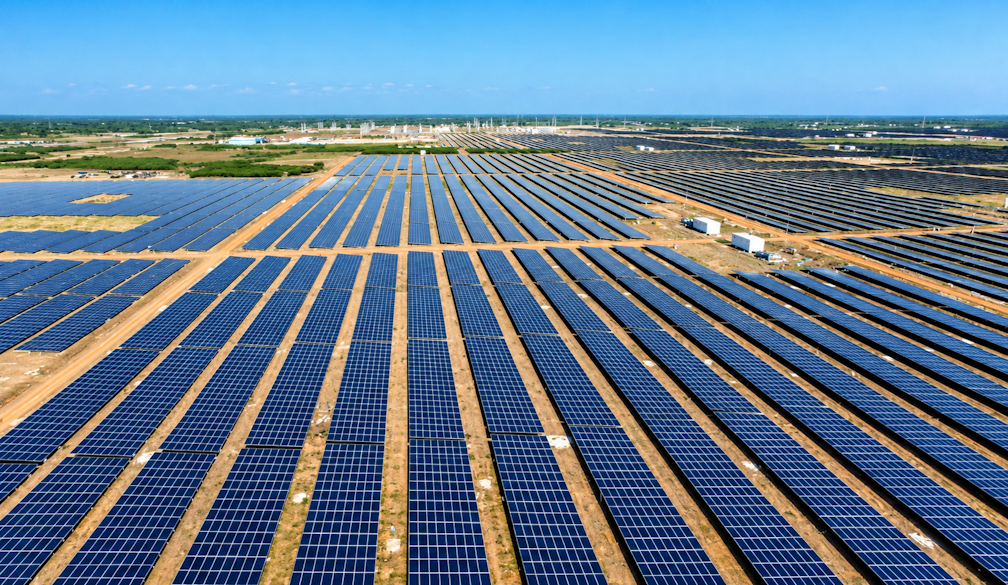
Australia has already demonstrated that renewable generation can be deployed at scale. In 2025, renewables supplied 42.7% of the country’s electricity, up from 38.9% in 2024, according to the Clean Energy Council. Rooftop solar accounted for 13.9% of national generation, with more than 4.3 million Australian households now equipped with solar systems. In the final quarter of 2025, renewables and storage supplied more than half of electricity in the National Electricity Market for the first time.
The next phase of the transition is more complex. Adding renewable capacity remains important, but increasingly the question is whether transmission, storage and grid connections can develop quickly enough to support it.
The Clean Energy Council reports that 5.9 GW of new renewable generation was completed in 2025, including rooftop solar. Utility-scale wind and solar contributed about 3.4 GW of that total. Yet only 2.3 GW of new utility-scale wind and solar reached financial commitment during the year, down 46% from 2024.
That contrast says something important about where the market is heading. Australia is not short of renewable resources or project ambition. Increasingly, project progress is being shaped by the interaction between grid access, planning and environmental approvals, congestion and curtailment exposure, project economics and the timing of supporting infrastructure.
AEMO’s 2026 Integrated System Plan illustrates the scale of that infrastructure challenge for the NEM, which covers Australia’s eastern and southern electricity markets rather than Western Australia or the Northern Territory. The plan identifies renewable generation, connected through transmission and distribution and firmed with storage, as central to the least-cost pathway as ageing coal generation retires.
Under AEMO’s Step Change scenario, around 6,000 kilometres of additional transmission is required by 2050, with a significant portion already represented by committed or anticipated projects. Major investments include HumeLink, Project Energy Connect Stage 2, the Central-West Orana Renewable Energy Zone network and Project Marinus Stage 1.
These investments reflect a structural feature of the transition: renewable resource zones and major centres of electricity demand do not always coincide. Transmission therefore has to develop alongside generation, allowing new renewable zones to connect, improving electricity transfers between regions and reducing the risk that projects are ready before adequate network capacity is available.
For developers and investors, this is also reshaping how project bankability is assessed. Resource quality and equipment costs remain fundamental, but connection capacity, system strength, congestion and potential curtailment can materially influence operating performance and revenue expectations. Grid studies and energy-yield analysis are therefore increasingly relevant earlier in project development, with assumptions considered against applicable technical requirements, market arrangements and network conditions.
Storage forms another part of the equation. In 2025, 4.3 GW of new large-scale battery capacity reached financial commitment and about 2 GW was commissioned, according to the Clean Energy Council. Batteries can shift renewable generation into periods of higher demand, provide fast-response grid services and improve the utilisation of constrained network capacity. They are an increasingly important part of system flexibility, but they do not remove the need for transmission.
Australia’s extensive rooftop solar base adds another dimension. Millions of homes are now both consumers and generators of electricity, creating increasingly dynamic two-way power flows. As household storage expands, coordinating distributed energy resources with utility-scale generation, batteries and network infrastructure will become an increasingly important part of system operation.
The implications extend beyond the renewable-energy industry. AEMO’s 2026 Electricity Statement of Opportunities forecasts NEM electricity consumption to increase by more than 40% over the coming decade as electrification, industrial activity and data-centre demand grow. At the same time, around 15 GW of coal and gas generation is scheduled to retire. AEMO's latest outlook identifies a pathway to maintain reliability, while making clear that continued investment in generation, storage, transmission and consumer energy resources will be required as the system evolves.
Delivering that infrastructure is not simply an engineering exercise. Planning and environmental approvals, land access and community engagement can all influence project schedules. Conditions also vary significantly between jurisdictions. Different generation mixes, network characteristics and planning frameworks mean national capacity figures alone cannot describe the risks or opportunities facing an individual project.
This is where the transition increasingly becomes a question of integration rather than individual technologies.
SgurrEnergy’s experience across international renewable-energy markets has consistently reinforced the importance of looking at generation, grid infrastructure and storage as an interconnected system rather than separate investment decisions. In Australia, as in any market undergoing rapid power-system change, those principles have to be considered within the specific network, regulatory, commercial and project conditions in which an asset will operate.
For developers, lenders and investors, the value of independent engineering is increasingly in understanding those interfaces early: where grid constraints may affect performance, how storage changes the operating case, whether technical assumptions remain robust, and how infrastructure timing can influence long-term project viability.
Australia’s next phase of renewable expansion will therefore be defined not only by how much capacity is proposed, but by how effectively projects can be connected, financed and operated within an evolving electricity system. The race to build grid capacity is ultimately a race to convert renewable potential into dependable, investable and resilient energy infrastructure.