The Times Australia
Google AI
The Times Australia
.

How housing precarity makes life hard for older Australians

  • Written by Piret Veeroja, Research Fellow, Housing, Homelessness and Urban Studies (HHAUS) Research Group, Swinburne University of Technology


Australia’s ageing population is colliding with a housing system under strain. More older Australians are facing multiple, often overlapping forms of housing precarity, including homes that cost too much or fall short on basic standards – or both.

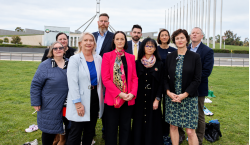
New research[1], launched today at Parliament House and commissioned by Housing for the Aged Action Group (HAAG), shows that such forms of housing precarity are affecting the health, wellbeing and financial hardship of mid-life and older Australians. They are also harming private renters and women the most.

Housing’s central role in ageing well

Housing has long been central to ageing well. Secure housing provides not only shelter, but stability, safety, autonomy and a place of care[2].

For decades, policy assumed most Australians would retire as outright homeowners[3], benefiting from tenure security and low housing costs. This assumption underpinned modest age pensions, based on the expectation that recipients were not paying rent or mortgages.

That model is weakening. More people are approaching later life with mortgage debt or in private rental[4] – tenures that offer less security and have higher costs. This means mid-life and older Australians face risks that can compound when they leave the workforce or face declining health.

What we studied

Our report draws on the Australian Housing Conditions Dataset[5] (2024), a national survey. We analysed responses from 6,008 people aged 50 and over, weighting the data to match ABS Census distributions.

We developed four housing profiles combining perceived affordability and self-reported dwelling condition:

  • unaffordable and poor condition
  • unaffordable and good condition
  • affordable and poor condition
  • affordable and good condition.

Who is most affected?

Private renter households face the greatest exposure. Nearly one-third (31%) of private renters live in homes that are both unaffordable and in poor condition. Only one-quarter live in affordable, good condition homes. Mortgaged households fare better, but 16% still live in unaffordable, poor condition homes.

Gender matters. Women are more likely than men to live in unaffordable, poor condition housing, whether they rent or own. They are also more likely to live in homes with multiple problems, such as cracks, mould, plumbing issues, and report worse wellbeing outcomes.

Health impacts are stark. Among private renter households in unaffordable, poor condition homes, 53% report poor physical health and 49% poor mental health. Comparable figures for mortgaged households are 42% and 41%. Housing also affects social life and financial security: 79% of private renters in unaffordable, poor condition homes say housing has a negative impact on their finances, and more than half report negative effects on their social lives.

Financial strain is severe. One-third of private renter households (34%) in unaffordable, poor condition homes cannot afford essentials, such as food, bills or clothing after paying for housing. Savings and investments are difficult for these groups, with 88% unable to save or invest.

Housing instability compounds these risks. Sixty percent of private renter households have moved in the past five years, and nearly half expect to move again within the coming five years. They expect to move due to cost pressures or fear of rent increases. Short leases (six-12 months) are common, adding to insecurity.

How to make housing more secure

Our findings highlight several priorities for reducing housing precarity among mid-life and older Australians. First, targeted responses are needed for groups most exposed to risk; particularly women, single-person households, and those living in older housing stock.

Second, housing policy should be better integrated with health and ageing agendas. Good-quality housing is closely linked to physical and mental health outcomes, and cross-sector planning can support ageing in place[6] and can reduce pressures on health and aged-care systems.

Third, expanding the supply of affordable and appropriate housing remains critical. This includes well-located private and social rental options, ownership opportunities, alternative models such as co-housing, and homes that are age-appropriate, and designed for accessibility and proximity to services.

Fourth, improving housing data and monitoring will help track risks and inform responsive policy. Linking housing data with health, aged care, and income support datasets is essential for evidence-based planning.

Finally, while rental standards and mortgage support were raised in participant responses, these areas require careful consideration. Ensuring minimum standards are met and exploring options for short-term financial assistance for mortgaged households could help improve housing security.

Older Australians deserve better housing

Housing precarity among mid-life and older Australians is not just a housing issue. It affects health, aged care, and social services. Without action, inequalities[7] will deepen and public costs may rise. Poor housing conditions, such as damp, mould[8] and indoor temperature[9], increase the risk of chronic illness. Financial strain limits independence and the ability to age well.

This is a structural problem, not an individual problem. It demands coordinated policy responses across housing, health, and retirement income systems.

References

  1. ^ New research (doi.org)
  2. ^ place of care (theconversation.com)
  3. ^ retire as outright homeowners (theconversation.com)
  4. ^ with mortgage debt or in private rental (theconversation.com)
  5. ^ Australian Housing Conditions Dataset (dataverse.ada.edu.au)
  6. ^ ageing in place (theconversation.com)
  7. ^ inequalities (www.who.int)
  8. ^ damp, mould (theconversation.com)
  9. ^ indoor temperature (theconversation.com)

Read more https://theconversation.com/expensive-and-in-bad-shape-how-housing-precarity-makes-life-hard-for-older-australians-270292

Shocking true cost of BOM’s disaster website revealed at $96 million

Leader of The Nationals David Littleproud said there should be consequences after revelations the Bureau of Mete...

Times Magazine

Australia’s electric vehicle surge — EVs and hybrids hit record levels

Australians are increasingly embracing electric and hybrid cars, with 2025 shaping up as the str...

Tim Ayres on the AI rollout’s looming ‘bumps and glitches’

The federal government released its National AI Strategy[1] this week, confirming it has dropped...

Seven in Ten Australian Workers Say Employers Are Failing to Prepare Them for AI Future

As artificial intelligence (AI) accelerates across industries, a growing number of Australian work...

Mapping for Trucks: More Than Directions, It’s Optimisation

Daniel Antonello, General Manager Oceania, HERE Technologies At the end of June this year, Hampden ...

Can bigger-is-better ‘scaling laws’ keep AI improving forever? History says we can’t be too sure

OpenAI chief executive Sam Altman – perhaps the most prominent face of the artificial intellig...

A backlash against AI imagery in ads may have begun as brands promote ‘human-made’

In a wave of new ads, brands like Heineken, Polaroid and Cadbury have started hating on artifici...

The Times Features

Worried after sunscreen recalls? Here’s how to choose a safe one

Most of us know sunscreen is a key way[1] to protect areas of our skin not easily covered by c...

Buying a property soon? What predictions are out there for mortgage interest rates?

As Australians eye the property market, one of the biggest questions is where mortgage interest ...

Last-Minute Christmas Holiday Ideas for Sydney Families

Perfect escapes you can still book — without blowing the budget or travelling too far Christmas...

98 Lygon St Melbourne’s New Mediterranean Hideaway

Brunswick East has just picked up a serious summer upgrade. Neighbourhood favourite 98 Lygon St B...

How Australians can stay healthier for longer

Australians face a decade of poor health unless they close the gap between living longer and sta...

The Origin of Human Life — Is Intelligent Design Worth Taking Seriously?

For more than a century, the debate about how human life began has been framed as a binary: evol...

The way Australia produces food is unique. Our updated dietary guidelines have to recognise this

You might know Australia’s dietary guidelines[1] from the famous infographics[2] showing the typ...

Why a Holiday or Short Break in the Noosa Region Is an Ideal Getaway

Few Australian destinations capture the imagination quite like Noosa. With its calm turquoise ba...

How Dynamic Pricing in Accommodation — From Caravan Parks to Hotels — Affects Holiday Affordability

Dynamic pricing has quietly become one of the most influential forces shaping the cost of an Aus...