Australia Reacts: The Federal Budget
- Written by: The Times
Australia’s federal budget has landed with the familiar combination of applause, outrage, relief, scepticism and political theatre that now accompanies every major economic statement from Canberra.
Within hours of Treasurer Jim Chalmers delivering the government’s fiscal blueprint, politicians, business leaders, welfare advocates, property developers, economists and ordinary Australians had begun dissecting what the budget really means — and whether Australians are genuinely better off or merely being told they are.
The government says the budget is responsible, disciplined and designed to protect Australians from global uncertainty while investing in the future.
Critics say it is a politically timed balancing act that spends heavily while attempting to disguise structural economic weakness.
Somewhere between those two positions lies the political and economic reality facing modern Australia.
Labor’s Message: Stability, Fairness and Relief
Government ministers immediately defended the budget as a responsible response to inflation pressures, housing shortages, global instability and rising living costs.
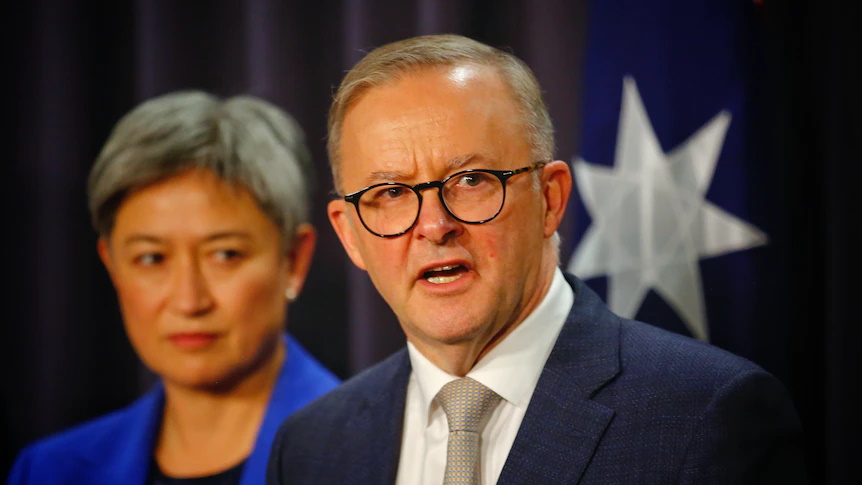
Prime Minister Anthony Albanese described the budget as one aimed at “helping Australians under pressure while building for the future.”
Treasurer Jim Chalmers argued the government was attempting to navigate difficult global conditions while protecting jobs, strengthening Medicare, funding infrastructure and supporting lower and middle-income households.
Labor MPs repeatedly highlighted measures involving health care, energy rebates, housing construction incentives, student debt adjustments and targeted support programs.
Government backbenchers especially focused on cost-of-living relief.
For Labor, the political message is straightforward: Australians are hurting financially, and the government is attempting to soften the blow without creating further inflation.
Ministers also stressed Australia’s comparatively strong employment figures and resilient economy compared to many advanced nations.
Privately, however, many within Labor understand the political danger remains significant.
Australians may acknowledge global pressures, but voters still judge governments primarily through their own household finances.
And many households remain under severe stress.
The Opposition: Spending, Debt and Broken Promises
The Coalition opposition wasted little time attacking the budget as overly optimistic, heavily dependent on taxation growth and lacking deeper structural reform.
Shadow Treasurer Angus Taylor is expected to focus heavily on debt, inflationary pressures and what the Coalition sees as excessive government spending.
Opposition MPs have already begun framing the budget as a document built on “temporary relief rather than long-term economic repair.”
Coalition figures argue that despite headline support measures, Australians continue facing elevated mortgage costs, expensive groceries, rising insurance premiums, higher rents and declining confidence.
Some Liberal and National Party MPs have also criticised the government’s industrial relations agenda, arguing business confidence is being undermined by increased regulation and uncertainty.
Others have targeted migration settings and housing policy, claiming the government has failed to adequately address housing supply constraints while population growth accelerates.
The Coalition’s broader strategy appears clear: argue Australians are working harder but falling behind financially under Labor.
Property Developers: “We Need Supply, Not Slogans”
Property developers have reacted cautiously.
Many welcomed infrastructure commitments and housing construction incentives but warned that taxation burdens, planning delays, labour shortages and financing costs continue to restrict housing supply.
Several industry representatives argued governments across Australia continue to speak about affordability while simultaneously imposing costs that make construction more expensive.
Developers say the mathematics of residential construction has become increasingly difficult.
Land costs remain high.
Construction materials remain expensive.
Insurance costs have surged.
Trades remain difficult to secure.
Interest rates continue affecting financing.
Some developers privately argue that governments have become addicted to collecting taxes and charges from new housing projects while publicly complaining about affordability problems.
The industry broadly supports faster approvals, reduced planning complexity and measures encouraging institutional investment into housing supply.
However, many developers remain sceptical that current policies will materially improve affordability in the short term.
Real Estate Agents: The Market Wants Certainty
Real estate professionals responded with a mixture of realism and concern.
Agents across major cities report that buyers remain active but cautious.
Affordability constraints continue reshaping the market.
First-home buyers remain under pressure despite various government assistance measures.
Investors continue weighing tax settings, interest rates and rental demand.
Some agents believe the budget may modestly support confidence if inflation eases and interest rates eventually stabilise.
Others say Australians have become fatigued by economic uncertainty and no longer respond strongly to budget announcements.
There is also growing concern that many younger Australians increasingly view home ownership as unattainable without family assistance.
Real estate professionals note that sentiment matters enormously in property markets.
When consumers feel uncertain about employment, taxation or borrowing costs, they delay major purchasing decisions.
The market therefore continues watching both inflation data and the Reserve Bank closely.
Welfare Organisations: “Many Australians Are Still Falling Through the Cracks”
Welfare groups broadly welcomed additional support measures but argued the budget still leaves vulnerable Australians struggling.
Charities and advocacy organisations say demand for assistance remains elevated across food relief, emergency accommodation and financial counselling services.
Many organisations continue calling for more substantial increases to income support payments.
Some welfare advocates argue Australia’s broader economic debate increasingly overlooks those living permanently near the edge of financial collapse.
Rising rents, energy bills and food costs continue affecting lower-income Australians disproportionately.
Several organisations also warned that inflation impacts remain deeply uneven across society.
Higher-income Australians may absorb price increases.
Those on fixed or limited incomes often cannot.
Some welfare leaders welcomed healthcare and housing measures while simultaneously arguing the government remains too cautious politically to undertake larger welfare reform.
The Public Mood: Sceptical, Tired and Financially Pressured
Perhaps the most striking feature of the budget reaction is not outrage or enthusiasm, but exhaustion.
Many Australians no longer expect budgets to dramatically improve their lives.
Instead, they look for signs that things may stop getting worse.
Mortgage holders remain anxious.
Renters remain frustrated.
Businesses remain cautious.
Young Australians increasingly question whether traditional financial milestones remain achievable.
Older Australians worry about retirement costs, healthcare access and taxation changes affecting accumulated assets.
Meanwhile, workers continue experiencing the contradiction of historically low unemployment alongside persistent cost-of-living stress.
Australians are employed — but many still feel financially insecure.
That creates a politically volatile atmosphere.
Lies or Necessary Changes?
Every budget involves selective presentation.
Governments emphasise benefits.
Oppositions emphasise pain.
This budget is no different.
Labor insists difficult decisions are necessary to maintain fiscal stability while protecting vulnerable Australians.
Critics argue governments routinely announce “temporary” measures that become permanent spending commitments while avoiding deeper reform.
The truth may ultimately depend on economic outcomes over the next 12 to 24 months.
If inflation moderates, employment remains strong and interest rates eventually ease, Labor will argue the budget succeeded.
If living standards continue deteriorating, critics will say Australians were sold optimism rather than reality.
Modern federal budgets are increasingly political documents as much as economic ones.
Governments seek not merely to manage finances but also to shape national mood.
What Will Angus Taylor Say?
Political observers expect Angus Taylor’s budget reply speech to focus on several core themes.
First, debt and deficits.
The Coalition is likely to argue Labor has become addicted to spending while leaving future generations exposed to mounting financial obligations.
Second, productivity and business confidence.
Taylor is expected to argue Australia requires stronger private-sector growth, investment incentives and regulatory restraint.
Third, inflation and living standards.
The Coalition will likely emphasise that many Australians still feel poorer despite government support programs.
Fourth, energy and economic competitiveness.
Expect criticism of Labor’s energy transition policies, particularly regarding reliability, affordability and industrial competitiveness.
Finally, housing.
Taylor is likely to argue Labor has failed to match migration growth with sufficient housing supply.
The speech will almost certainly attempt to position the Coalition as economically disciplined while portraying Labor as politically opportunistic.
Will the Teals Support Labor?
The so-called “teal” independents occupy a fascinating position in federal politics.
On issues involving climate policy, integrity reforms and some social programs, the teals often align more closely with Labor than the Coalition.
However, they also seek to maintain independent identities and represent electorates with economically moderate and professionally affluent voter bases.
Most analysts expect the teals to support significant portions of the budget framework while criticising aspects relating to climate ambition, transparency or fiscal priorities.
The teals are unlikely to become automatic Labor allies on every issue.
But neither are they likely to support a broad Coalition campaign opposing most budget measures outright.
Their political power partly depends on maintaining separation from both major parties.
Labor Controls Both Houses: The Danger of Hubris
One of the most consequential political realities emerging from this parliamentary term is Labor’s strengthened legislative position.
Governments controlling both houses — or effectively controlling legislative outcomes through supportive crossbench arrangements — often become more ambitious.
History suggests that can produce both reform and overreach.
Supporters argue strong parliamentary control allows governments to implement coherent long-term policy.
Critics warn it can create arrogance, complacency and ideological excess.
Australian politics has repeatedly shown that governments appearing politically invincible can rapidly lose public support.
Voters often reward governments for competence but punish perceived arrogance.
That risk now hangs over Labor.
The government may view electoral success as a mandate for broader reform.
Opponents warn it could instead become a pathway toward political hubris.
For Australians watching another budget unfold amid inflation, housing stress and geopolitical uncertainty, the question may not simply be whether the budget succeeds economically.
It may also be whether the government remembers that political dominance in Australia is rarely permanent.