Unemployment is staying low at 3.5%. But for those out of work, here's why it's become harder to get a job
- Written by: Jeff Borland, Professor of Economics, The University of Melbourne
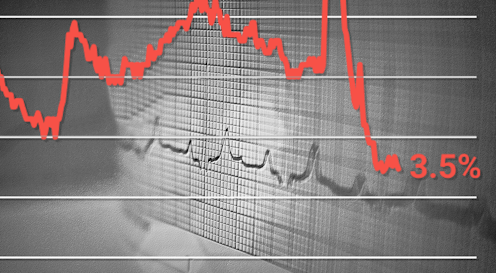
Slower employment growth, faster population growth and a steady rate of unemployment are the main stories from the Bureau of Statistics’ labour force[1] update, released on Thursday.
Employment climbed by 32,600 between May and June, while the population grew 49,900. The rate of unemployment (happily) remains fixed at 3.5 per cent, although to two decimal places, it fell from 3.55% to 3.47%.
This story isn’t new. The waning of the Delta wave of COVID-19 from late 2021 brought a strong recovery in the demand for workers. Even after the immediate bounce-back from lockdowns, employment grew impressively.
Read more: Australia is on the brink of ending interest rate hikes and an economic first – beating inflation without a recession[2]
In the nine months from November 2021, total employment increased by an average of 55,000 per month – double the 20,000 to 30,000 common before COVID.
Thereafter, employment growth has grown more slowly, by an average of 35,600 per month since August 2022.
Population growth has climbed as employment growth has slowed. During the nine months to August 2022, in which major restrictions on immigration remained, it averaged 37,200 per month.
After that time, with those restrictions removed, population growth averaged 50,300 per month.
Who is getting work has been changing
Mid-2022 didn’t just mark a change in the pace of employment growth. It also marked a shift in the sources of employment growth[3].
Up to August 2022, extra workers had been drawn from unemployment and from new entrants joining the labour force, as well as from population growth.
But since August 2022, employment growth has come almost entirely from population growth. The rates of unemployment and of labour force participation have remained largely constant.
Why unemployment didn’t jump
A combination of slowing job growth and faster population growth ought to have pushed up the unemployment rate. But so far that hasn’t happened.
Having hit a low of 3.5% in August 2022, unemployment has stayed there pretty much the whole time since.
The reason is our record level of job vacancies. Fewer new jobs are being created, but an unusually high number of vacancies is keeping demand for workers high.
New entrants to the labour force have been able to take up those vacancies, rather than becoming unemployed.
Where population growth coming from
The higher rate of population growth is coming from increased immigration, a term that encompasses international students and working holidaymakers.
Net overseas migration (the extent to which arrivals exceed departures) averaged 23,270 per month in the first half of 2022, and then 35,200 in the second half.
A big part of the growth is from the return of international students and working holidaymakers.
Unsurprisingly, the biggest reductions in job vacancies came in the occupations where these temporary visa holders make up the largest shares of the workforce.
Since mid-2022, the vacancy rate for food trades workers has fallen from 4.4% to 3.0%, the largest fall by far of any occupation group.
Vacancy rates for hospitality and food preparation workers have each fallen by about three quarters of a percentage point.
Where to from here
Continued (now modest) growth in new job creation, together with the huge backlog of vacancies, might well allow the rate of unemployment to remain around its current level – even with a high rate of population growth.
Whether that does indeed happen depends on how future growth in new jobs is affected by actions of the Reserve Bank aimed at dampening economic growth.
So far, these actions have slowed the jobs market, but haven’t sent it into a tailspin.
Whether that remains the case will be the story to watch in the coming months.
References
- ^ labour force (www.abs.gov.au)
- ^ Australia is on the brink of ending interest rate hikes and an economic first – beating inflation without a recession (theconversation.com)
- ^ sources of employment growth (cdn.theconversation.com)
Authors: Jeff Borland, Professor of Economics, The University of Melbourne