Google AI
The Times Australia

Times Media

Beyond bricks and mortar: Building socially connected communities is Australia’s next big challenge
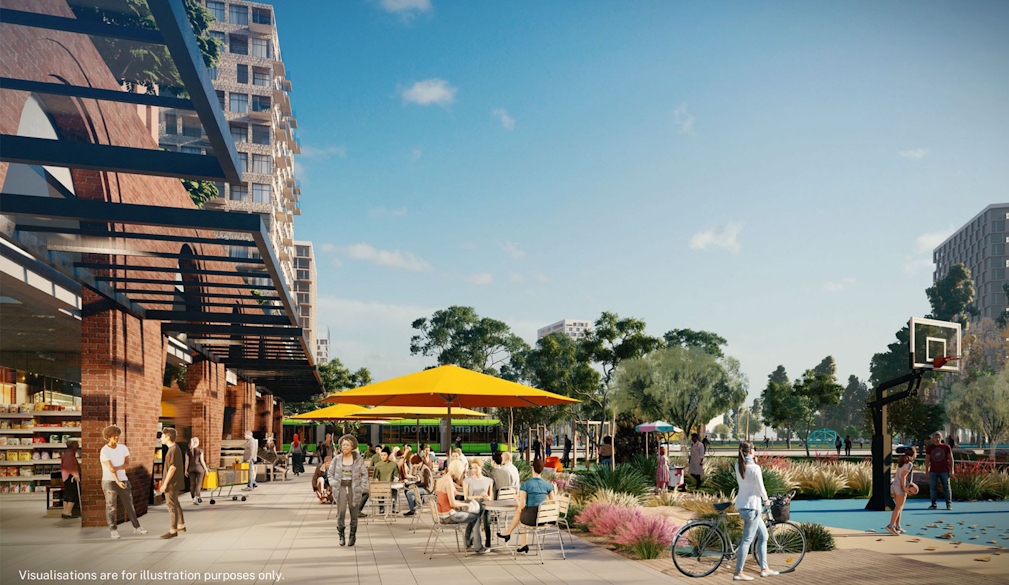

As state governments rush to deliver thousands of homes across the major capitals,1 one of the nation’s leading urban planners warns we must build transit based, mixed-use, walkable neighbourhoods in concert with dwellings, or risk further deterioration of our social fabric. 


Mike Day – a Partner at global urban solutions, engineering and project management firm Hatch – is a prominent, multi-award-winning figure in urban planning and transportation. He is a Fellow of the Planning Institute of Australia, a member of Melbourne’s Liveability + Urban Optimisation Standing Committee and has been instrumental in steering visionary urban planning initiatives and leading design teams responsible for transformative projects across Oceania, the UAE and Asia. 


Mike says Australia’s crime rates are too high and rising, our mental health is poor and loneliness is at epidemic levels, with fragmented communities contributing to the problem


In June this year, the ABS’s 2023 Recorded Crime – Victims report recorded an 11 per cent surge in sexual assault, a 10 per cent rise in motor vehicle theft, and a 6 per cent rise in unlawful entry with intent YoY.2 Recent figures suggest loneliness now affects nearly one in four Australians.3 In Queensland, figures show offences against a person soared 4.8 per cent from July 2023 to July 20244. In NSW, unarmed robbery rose to an eyewatering 13 per cent in 2023.5  


In his decades of urban planning and design experienceMike has seen the positive impact that sound community design has on the health of residents and their social cohesion, safety and even crime rates. Studies across the globe have revealed the link between street design, community facilities and mixed-use urban hubs, including local workplaces, and a strengthened social fabric.6 


AAustralia continues to grapple with a severe housing shortage,7 he warns governments must provide more than bricks and mortar. 
 

The National Housing Accord says Australia needs 1.2 million new well-located homes over the next five years,8 while experts say a construction lag will likely lead to a shortfall of 400,000 homes.9 


Mike says: The anticipated shortfall is only going to fuel the construction boom and therein lies an opportunity. While neighbourhood design can’t completely arrest crime rates, studies show walkable neighbourhoods that foster safety, and inclusion can help mend our fraying social fabric.10 


House size, neighbourhood designlocal workplaces, public transport access, green spaces and community hubs are the key ingredients for connected and safe communities and one of the best places to see this at play is in Vauban in Germany.11 By creating connected, walkable and green neighbourhoods with community centres it has fostered social and environmental sustainability.12 And residents use a bicycle almost 40 per cent more than they did prior to moving there.13  


Mike points to Future Fremantle as an Australian example where place-making is at the forefront of future city plans. There, Hatch is collaborating with the State Government to transform the city into a world-class destination focused on residents' wellbeing by adopting the United Nations' Sustainable Development Goals centred around equity, resilience, wellness, and competitiveness with an emphasis on walkability, sustainable transport, and community amenities.14  


He says the nation has an opportunity to replicate this, particularly as Sydney rolls out its 2050 Sydney Olympic Park initiative15 to increase the locality’s population by 471 per cent to 30,000 residents by 2050. In Melbourne, the Victorian Government has also launched Australia's largest urban renewal project, planning to redevelop all 44-ageing high-rise public housing estates.16 


“As we rush to deliver thousands of homes amid this construction boom, we must also focus on developing more modest dwellings and prioritising placemaking,” says Mike. 


This will involve shaping transit based, compact, connected, mixed-use walkable neighbourhoods with discernible centres and well-defined edges, and incorporating community facilities that strengthen the social fabric and alleviate cost-of-living hikes and rising rates of homelessness.17 


“There is compelling evidence demonstrating the impact of attainable housingopen space amenity and access to public transit on managing crime,18 with one study in Barcelona even showing bolstered community ties significantly reduces young offender crime rates,”19 says Mike. 


This is now an economic and social imperative for Australia. 


Times Lifestyle

Why We Travel: The Timeless Search for Somewhere Different

Every year, billions of people pack a suitcase, lock the front door and set off for somewhere else. Some fly halfway around the world to explore ancient cities. Others drive a few hours to a country town, a beachside apartment or a quiet cabin in t...

A Relationship Expert Reveals the Real Key to a Stronger Relationship

For a long time, we have romanticised the idea that a strong relationship means finding someone who can be your everything. Your best friend. Your confidant. Your emotional support system. The person who understands every part of you and meets ever...

How Australia's Childcare Crisis Is Taking a Toll on Parents - and What One App Is Doing About It

Australian mums and dads are increasingly anxious, exhausted, and distrustful of Australia’s childcare system - and the nation's headlines are a big reason why. Confidence in the Australian childcare industry has been shaken after dangerous practice...

Australia’s Changing Family Dynamic: When Adult Children Stay Home Longer

Australia’s housing affordability crisis is no longer simply an economic issue. It is reshaping the structure of the Australian family itself. Across the country, more young adults are remaining in the family home longer than previous generations...

The Arrival of Winter: More Than Just a Date on the Calendar

Winter arrives quietly in Australia. There is no dramatic wall of snow sweeping across the nation and no frozen months that completely shut down daily life. Yet when the seasons change, Australians feel it almost immediately. The arrival of winter ...

Australian mum creates Sandy Baby wipes to remove sand from baby bums

I’m Yaz, founder and mumma behind Sandy Baby®, an Australian designed and owned brand that was created from one very real parenting problem… I was sick of putting dry nappies onto sandy bums. Living near the beaches of Jervis Bay, beach days were ...

Times Magazine

Will Travis Kelce follow the athlete silicone ring trend?

From the NFL to the All Blacks, professional athletes have been ditching metal for silicone rings. W...

The AI economy: How artificial intelligence is creating the jobs of tomorrow in Australia

Artificial intelligence has become one of the most discussed technologies of the decade, often acc...

Yoga and Tai Chi: Why Simple Movement Still Inspires Millions

In a world of high-intensity workouts, fitness technology and ever-changing exercise trends, two a...

Technology

Why Australian Enterprises Are Reth…

The corporate landscape in Australia has undergone a permanent structural shift over the past few ...

Local News

Fremantle Ports to trial project to…

Fremantle Ports has partnered with Byssal and DevelopmentWA to trial an innovative nature-based pilo...

Culture

Is Fast Food Really Food?

It is a question that sounds provocative, but it goes to the heart of a growing debate about what ...

Travel

Overtourism: Why Some of the World's Mos…

For decades, attracting more visitors was the goal of tourism authorities around the world. More t...

The Times Features

Is Fast Food Really Food?

It is a question that sounds provocative, but it goes to the heart of a growing debate about what ...

Ultra-Processed Foods: The Hidden Ingredient in the Mod…

Walk through almost any Australian supermarket and much of what fills the shelves has one thing in...

Is Red Wine Good for the Human Body?

Red wine has long enjoyed a reputation as the healthiest alcoholic drink. From the vineyards of Fr...