



Ukraine might be far away, but a security crisis in Europe can still threaten Aotearoa New Zealand
- Written by: Sascha-Dominik (Dov) Bachmann, Professor in Law and Co-Convener National Security Hub (University of Canberra), University of Canberra
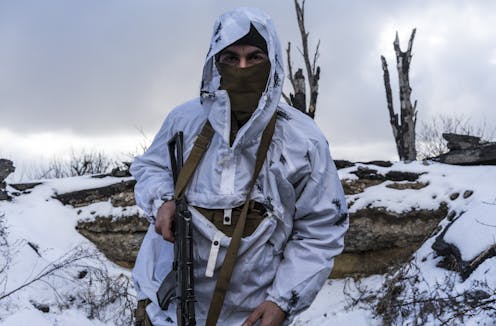
A geopolitical earthquake could begin within weeks. As a string of bilateral crisis talks predictably falter[1], further military aggression by Russia against Ukraine seems all too probable[2].
If this comes to pass, the shock waves will likely be fast, wide and highly disruptive, potentially activating “tripwires” in the global security environment far beyond the edge of Europe.
Aotearoa New Zealand’s geographical distance will be no defence against the rolling consequences of a protracted crisis involving great powers and their allies. Yet there has been relatively little discussion in New Zealand about these threats.
This leaves the country at risk of being blindsided by events in an increasingly polarised world. New Zealand’s enviably peaceful and prosperous way of life depends on secure maritime trade routes, reasonable market conditions and a stable global security order.
The Ukraine situation carries the real risk of snowballing into a crisis on many fronts, shaking that stability in the process.
While speculation is always risky, there are real indications[3] that trouble is coming. So it is worth mapping a range of scenarios that could emerge if Ukraine becomes a test of wills involving multiple major powers – and what this could mean for Aotearoa.
A chain reaction
Moscow surely knew its ultimatums to NATO were only ever going to be rejected; there is little room left for successful negotiation. If Russia opts to invade, it will happen sooner rather than later[4], eliciting an instant punitive response[5] from the West.
Russia has already warned of “grave consequences” if Washington makes good on its threats of unprecedented, far-reaching sanctions that could even include expelling Russia[6] from the SWIFT banking system[7].
Read more: Russia-Ukraine tensions: power posturing or trouble on the home front for Putin?[8]
In reply, the Kremlin would almost certainly further weaponise energy supplies[9] to European nations, including de facto EU leader Germany.
A war in Ukraine and the need to counter Russia’s aggression would, without doubt, affect the global COVID-19 economic recovery[10]. For example, Europe derives around 40% of its natural gas from Russia. Disruptions in energy flows would magnify destabilisation far beyond the borders of Europe.
In turn, this would shake financial markets and supply chains, raising the prospect of increased inflationary pressure in an already COVID-battered world economy. The closure of the SWIFT banking system for any transactions with Russia, as well as trade sanctions, will only add to this economic disruption.
A widening crisis
As a nation that derives much of its prosperity from exports and relies on the stable functioning of the global trade system, Aotearoa New Zealand would clearly be affected by this. But if the standoff between Russia and the US persists, matters could get much worse.
To punish Biden, Moscow – and/or Beijing as Russia’s current security partner[11] – may well use its sway over Tehran to dampen the prospects of a nuclear deal with Iran. The Biden administration has hoped to secure such a deal, but Russia has arguably never even wanted it[12], despite pretensions otherwise.
Read more: Explainer: what is 'hybrid warfare' and what is meant by the 'grey zone'?[13]
This could precipitate a wider international security crisis across multiple domains, altering the strategic calculations of key Middle Eastern states.
The US would then face a fresh set of dilemmas, weakening its hand as it tries to manage the tensions between allies that such a situation would create. And a protracted stress test for the US-led security alliance would present a tempting opportunity for China to exploit.
If US allies vacillate over Ukraine, China may use the moment to escalate non-military aggression against Taiwan, or increase its provocative posturing in the South China Sea. This would increase the challenges for the global rule-based order.
Impact on the Indo-Pacific region
New Zealanders are resilient and may be able to weather the ripple effects of one or more of the above. But if crisis spreads to the Indo-Pacific, another layer of pressure will be added.
A drawn out naval exchange in either location would potentially disrupt shipping and the flow of much of the world’s manufactured goods, delivering yet another blow to societies vulnerable to market turbulence.
And a direct invasion of Taiwan – unlikely but not unthinkable in the near term – would alter the strategic architecture of the region permanently.
Read more: Russia and the West are at a stalemate over Ukraine. Is Putin's endgame now war?[14]
While this risk may seem remote, it is not a paranoid projection: Kremlin think tanks, such as Russtrat[15], have boasted of Sino-Russian capacity for overwhelming Washington and its allies through multiple-front confrontation.
And there is evidence already of concerted cyber and information operations from Moscow and Beijing against Western targets, ranging from cyber attacks[16] to information warfare[17] aimed at undermining democratic societies’ trust in their institutions and leaders.
Forewarned is forearmed
Of course, none of this may happen. The purpose of this article is to call for greater awareness and debate concerning these geopolitical challenges to a liberal democracy and its way of life.
Aotearoa New Zealand occupies a strategically important space in the Indo-Pacific region, set to be the key theatre of 21st century great power competition. The threat of an increasingly militarised South Pacific looms, as do the economic and security risks of a falling out with China, as New Zealand’s foreign minister has warned[18].
Collective resilience is only possible when citizens are reasonably aware of a threat well in advance of it reaching a critical state. By contrast, a limited public conversation about future risk is a virtual invitation for trouble.
A forewarned, empowered citizenry will be better placed to face the future, and more likely to deal with its challenges rationally. So, whether or not the situation in Ukraine is resolved, we should turn up the volume on this conversation.
The author acknowledges the assistance of Emanuel Stoakes, affiliate researcher with the National Security Hub at the University of Canberra, in the preparation and writing of this article.
References
- ^ predictably falter (www.theguardian.com)
- ^ all too probable (www.washingtonpost.com)
- ^ indications (www.news.com.au)
- ^ sooner rather than later (www.nytimes.com)
- ^ punitive response (www.aljazeera.com)
- ^ expelling Russia (www.reuters.com)
- ^ SWIFT banking system (www.investopedia.com)
- ^ Russia-Ukraine tensions: power posturing or trouble on the home front for Putin? (theconversation.com)
- ^ weaponise energy supplies (www.theguardian.com)
- ^ COVID-19 economic recovery (www.barrons.com)
- ^ security partner (www.reuters.com)
- ^ never even wanted it (www.atlanticcouncil.org)
- ^ Explainer: what is 'hybrid warfare' and what is meant by the 'grey zone'? (theconversation.com)
- ^ Russia and the West are at a stalemate over Ukraine. Is Putin's endgame now war? (theconversation.com)
- ^ Russtrat (archive.is)
- ^ cyber attacks (www.theguardian.com)
- ^ information warfare (www.jstor.org)
- ^ New Zealand’s foreign minister has warned (www.theguardian.com)










