
No more acting like 'stunned mullets' — bigger, better, faster responses needed to meet future bio-threats
- Written by: Nick Wilson, Professor of Public Health, University of Otago
The world must decide what needs to change to prevent events like the COVID-19 pandemic happening again, according to the former New Zealand prime minister Helen Clark.
Currently co-leading an independent international review of the global response, the Independent Panel for Pandemic Preparedness and Response[1], Clark wryly described the job as something of a “hospital pass”.
The review’s full recommendations are due in May, but she spoke about the panel’s interim report at the University of Otago Public Health Summer School on February 1. Clark painted a grim picture of the findings to date, including:
pre-existing shortcomings in pandemic preparedness
a lack of appetite by nations to comply with the basic provisions of the International Health Regulations[2]
no mechanisms for co-operation or financing when a crisis hits
key metrics such as the Global Health Security Index[3] possibly giving false reassurances due to leadership and political factors.
‘One failure leading to another’
The review committee is developing an authoritative chronology of COVID-19. It’s a timeline of virus spread, knowledge acquisition, recommendation sharing and actions taken. Clark said this “will speak for itself” about the deadly delays the world suffered.
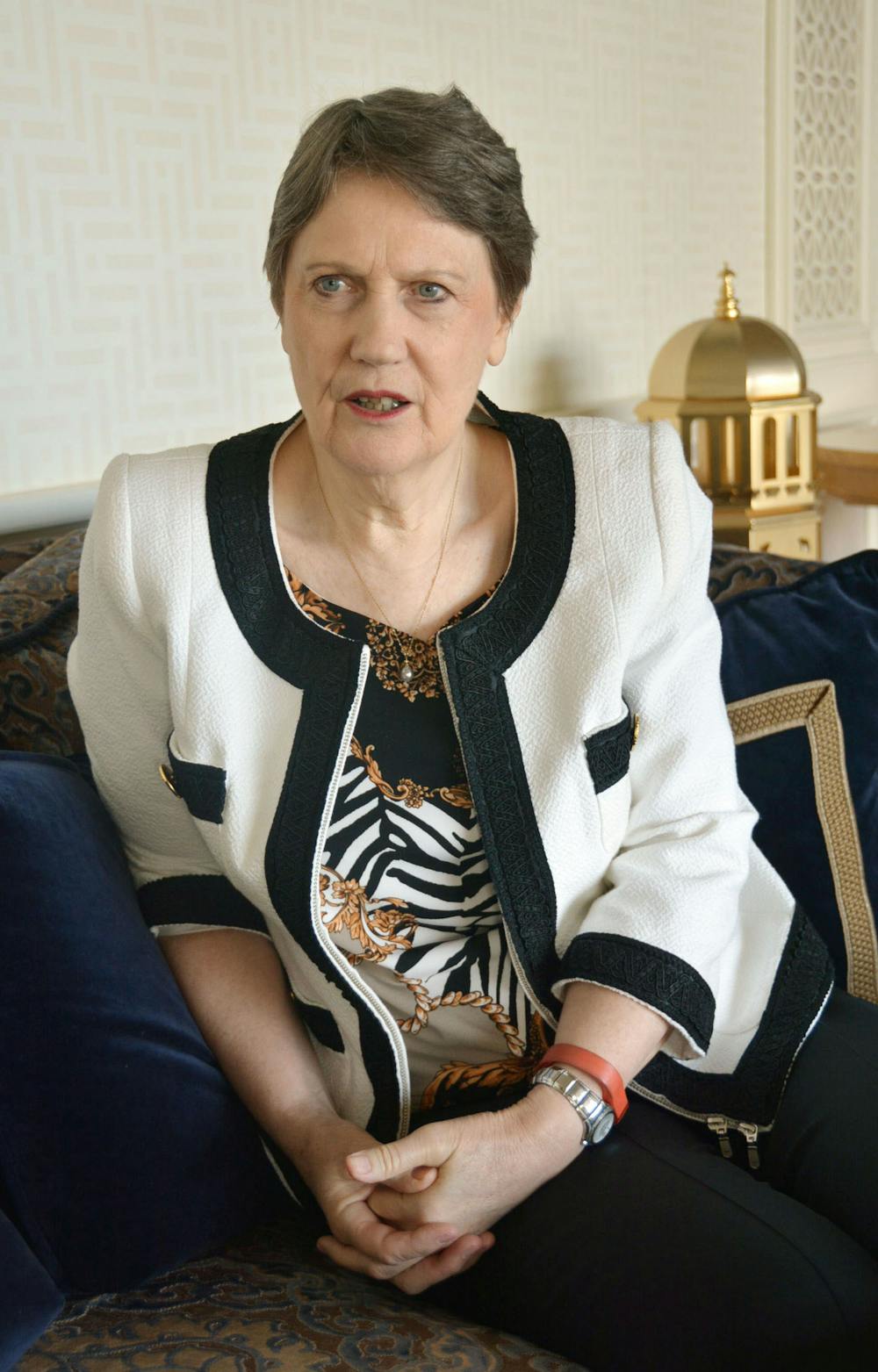 Helen Clark.
GettyImages
Helen Clark.
GettyImages
The big questions arising from that chronology are:
why it took a month and two meetings for the WHO’s Emergency Committee to declare a public health emergency of international concern (PHEIC[4]) — in a densely interconnected world where hours may be the difference between catastrophic spread and containment
why travel restrictions were specifically recommended against at that time, seeming to undercut the gravity of the PHEIC declaration
why the world stood around like “stunned mullets” while disaster unfolded.
The New York Times described[5] the review committee’s interim report as a “bleak recounting” of “one failure leading to another” and a “slow, cumbersome pandemic alert system” with “obstructive responses of national governments”.
Read more: No more acting like 'stunned mullets' — bigger, better, faster responses needed to meet future bio-threats[6]
Global preparedness vital
The substance of Clark’s Otago University address hinted that the review’s final recommendations might include the need to:
reduce global barriers to a precautionary approach
fund and power the WHO at levels matching the role the world expects of it
overcome geopolitical tensions to empower the UN Security Council to declare a pandemic threat to global security and mobilise appropriate resources
ensure a revamped pandemic alert system is fit for purpose
enhance the speed of PHEIC declarations when appropriate.
We agree strongly with this final point. We note that WeChat searches for “SARS” spiked[7] on December 1 2019 and there was most likely a positive “SARS coronavirus” laboratory report[8] in Wuhan on December 30 2019.
What if COVID-19 had been worse?
Given that the International Health Regulations specifically identify SARS coronaviruses as pathogens of major concern to be reported within 24 hours, a PHEIC should arguably have been declared there and then.
Wuhan is a huge city, multiple cases were apparent, and we already knew SARS can spread from person to person. Responses were simply too small and too slow.
Read more: Frontline border workers to be vaccinated first as New Zealand approves Pfizer vaccine[9]
Furthermore, initial and ongoing advice by the WHO (such as no travel restrictions), though possibly in line with evidence at the time for some countries, was completely inappropriate for others, such as small island nations.
If SARS-CoV-2 had the fatality risk of SARS-CoV-1 (around 10%) or higher, it would have turned the disaster of the COVID-19 pandemic into a catastrophic global threat. It could have completely overwhelmed human systems and killed tens or hundreds of millions of people. We simply cannot allow such a threat to ever take hold.
We argue that the most important future distinction will be between declaring a PHEIC with, or without, accompanying global catastrophic biological risk (GCBR[10]).
Early reports put the case fatality risk of COVID-19 at several percent. This was later downgraded. But had it been that high, far more stringent measures would have been justified to contain the virus. An initial overreaction can always be swiftly downgraded as information comes to light, but the reverse is not possible.
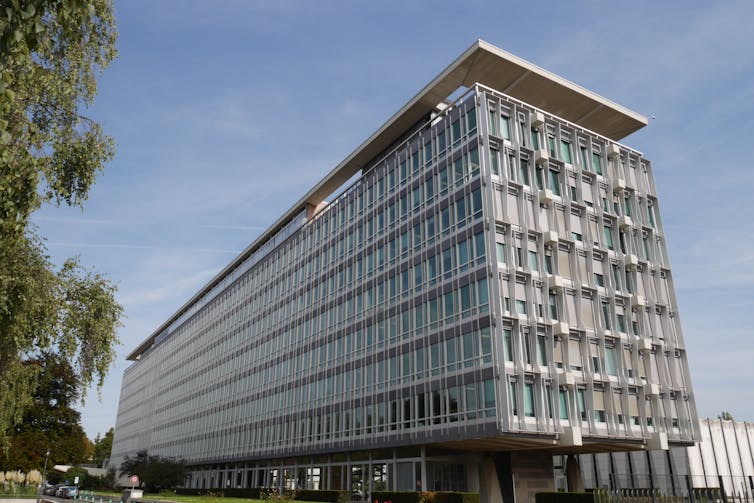 The World Health Organisation headquarters in Geneva: too slow, too cautious.
www.shutterstock.com
The World Health Organisation headquarters in Geneva: too slow, too cautious.
www.shutterstock.com
No one can go it alone
If initial reports indicate some future emerging highly contagious respiratory pathogen has a case fatality risk of 10, 20 or 50%, then PHEIC with GCBR potential must be declared, without any mitigating language about cautious approaches or unrestricted travel.
As Helen Clark asserted, no measures will succeed unless the world learns to co-operate on threats that affect us all. The whole point of creating global institutions such as the UN and WHO was to deal with issues that no single country can deal with themselves.
If we do not use these institutions to govern the response when something threatens “the health of everyone in the entire world”, Clark asked, then when would we ever defer to them?
Countries must stop trying to go it alone. There is a strong case for multilateralism and the world needs to remove the obstacles to a precautionary approach. It should be of major concern that future pandemics may be bigger. Our responses simply must be better and faster.
References
- ^ Independent Panel for Pandemic Preparedness and Response (theindependentpanel.org)
- ^ International Health Regulations (www.who.int)
- ^ Global Health Security Index (www.ghsindex.org)
- ^ PHEIC (www.who.int)
- ^ described (www.nytimes.com)
- ^ No more acting like 'stunned mullets' — bigger, better, faster responses needed to meet future bio-threats (theconversation.com)
- ^ spiked (www.businessinsider.com.au)
- ^ laboratory report (www.theguardian.com)
- ^ Frontline border workers to be vaccinated first as New Zealand approves Pfizer vaccine (theconversation.com)
- ^ GCBR (www.nti.org)