Still Want to Change Gears? The New Cars Keeping the Manual Alive in Australia
- Written by: The Times
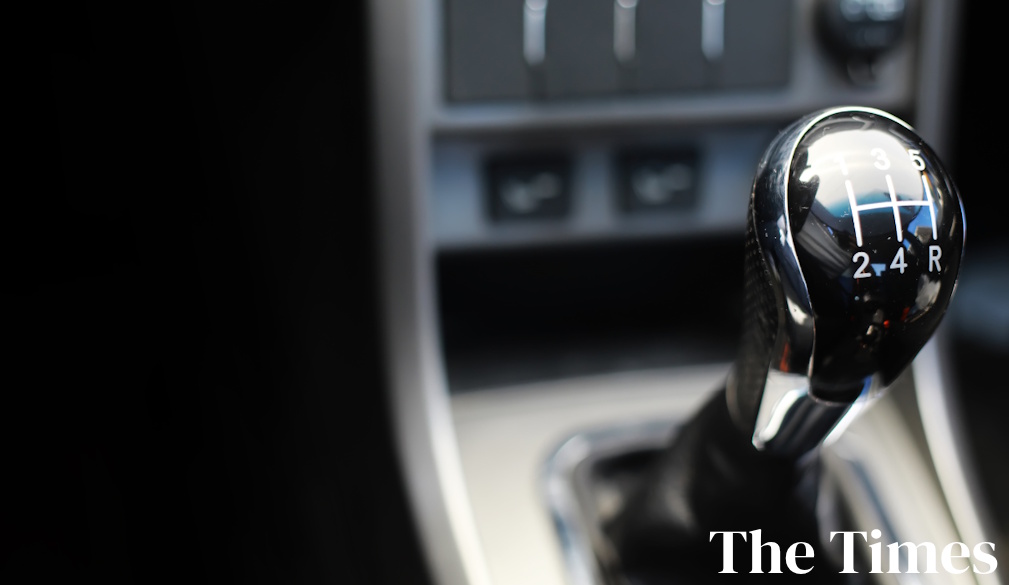
For decades, learning to drive meant mastering the clutch pedal, selecting the right gear and finding the "bite point" on a hill. Today, that experience is becoming increasingly rare.
Automatic transmissions dominate Australia's new car market, while electric vehicles have eliminated conventional gearboxes altogether. Yet for motorists who enjoy driving rather than simply travelling, the manual transmission remains very much alive—albeit in a smaller corner of the market.
Why manuals are disappearing
Modern automatic gearboxes have improved dramatically over the past two decades.
Eight, nine and even ten-speed automatics now offer smoother acceleration, better fuel economy and often faster performance than their manual counterparts. Dual-clutch transmissions can change gears in milliseconds, while modern torque-converter automatics are more efficient than ever.
Electric vehicles have accelerated the change. Most EVs use a single-speed reduction gear, making a manual gearbox unnecessary.
For many buyers, convenience has won.
Where manuals remain
Although the choices are shrinking, Australians can still buy a variety of new vehicles with manual transmissions.
Sports cars remain the strongest supporters of traditional gearboxes.
Models such as the Toyota GR86, Subaru BRZ, Mazda MX-5, Toyota GR Corolla, Toyota GR Yaris, Subaru WRX and Honda Civic Type R continue to offer enthusiasts a more involved driving experience.
Among work vehicles, manuals are still available in selected versions of the Toyota HiLux, Toyota LandCruiser 70 Series, Mazda BT-50, Nissan Navara and Mahindra Pik-Up.
Entry-level passenger cars have become far less common with manual transmissions, although buyers can still find models such as the Kia Picanto and selected Suzuki and Mazda vehicles.
The overall trend, however, is unmistakable. Each model generation typically offers fewer manual variants than the one before.
Why some drivers still prefer them
For many motorists, driving a manual is about engagement.
Drivers choose the gear, control engine braking and often feel more connected to the vehicle.
Motoring enthusiasts also argue that manuals encourage greater concentration because drivers must actively manage speed and engine performance rather than relying entirely on electronics.
For others, it is simply enjoyable.
Will manuals become collectibles?
As manufacturers move towards electric vehicles and increasingly sophisticated automatics, today's manual cars may become increasingly desirable among enthusiasts.
Vehicles such as the GR86, GR Corolla and Mazda MX-5 already attract buyers who appreciate their traditional driving experience.
While there are no guarantees that manual cars will appreciate in value, scarcity often increases interest over time.
Buying one today
Anyone considering a manual vehicle should be aware that dealership stock is generally more limited than automatic versions.
Some manufacturers build manual models in relatively small numbers, meaning buyers may need to order rather than purchase directly from dealer inventory.
For enthusiasts, however, that may be a small price to pay for owning one of the last generations of manually operated cars.
The Times View
The manual gearbox is no longer Australia's default choice. It has become a specialist option for drivers who value involvement over convenience. Automatic and electric vehicles will continue to dominate sales, but the manual transmission still offers something technology cannot easily replace—the satisfaction of being fully engaged in the act of driving.
Is a Manual Driver Licence Still Worth Having?
For many young Australians, learning to drive no longer involves changing gears.
Driving instructors increasingly teach in automatic vehicles, families often own only automatic cars, and electric vehicles have removed the gearbox altogether.
So does obtaining a manual licence still matter?
The answer depends on where—and how—you expect to drive.
The automatic generation
Australia's vehicle fleet has changed dramatically over the past two decades.
Automatic transmissions now dominate new vehicle sales, and every mainstream electric vehicle is effectively automatic.
For everyday commuting, shopping and family transport, an automatic licence will meet the needs of most drivers.
Where manuals still matter
Despite declining sales, manual vehicles remain common in several industries.
Agriculture continues to use many manual utilities and light trucks.
Mining, construction and some trades also operate vehicles where manual gearboxes remain in service.
Regional Australia, in particular, still has many older work vehicles that require manual driving skills.
For people considering careers in these industries, a manual licence may still provide additional employment opportunities.
Travelling overseas
Manual cars remain popular in many parts of Europe, South America and Asia.
Travellers hiring vehicles overseas may discover that manual cars are cheaper to rent and more readily available than automatics.
Being licensed and confident to drive both can provide greater flexibility.
Better understanding of driving?
Many experienced instructors believe learning in a manual develops a stronger understanding of vehicle control.
Drivers learn how engine speed affects performance, how gears influence braking and how to manage hills without relying solely on technology.
Whether this creates safer drivers remains open to debate, but many experienced motorists believe it builds mechanical awareness.
The cost
Learning in a manual generally takes longer.
There is more to master, and some learners require additional lessons before becoming comfortable with clutch control.
That can increase the overall cost of obtaining a licence.
For many learners whose future driving will be entirely automatic, the additional expense may not be worthwhile.
Looking ahead
The long-term direction of the automotive industry is clear.
Electric vehicles will continue to grow in popularity, and manufacturers continue to discontinue manual models.
However, millions of manual vehicles remain on Australian roads, particularly in regional areas and commercial fleets.
Manual driving skills are unlikely to disappear overnight.
The Times View
Learning to drive a manual is no longer essential for every Australian. For many people, an automatic licence will comfortably meet their lifelong driving needs. But those considering careers in agriculture, construction, transport or mining—or those who simply enjoy driving—may find that learning to use a manual remains a valuable skill. Like many traditional abilities, it is becoming less common, which may make it more valuable to those who possess it.