
View from The Hill: Morrison to ministers: don't stir the states
- Written by: Michelle Grattan, Professorial Fellow, University of Canberra
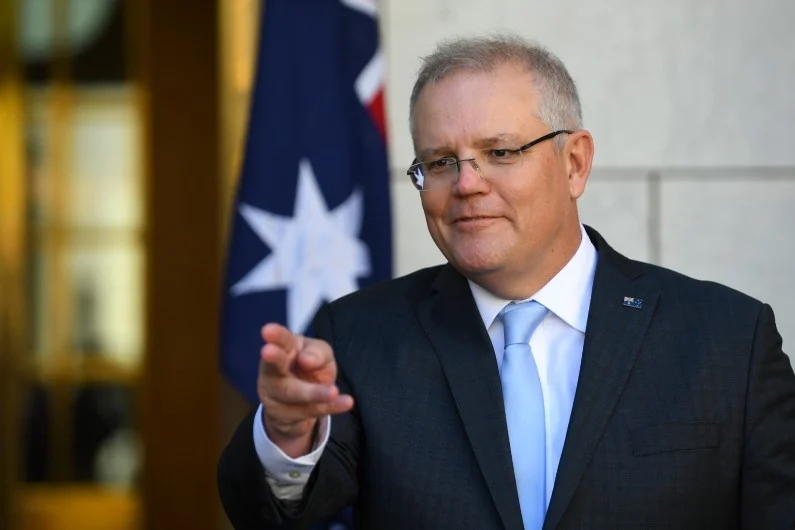
When your back’s against the wall, attack is not necessarily the best means of defence. With this in mind, the word from Scott Morrison to his ministers is, lay off the states.
The federal government’s instinct is to avoid acknowledging its failures; when things are not going as promised, the reaction of some ministers is to kick the states if they are in line of sight.
The most egregious example was last week, when a story was planted to discredit states’ performance on vaccination. Premiers immediately saw the hand of Health Minister Greg Hunt.
Nationals Minister David Littleproud took his cue from the story, and piled on.
NSW and Queensland hit back.
Peter Dutton didn’t receive the smoke signal from Morrison that he was annoyed at his ministers, and on Sunday put the boot into Queensland over its lockdown. This was followed by a whack back from Queensland deputy premier, Steven Miles. The PM had to reinforce his message.
Morrison would understand that while the rollout involves both federal and (to a considerably lesser extent) state governments, his government has – and is seen as having – the major responsibility.
Rollout failures will be sheeted home to the feds, and the public will be angrier if there’s a blame game.
With the rollout struggling on several fronts – as of Monday only 855,000 doses had been administered – and national cabinet meeting on Friday, Morrison needs a semblance of public harmony and maximum co-operation from other governments.
Each day a fresh issue arises. On Tuesday, for example, the pharmacists, declaring they were already prepared for their role, were complaining the details for their involvement were being vagued up and possibly their participation would be delayed.
The pharmacists are due to come into the program as part of phase 2a (covering 50-69 year olds, Aboriginal and Torres Strait Islander people aged 18-54, and some others).
Pharmacy Guild national president Trent Twomey says the language on the timing of their involvement had changed from “June” to “the middle of the year”. This followed a slippage from the original timing of May for the 2a phase, and the pharmacies’ participation, to start.
Twomey says that earlier, the date set for individual pharmacies to know whether they were accepted for the program was March 19. Now they were being told they would be notified between April 12 and the end of the month. “Now there is a range, not a date,” he says.
Given many pharmacies are small businesses, this complicates their planning.
“I’m getting questions [from pharmacists] as to why Joe Biden and Boris Johnson have brought forward community pharmacy [participation] but we’re being delayed,” Twomey says.
Morrison at a Tuesday news conference denied a delay – “we were always working to mid-year”.
Much – though by no means all – of the difficulty with the rollout is on the supply side.
The EU blocked (actually or effectively) more than 3 million vaccine doses coming to Australia which put a major spanner in the works. Also, many of the vaccines already produced by CSL are still in the pipelines for checks and approval.
A CSL statement said on Monday: “In the first week of the local rollout, 832,000 doses were released ahead of schedule to the Australian government.
"Further batches of finished doses are now being released on a rolling basis every week. When approved by the [Therapeutic Goods Administration] they are delivered to the national network of vaccination centres and GP clinics. CSL hopes to reach a rolling output of 1 million doses a week as soon as possible.”
Like much else in the rollout these days, “as soon as possible” is vague.
The government is noticeably unwilling to be precise about CSL weekly production figures.
Asked on Monday how many doses CSL was providing a week, Acting Chief Medical Officer Michael Kidd said, “I don’t have the figures available here right now”. On Tuesday morning he said CSL had already produced 2.5 million doses of the AstraZeneca vaccine. “As each batch has finished its checking, they’re being distributed … CSL production capacity is continuing to increase.”
Asked a similar question on Tuesday about CSL production, Morrison had this unforthcoming and convoluted answer: “Well, it varies from week to week. And we are still in the early phases so it would be misleading, I think, to give you an average at this point.
"We know what we are hoping to achieve. But at this point, we are hoping to achieve the figures that have already been realised to some extent and that’s around the 800,000 mark. That is achievable and we want to be able to try and keep achieving that, and if we can do better than that, then we will.”
Health Department Secretary Brendan Murphy (appearing after Hunt had declined the ABC’s invitation) was blunt on Tuesday night: “we’re not going to give you an absolute average yet”.
As for other numbers, Morrison will urge national cabinet to approve more timely release of vaccination data.
Anxious to stress the positives, the federal government predicts that this week the number of GP clinics in the rollout will ramp up to more than 3000.
And responding to calls for mass vaccination centres (the states already have some hubs), the government says that is planned for phase 2a. Why not now? It declares it doesn’t want to be bussing the elderly (who are eligible for shots in the current stage) to football stadiums. One would think some of the elderly might be quite happy to go to a stadium, if it meant earlier access to the vaccine.
As winter approaches, it’s vital Friday’s national cabinet eschews squabbling and brings a united approach to doing whatever politicians and bureaucrats can to accelerate the rollout.
Which is why Morrison plans to be wearing his nice face to the meeting.
Read more https://theconversation.com/view-from-the-hill-morrison-to-ministers-dont-stir-the-states-158460