Why Australians Are Turning to Real Estate in Japan for Their Next Investment
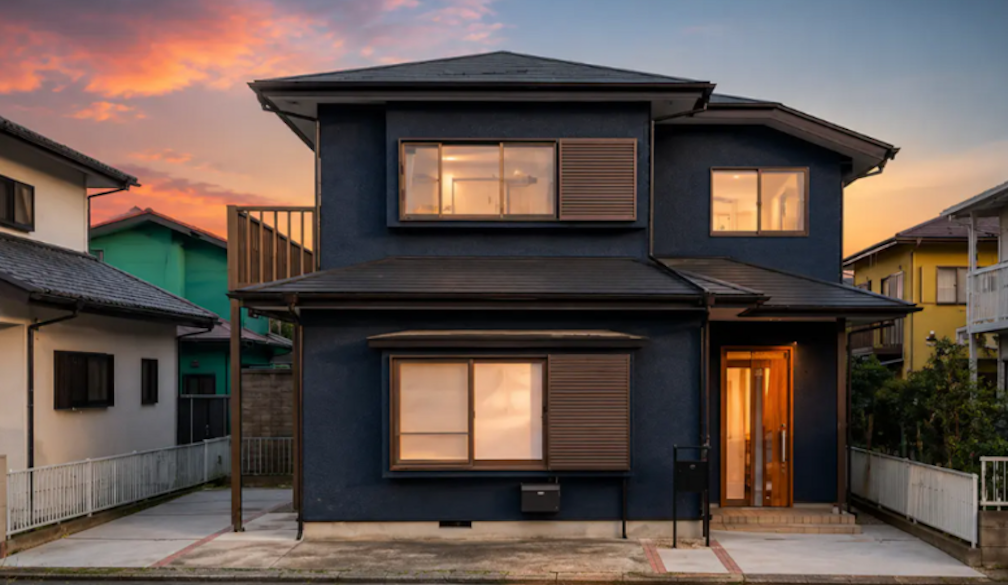
There's a quiet shift happening among Australian property investors. While domestic prices in Sydney and Melbourne continue to test the limits of affordability, a growing number of buyers are looking further afield—and increasingly, they're looking at Japan.
It might seem counterintuitive at first. Japan is a country most Australians associate with holidays, food, and bullet trains—not bricks and mortar. But spend some time researching real estate in Japan and a compelling picture emerges: stable prices, strong rental yields in key cities, full foreign ownership rights, and a lifestyle dividend that few other markets can match. The numbers are catching people's attention, but it's often the experience of the country itself that closes the deal.
A Market Built on Different Foundations
To understand why Japan's property market is so interesting to foreign investors, you first need to understand how different its foundations are from Australia's.
In Australia, land is scarce and property prices have been underpinned by decades of population growth, restrictive zoning, and a cultural obsession with homeownership. Supply has perpetually lagged demand in the major cities, and prices have risen accordingly.
Japan operates on almost the opposite dynamic. The country's population has been declining since 2011. Zoning laws are relatively permissive by international standards, meaning new housing supply has consistently kept pace with—or exceeded—demand. The result is a market where prices have remained stable and, in many cases, flat over long periods—with notable exceptions in high-demand urban areas that have seen genuine appreciation in recent years.
For investors, this stability is actually an asset. You're not buying into a market inflated by speculative fever. You're buying into a market priced on fundamentals: rental income, location, and the quality of the asset itself.
What Foreign Ownership Actually Looks Like
Japan is one of the few countries in Asia—and indeed the world—where foreigners can purchase real estate with no restrictions whatsoever. No special visas, no government approval processes, no local partner requirements. A non-resident Australian can buy a freehold property in Tokyo, Osaka, or anywhere else in Japan on exactly the same terms as a Japanese citizen.
This is rarer than people realise. Many of Japan's regional competitors in Asia—Thailand, Indonesia, Vietnam—impose significant restrictions on foreign ownership, requiring long-term leases in lieu of freehold title, local corporate structures, or outright prohibitions on land ownership. Japan's clean, freehold ownership model removes a layer of complexity and risk that investors in other Asian markets must carefully navigate.
Registration of ownership is transparent and managed through Japan's Legal Affairs Bureau. Title searches are straightforward. The legal framework, while conducted in Japanese, is well-established and—with the right professional support—highly navigable for foreign buyers.
The Cities Driving Investor Interest
Not all of Japan's cities present the same opportunity, and part of the value of working with experienced local professionals is understanding where demand is genuinely supported.
Tokyo
Tokyo remains the flagship. As one of the world's great global cities and a hub for finance, technology, and culture, Tokyo's rental market is underpinned by millions of young professionals, a large and growing international community, and a chronic undersupply of premium stock in the most desirable inner wards. Gross rental yields in central Tokyo typically range from 3% to 5%, which compares favourably with Sydney or Melbourne equivalents once you factor in Japan's lower entry prices.
Osaka
Osaka has emerged as a serious contender in its own right. The city is more affordable than Tokyo, its economy is genuinely diversified, and it has benefited enormously from both domestic and international tourism infrastructure investment. Osaka's integrated resort development, when operational, is expected to further strengthen the case for short-term rental properties in well-located areas.
Fukuoka
Fukuoka, on the northern tip of Kyushu, deserves more attention than it typically gets in Australian investment conversations. The city is compact, liveable, and deeply connected to the broader Asia-Pacific region—short flights to Seoul, Shanghai, Taipei, and Hong Kong make it a natural hub for regional business. Property prices remain significantly below Tokyo levels while rental demand from young professionals and students stays robust.
Sapporo
Sapporo, on the northern island of Hokkaido, appeals to a different type of investor. Its world-class ski fields—including Niseko, arguably Asia's most celebrated ski resort—have driven substantial international interest in the Hokkaido property market. Seasonal short-term rental yields in premium ski areas have been among the strongest in Japan, attracting buyers from Australia, Hong Kong, Singapore, and beyond.
Understanding the Costs
Japanese property transactions come with their own set of costs that investors need to model carefully.
Acquisition Taxes
Japan levies a real estate acquisition tax, typically 3% of the assessed value for residential properties. Registration and licence taxes apply on top. Stamp duties vary by transaction value but are relatively modest.
Annual Holding Costs
Fixed asset tax and city planning tax combine to approximately 1.4–1.7% of the assessed value annually. Japan's assessed values tend to be lower than market values, so the effective rate as a percentage of purchase price is typically lower still.
Property Management
For non-resident investors, a local property management company is essential. Fees typically run at 5–10% of monthly rental income and cover tenant management, maintenance coordination, and compliance. This is not optional overhead—it's the infrastructure that makes remote ownership workable.
Currency
All transactions and rental income are in Japanese yen. The yen has been at historically favourable levels against the Australian dollar in recent years, which has meaningfully reduced entry costs for Australian buyers—though currency risk works in both directions over a long holding period.
The Lifestyle Dimension
Numbers rarely tell the whole story, and Japan's appeal to Australian buyers has a dimension that doesn't appear on any spreadsheet.
Many Australians already have an emotional connection to Japan—built through skiing holidays in Niseko, food trips to Tokyo, or cultural exchanges accumulated over years of proximity. The idea of owning a base in a country you genuinely love, rather than treating an investment purely as a financial instrument, changes the calculus.
A well-located apartment in Tokyo can serve as a pied-à-terre for visits while generating rental income in your absence. A Niseko chalet can host your family for ski season and be professionally managed for the rest of the year. The investment and the lifestyle benefit aren't competing priorities—in Japan, they often reinforce each other.
Getting the Right Support
The most common mistake Australian investors make when approaching Japan's property market is underestimating the importance of local expertise. Language, legal conventions, and market knowledge are not trivial barriers—they are the difference between a smooth transaction and an expensive lesson.
Working with professionals who specialise in supporting foreign buyers—from initial property search through due diligence, legal review, and post-purchase management—is not a luxury. It is the foundation of a successful investment.
Japan's market rewards the patient, the well-advised, and the genuinely curious. For Australian investors willing to do the work, the opportunity is real, the framework is solid, and the country itself makes the whole endeavour considerably more enjoyable than most.