A SZSubfloor Ventilation Sydney Warning Signs: What Every Homeowner Should Know
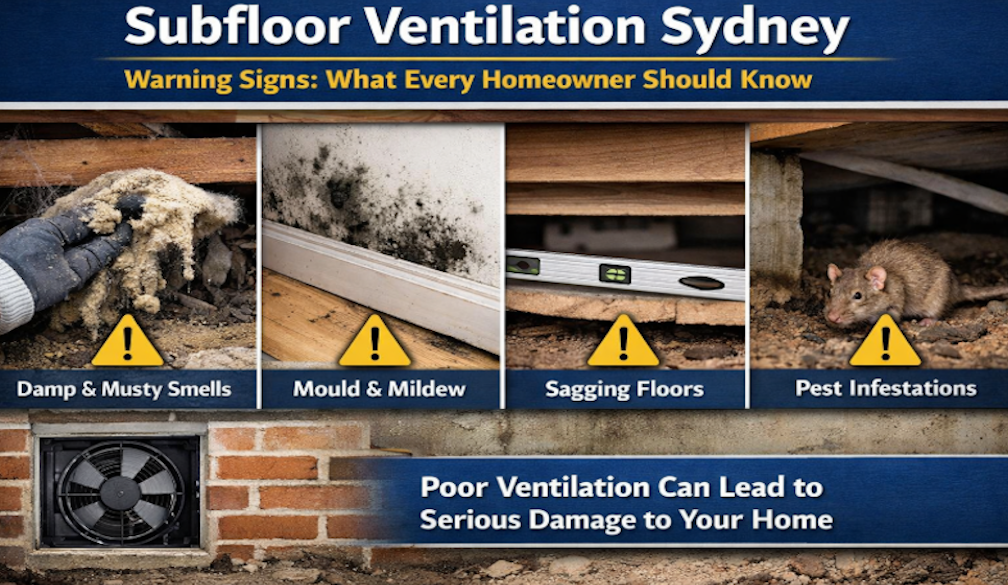
A home's foundation does much more than support walls and flooring it also influences indoor comfort, structural stability, and air quality. Yet, one area that many Sydney homeowners rarely inspect is the subfloor space. Hidden beneath the house, this area can silently develop moisture problems that eventually affect the entire property.
Poor subfloor ventilation is a common issue in Sydney homes, particularly older properties and houses located in areas with high humidity or poor drainage. Unfortunately, many warning signs go unnoticed until significant damage has already occurred.
Understanding the early indicators of inadequate subfloor ventilation Sydney homeowners frequently encounter can help you prevent costly repairs, improve indoor air quality, and protect your investment for years to come.
Why Subfloor Ventilation Is So Important
Subfloor ventilation refers to the movement of fresh air beneath a house. This airflow removes excess moisture, regulates humidity levels, and keeps the underfloor area dry.
Without adequate airflow, moisture becomes trapped beneath the home. Over time, damp conditions can lead to mould growth, timber decay, pest infestations, and structural damage.
Sydney's climate makes proper ventilation particularly important. Seasonal rainfall, coastal humidity, and changing temperatures create ideal conditions for moisture buildup beneath homes.
An effective subfloor ventilation system offers several benefits, including:
- Reduced moisture accumulation
- Protection against timber rot
- Improved indoor air quality
- Lower risk of mould growth
- Prevention of unpleasant odors
- Increased lifespan of flooring structures
- Enhanced comfort throughout the home
Many homeowners choose professional ventilation system installation Sydney services to ensure their properties remain dry and healthy throughout the year.
Common Warning Signs of Poor Subfloor Ventilation
Identifying ventilation problems early can save homeowners thousands of dollars in future repair costs.
1. Persistent Musty Smells Inside the Home
One of the earliest and most noticeable signs of poor subfloor ventilation is a musty or damp smell.
When moisture accumulates beneath a house, it creates ideal conditions for mould and mildew. These microorganisms release unpleasant odors that travel upward through floor gaps and vents into living areas.
If your home smells damp despite regular cleaning and ventilation, the source may be beneath your floor.
Many Sydney homeowners mistakenly assume that musty odors are simply caused by humid weather. However, persistent smells often indicate a serious moisture issue within the subfloor.
2. Mould and Mildew Growth
Mould thrives in dark, damp, and poorly ventilated environments.
Excess moisture beneath your home can increase indoor humidity, creating conditions that encourage mould growth on:
- Walls
- Skirting boards
- Carpets
- Furniture
- Ceilings
- Storage areas
While occasional mould may be linked to condensation, recurring mould growth often suggests an underlying ventilation problem.
Besides damaging surfaces, mould can negatively affect indoor air quality and potentially trigger respiratory issues.
Proper subfloor ventilation Sydney solutions can significantly reduce mould development by maintaining balanced moisture levels beneath the home.
3. Warped, Buckled, or Uneven Flooring
Timber flooring reacts naturally to moisture. When excess moisture rises from the subfloor, timber absorbs water and expands.
Signs include:
- Warped floorboards
- Buckling timber floors
- Cupping or lifting floorboards
- Uneven walking surfaces
- Soft or spongy flooring
Engineered timber, laminate, and hybrid flooring products may also be affected.
Ignoring these warning signs can result in expensive flooring replacement projects. Addressing ventilation issues early often prevents permanent damage.
4. Excessive Condensation on Windows
Condensation forms when warm air meets cooler surfaces.
Although occasional condensation is normal, frequent moisture on windows and glass surfaces can indicate elevated indoor humidity levels.
If condensation regularly appears during normal weather conditions, trapped moisture beneath the property could be contributing to the issue.
Excess humidity not only affects comfort but can also encourage mould growth and damage interior finishes.
Professional assessment of your subfloor may reveal whether inadequate ventilation is causing moisture to accumulate within the home.
5. Increased Allergy or Respiratory Symptoms
Poor indoor air quality can affect the health of everyone living in the home.
When mould spores and damp air circulate throughout the property, occupants may experience:
- Sneezing
- Coughing
- Nasal congestion
- Wheezing
- Itchy eyes
- Headaches
- Asthma flare-ups
Children, elderly residents, and individuals with respiratory conditions are often particularly sensitive.
A properly functioning ventilation system can improve airflow and help maintain healthier indoor conditions.
6. Timber Rot Beneath the House
Timber structures beneath a home require dry conditions to remain strong and durable.
Persistent moisture can cause:
- Timber decay
- Wood softening
- Structural weakening
- Sagging floors
- Cracked walls
Rotting timber often develops gradually, making regular inspections essential.
Unfortunately, many homeowners only discover structural damage during renovations or property inspections.
Routine maintenance and professional ventilation system installation Sydney services can prevent moisture-related structural deterioration.
7. Pest and Termite Activity
Damp subfloor environments attract a range of pests.
Common examples include:
- Termites
- Cockroaches
- Silverfish
- Rodents
- Spiders
Termites are especially concerning because they thrive in moist timber and can cause significant structural damage before being detected.
Maintaining dry conditions beneath your home reduces the likelihood of infestations and protects valuable structural components.
What Causes Poor Subfloor Ventilation?
Several factors may contribute to inadequate airflow beneath a property.
Blocked Air Vents
External vents may become obstructed by:
- Soil buildup
- Garden beds
- Debris
- Leaves
- Vegetation
Blocked vents reduce airflow and trap moisture beneath the house.
Regular inspections can help ensure vents remain clear and functional.
Inadequate Ventilation Design
Older Sydney homes were often built with minimal ventilation.
Modern building practices recognize the importance of proper airflow, but many existing homes still rely on outdated ventilation designs.
Insufficient vent placement frequently contributes to moisture problems.
Low-Clearance Subfloors
Homes built close to the ground often experience restricted airflow.
Limited underfloor space reduces natural air movement and increases the risk of moisture accumulation.
Mechanical ventilation systems may be necessary in these situations.
Poor Site Drainage
Water pooling around foundations significantly increases subfloor moisture.
Common drainage issues include:
- Blocked gutters
- Poor landscaping design
- Inadequate stormwater systems
- Sloping ground toward the house
Addressing drainage concerns is often essential for long-term moisture control.
How Sydney's Climate Impacts Subfloor Conditions
Sydney experiences a combination of humid summers, seasonal rainfall, and changing temperatures throughout the year.
Coastal suburbs often experience elevated humidity levels, while prolonged rain events can saturate surrounding soil.
Without adequate ventilation, moisture may remain trapped beneath homes long after rainfall ends.
Properties located in shaded areas or on sloping blocks can be especially vulnerable.
Because environmental conditions vary significantly across Sydney, tailored ventilation solutions are often necessary.
Natural Versus Mechanical Ventilation Systems
Homeowners generally have two ventilation options.
Natural Ventilation
Natural systems rely on passive airflow through vents installed around the property's perimeter.
Benefits include:
- Lower upfront costs
- Minimal maintenance
- No electricity usage
However, natural ventilation may not provide sufficient airflow in all situations.
Mechanical Ventilation
Mechanical systems use fans to actively move air beneath the home.
Advantages include:
- Improved airflow
- Faster moisture removal
- Consistent performance
- Effective humidity control
Professional ventilation system installation Sydney specialists often recommend mechanical systems for homes experiencing persistent dampness or restricted airflow.
Benefits of Professional Ventilation System Installation
Professional installation ensures the ventilation system is designed specifically for your property's conditions.
Benefits include:
Improved Air Quality
Removing damp air helps reduce mould spores and airborne contaminants.
Enhanced Structural Protection
Proper ventilation protects timber flooring, joists, and support structures.
Reduced Mould Growth
Balanced moisture levels create an environment where mould struggles to develop.
Greater Energy Efficiency
Drier homes often feel more comfortable and may require less heating during cooler months.
Increased Property Value
Well-maintained homes with effective moisture management are generally more attractive to buyers.
When Should Homeowners Seek Professional Help?
Consider arranging a professional inspection if you notice:
- Persistent musty smells
- Visible mould growth
- Warped flooring
- Increased humidity
- Condensation problems
- Signs of timber damage
- Pest activity beneath the home
Early intervention almost always costs less than major structural repairs.
Tips for Preventing Future Ventilation Problems
Preventative maintenance plays a vital role in protecting your home.
Recommended steps include:
- Keep external vents clear.
- Inspect subfloor areas regularly.
- Repair plumbing leaks immediately.
- Maintain gutters and drainage systems.
- Monitor indoor humidity levels.
- Schedule periodic professional inspections.
These proactive measures can help preserve effective subfloor ventilation Sydney homeowners depend on for healthy living conditions.
Final Thoughts
Poor subfloor ventilation can quietly damage your home long before obvious problems appear. Musty odors, mould growth, warped flooring, condensation, and timber decay are all important warning signs that should never be ignored.
By identifying these issues early and investing in appropriate subfloor ventilation Sydney solutions, homeowners can protect their property's structural integrity, improve indoor air quality, and avoid costly repairs.
Whether your home requires simple airflow improvements or professional ventilation system installation Sydney services, taking action now can provide long-term benefits for both your property and your family's wellbeing.