Your Original Floorboards May Only Have Two Sandings Left. A Weekend With a Hire Machine Can Spend Both
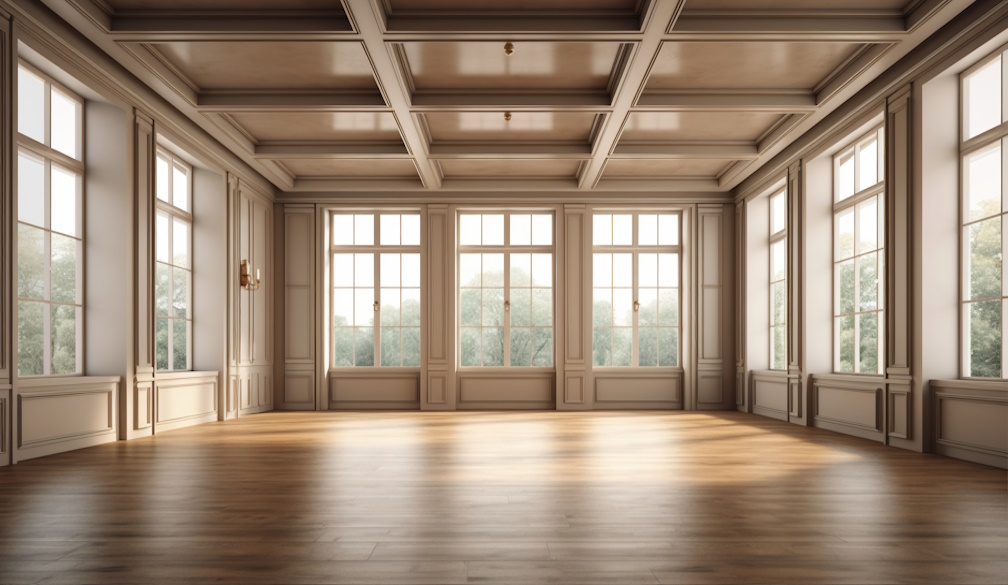
A hire drum sander costs about as much for the weekend as dinner for two.
The floor it runs over may be 130 years old, and it cannot be replaced with anything except a reproduction.
That asymmetry is the whole problem. Almost nobody weighs it before Saturday morning.
The mistake most people make with DIY floor sanding is not clumsiness. Plenty of first-timers produce a floor that looks good by Sunday night.
The mistake is arithmetic. Sanding is the only common home improvement that permanently spends a resource the house can never make again, and a rented machine spends it faster than anything else you can hire.
The short version
- Solid floorboards can only be sanded a fixed number of times. The limit is set by the timber sitting above the tongue and groove joint, not by the thickness of the board.
- A full sand and refinish removes roughly one millimetre. Most Sydney heritage floors have already given up three or four.
- A drum sander gives no warning before that budget runs out. The first clear signal is also permanent.
- In homes built before 1970, sanding disturbs lead paint as well as timber.
- Once the wear layer is spent, a floor stops being repairable and becomes replaceable.
The number nobody measures before they start
A solid tongue and groove board holds only so much usable timber. What matters is not the overall board thickness. It is the depth of the wear layer above the tongue, because sanding into that joint destroys the grip the boards have on each other.
On a 19mm hardwood board, that usable layer might be six millimetres. A full sand and refinish removes roughly one of them.
Flooring consultant Howard Brickman, writing for the trade journal Wood Floor Business, puts a skilled professional's removal at between 1/32 and 3/64 of an inch per full resand. That allows a typical solid three-quarter-inch floor about five sandings in ideal conditions. He adds two warnings worth memorising: visible fastener heads mean you have already gone too far, and the groove edge begins to split once roughly an eighth of an inch remains.
Now run the sum on a Federation terrace.
Built in 1910. Sanded when the carpet came up in the seventies. Sanded again before a sale in the nineties. Sanded once more by a landlord in 2012.
That floor may have one sanding left. It may have none.
A heritage floor is a prepaid card with no balance printed on it. The only way to read the balance is to look. Lifting a floor vent or a threshold strip exposes a board edge that can be measured directly, and the measurement takes minutes.
It is also the step that gets skipped almost every time. Any serious hardwood floor restoration begins with that number rather than with a machine.
A drum sander gives no warning until the damage is permanent
There is no readout. No gauge counts the millimetres down. No alarm sounds. Nothing changes in the handles.
The first clear signal that you have gone too far is a shiner: the head of a hundred-year-old nail emerging through the surface. By the time one appears, the timber that covered it is already in the dust bag.
Polyurethane does not bond to steel. The coating then fails in a line down the room, tracing the joists like stitching.
Edge splitting behaves the same way. The top of the groove thins until it breaks off, and adjacent boards lose their hold on each other. Neither failure announces itself in advance.
The other common outcome is a dish. A drum that pauses for a second at a doorway cuts a shallow saucer across the boards. Under a wet coating, it disappears. In low afternoon light, six weeks later, it looks like a puddle.
Hollows cannot be sanded out. They can only be met by lowering the surrounding floor to the same depth. That spends another millimetre everywhere.
This is what separates sanding from nearly every other job in a house. Bad tiling comes up. Bad paint sands back. A bad cut gets re-cut in new material.
Timber removed from a heritage floorboard is not coming back.
The floor that looks perfect in June and fails in October
Plenty of inner-Sydney terraces sit over subfloors with poor ventilation. Moisture rises, the underside of each board takes on more of it than the top, and the board edges lift. That is cupping, and it is common enough that most owners assume it is just what old floors do.
Sand a cupped floor flat, and you have shaved the raised edges off boards that are temporarily the wrong shape. When the moisture eventually equalises, and the boards relax, those thinned edges drop below the centre.
The Australian Timber Flooring Association describes the outcome precisely. Crowning, it notes, occurs when a floor has become wet, has cupped, and is then sanded before the moisture imbalance between the top and bottom of the board has settled out. It does not become apparent until some months after finishing.
For water-affected floors, the same body advises that drying and recovery will likely take around six months before re-sanding should even be considered.
Read that timing again.
The job passes inspection on the day it is finished. It fails in spring. By then the coating is on, the machine went back to the hire shop months ago, and the timber is gone.
The comparison that matters
|
Weekend hire machine |
Professional restoration |
|
|
Remaining wear layer |
Assumed |
Measured before quoting |
|
Moisture content |
Not tested |
Tested, and work deferred if unstable |
|
Timber removed per pass |
Uncontrolled |
Minimised by design |
|
First warning of over-sanding |
A visible nail head |
A number on a meter |
|
Dust containment |
A bag clipped to the machine |
Sealed extraction |
|
If it goes wrong |
Replacement |
Repair of the affected boards |
The floor does not fail on the Saturday you sand it. It fails years later, when the next owner is told it cannot be sanded again.
In a pre-1970 home, the dust is a health issue
This is the point where floor sanding stops being a finish question and becomes a health one.
Lead paint was used in most Australian homes built before 1970. Floor sanding does not stay on the floor, either. Edge sanders run hard against painted skirtings and architraves, and dry sanding is one of the specific methods flagged as high-risk because it produces particles fine enough to be inhaled or embedded in soft furnishings, which makes full clean-up extremely difficult.
According to NSW Government renovation safety guidance, lead dust builds up over many years in places that are unused and hard to access, including between and under floorboards, and working in those areas can spread it around the house and expose everyone nearby.
A cloth bag clipped to a hire machine is not containment. It is a courtesy.
Where a repair quote becomes a replacement quote
New South Wales keeps more than 30,000 records in its State Heritage Inventory, and a very large number of Sydney terraces sit inside local conservation areas without their owners thinking of themselves as custodians of anything.
The value in a heritage home is not the look of the timber. It is the fact that it is the original timber.
Once the wear layer is spent, the options narrow to two. Overlay the floor and lose the level, the skirting lines and the door clearances. Or replace the boards and lose the fabric.
Reclaimed hardwood can be matched beautifully. It is still a reproduction of what was there.
Firms such as Heritage Restorations and Renovations in Sydney see the same sequence often enough to predict it. The call rarely comes before the weekend. It comes on Monday, and it usually opens with a version of "we had a go at it ourselves."
That sentence changes the quote. Not because of what it costs to fix, but because of what is no longer there to fix.
Four checks worth doing before anything is hired
-
Measure the wear layer. Lift a floor vent or a threshold strip and check the timber above the tongue. Under about three millimetres, a full sand is off the table.
-
Look for shiners. Nail heads already showing through the surface mean previous sandings have used the budget.
-
Check the shape of the boards. Raised edges mean cupping, and cupping means a moisture problem that needs solving before any timber comes off.
-
Assume lead until proven otherwise. In a pre-1970 house, test before a machine touches a painted surface.
If three of those four look wrong, the honest answer is often a light cutback and a recoat rather than a full sand. It costs less and it leaves the floor intact.
What the next owner inherits
None of this argues that heritage floorboards are too precious to touch. They were built to be walked on and built to be renewed, which is the entire point of a solid timber floor and the reason a good one outlives four or five generations of carpet.
It is an argument about who is keeping score.
Somewhere under the coating in your hallway, there is a figure measured in millimetres, and it only ever goes down. Nobody will tell the next owner what it is.
The most useful thing anyone can do for a 130-year-old floor is to finish with more of it left than they were tempted to take.
Common questions about DIY floor sanding
Can I sand my own floorboards?
Physically, yes. The question is not whether you can run the machine. It is how much timber is left to run it over. On a floor already sanded three or four times, capability is not the constraint. Material is.
How many times can a timber floor be sanded?
A rough industry rule is the number of millimetres above the tongue, minus one. A new 19mm board with a six millimetre wear layer gives around five full sands across its life. Most Sydney heritage floors have already spent the bulk of that.
How do I know if my floor has already been sanded too many times?
Three signs. Nail heads showing through the surface. Splintering or missing timber along the groove edges. Boards that move or flex underfoot when they previously did not. Any one of them means the wear layer is close to gone.
Is a light cutback better than a full sand?
On an old floor, often. A cutback abrades the existing coating and takes a new one over the top without removing timber. It needs repeating more frequently than a full sand, but it costs the floor nothing, which matters when the floor has little left to give.
Do I need approval to work on floors in a heritage home?
It depends on how the property is listed. Items on the State Heritage Register fall under the Heritage Act 1977, with some maintenance and repair covered by standard exemptions. Locally listed homes and properties inside conservation areas are governed by the council's local environmental plan. Check with your council or Heritage NSW before work starts rather than after.
Is DIY floor sanding dangerous in an older house?
It can be. In homes built before 1970, sanding disturbs paint that may contain lead, and dry sanding produces exactly the particle size that is hardest to clean up afterwards. Test before a machine touches any painted surface, and read the federal guidance linked above before deciding how to proceed.