Why Smaller Machines Can Be the Smartest Choice on Tight Worksites
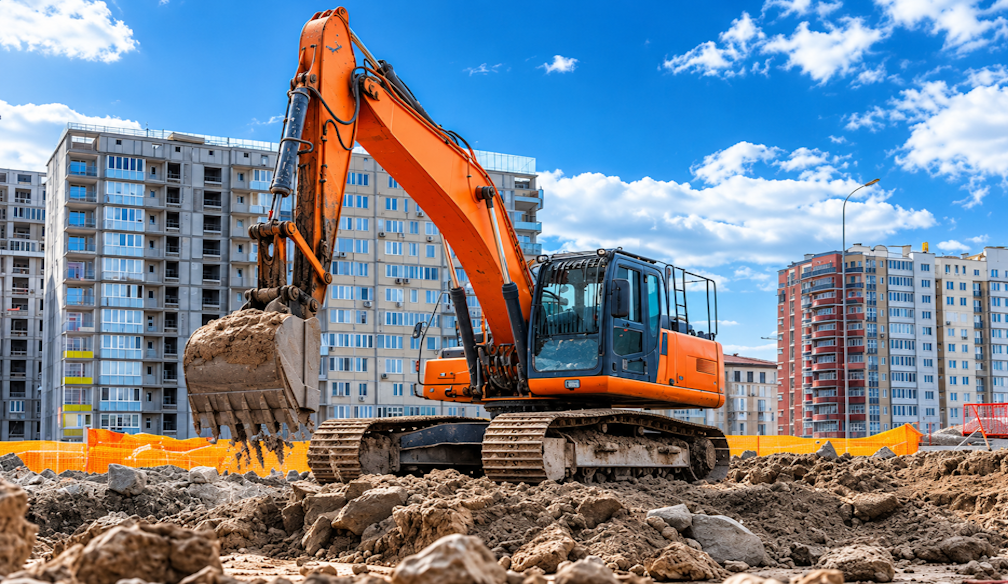
There’s a common assumption in construction that bigger equipment gets the job done faster. Sometimes it does. But on a cramped residential block, a narrow access site or a job where completed structures already limit movement, a large machine can quickly become more trouble than it’s worth. In those situations, compact equipment often wins because it can get into places larger machines simply can’t.
That’s one reason excavator hire is often approached with site constraints in mind rather than raw machine size. The best choice isn’t necessarily the most powerful excavator available. It’s the one that can move efficiently, access the work area safely and complete the task without creating new problems around it.
Tight Access Changes the Equation
On a greenfield site, access may be relatively straightforward. On established properties, it can be a completely different story. Side passages, garages, fences, retaining walls and neighbouring buildings can all restrict how machinery enters and moves around.
A compact excavator can be particularly useful where every metre counts. Instead of removing fencing, widening access points or making extensive temporary changes just to accommodate a larger machine, a smaller unit may be able to get in with far less disruption.
That can save time before the real work has even started. It can also reduce the amount of reinstatement needed once the job is finished.
Smaller Equipment Can Mean Better Control
Large equipment is built for capacity, but smaller machines often provide an advantage when precision matters more than speed. Working close to structures, garden features, services or boundaries requires control.
On excavation jobs where there’s little margin for error, being able to position the machine accurately can make the work much easier. Smaller excavators can also be more practical for tasks such as trenching, landscaping, drainage work and preparation around existing homes.
The job may not require huge digging power. It may require careful movement and the ability to work neatly in a confined area.
Less Site Damage Can Be a Big Advantage
Heavy machinery can have a noticeable impact on the ground beneath it. On large construction sites, that may not be a major concern. On residential properties, it often is.
Lawns, driveways and landscaped areas can all be affected by repeated machinery movement. A smaller machine generally places less demand on the surrounding area and may be easier to manoeuvre without disturbing everything nearby.
That doesn’t mean compact equipment causes no impact at all, but choosing machinery that suits the scale of the work can help keep unnecessary damage to a minimum.
This can be especially important when the excavation is only one part of a broader renovation or landscaping project and much of the site needs to remain intact.
Transport and Delivery Can Be Simpler
The logistics of getting machinery to site are often overlooked. Larger equipment may require more space for unloading, larger transport vehicles and greater clearance around the delivery area.
Compact machines can be easier to transport and position, particularly in suburban streets where parking and access are already limited. That can simplify the start and finish of the hire period and reduce the amount of site coordination needed.
It also matters when machinery needs to move between several jobs. Equipment that’s easier to transport can provide more flexibility for contractors working across multiple locations.
Fuel and Operating Costs Still Matter
More machine than you need often means more cost than you need as well.
Larger machinery typically consumes more fuel and may come with higher transport and hire costs. If the job doesn’t require that extra capacity, paying for it doesn’t necessarily make sense.
A smaller excavator operating efficiently for the full hire period can sometimes be more economical than a larger machine spending part of the day manoeuvring awkwardly or sitting idle because the site can’t make full use of it.
The real comparison should be based on how effectively the machine will complete the task, not simply its hourly or daily output in ideal conditions.
The Attachment Can Matter as Much as the Machine
Excavators become more versatile when the right attachments are available. Buckets of different sizes can suit different excavation tasks, while other attachments may help with breaking, grabbing or moving material.
This means machine selection shouldn’t be considered separately from the actual work being performed. A compact excavator fitted with the right attachment may handle a specialised job more effectively than a much larger machine with a generic setup.
Thinking about the whole configuration before the hire begins helps avoid changing equipment halfway through the job.
Operators Need Room to Work Properly
Even compact machinery needs enough space to operate safely.
The advantage is that smaller excavators can often work within tighter areas while still giving the operator reasonable visibility and control. Depending on the machine design, reduced tail swing can also be useful where the excavator needs to rotate close to walls, fences or other obstacles.
Before choosing equipment, it’s worth considering not only whether it can physically fit through the access point, but whether it will have enough working room once it reaches the excavation area.
A machine that squeezes through the gate but can’t comfortably move once inside hasn’t really solved the problem.
Bigger Jobs Still Need Bigger Machines
Compact equipment isn’t automatically the best choice for every site.
If significant volumes of material need to be moved quickly, the efficiency of a larger excavator may outweigh the benefits of a smaller one. Deep excavation, major earthworks and large commercial projects can require capacity that compact machines simply aren’t designed to provide.
The important thing is matching the machine to the actual job.
Choosing equipment by habit can lead to overkill on one project and underpowered machinery on the next. Site access, excavation depth, material type, available working space and the amount of earth being moved should all influence the decision.
The Smartest Machine Is the One That Fits the Job
Construction equipment doesn’t have to be impressive to be effective.
On a tight worksite, a smaller excavator can reduce access headaches, improve manoeuvrability and make detailed work easier. It may also simplify transport and limit unnecessary disturbance to the surrounding site.
That’s why choosing equipment should start with the realities of the job rather than the size of the machine. When space is limited, the equipment that looks modest on paper can end up being the most productive option on site.