

Skin Checks on the Sunshine Coast for People Who Live Outdoors
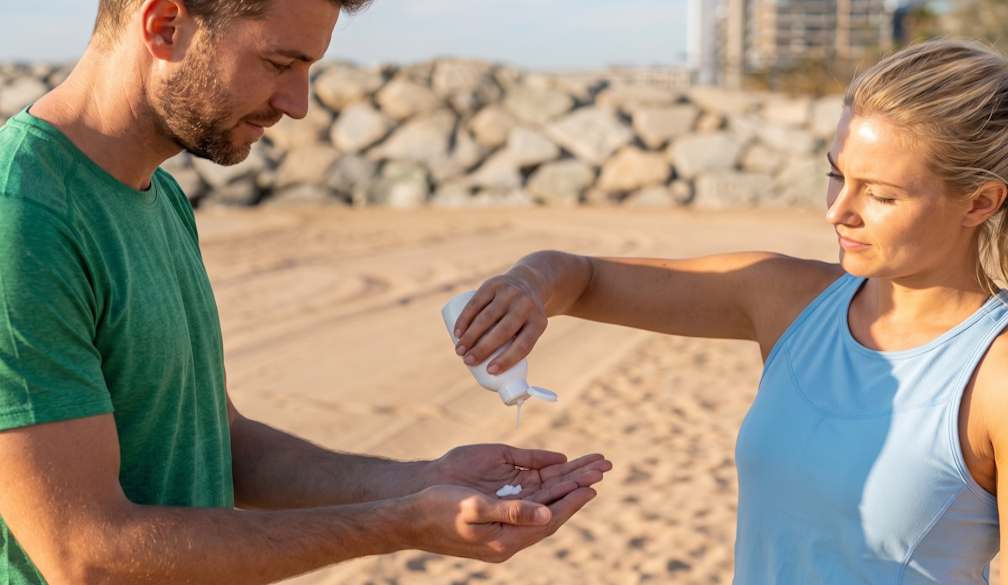
Life on the Sunshine Coast tends to happen outside, whether that's an early surf, a weekend on the boat, a round of golf or a day on the tools, and years of that add up to a lot of UV. Queensland has the highest rate of skin cancer in the world, and the sun here is strong enough to damage skin all year round, winter included.
For most people, a professional skin check on the Sunshine Coast takes around 15 minutes and is one of the simplest ways to find skin cancer early, when treatment is most likely to be successful.
How outdoor living adds to your risk
Skin damage starts once the UV Index reaches three, and in Queensland it sits at or above that level for most of the year. UV isn't linked to temperature, so a cool sea breeze or a cloudy morning can feel gentler than it is, and you can burn without noticing until later. Your risk also relates to your total lifetime UV exposure, which means years of early surfs, weekends on the water and days working outside all count, even if you can't remember a bad burn.
Risk is higher again for people with fair skin, many moles, a family history of skin cancer, a history of bad sunburn, outdoor work or solarium use, and it rises with age.
How often should you have a skin check?
People at high risk should have their skin examined in full by a doctor every six months, with total body photography and dermoscopy to help track changes, and for everyone else a regular professional check is a sensible habit, with the gap set by your skin type, sun history and family history. Between checks, a new spot, or a change in the size, shape or colour of an existing one, is a reason to see a doctor without waiting for your next appointment.
What happens during a skin check
A full skin check usually takes about 15 minutes, and the doctor will examine your whole body in a private room, from your scalp to the soles of your feet. You may be given a gown, and most checks are done with your underwear on, but you can ask the doctor to look at a particular spot in a private area if it concerns you.
The doctor looks closely at anything unusual using a dermatoscope, a specialised hand-held magnifying device with a light, and it lets them see beneath your skin's surface without any incisions or discomfort.
If you would feel more comfortable, you are welcome to request a chaperone to be present at your appointment, whether that's someone you know or a member of the clinic team, and it's best to let the clinic know beforehand so they can arrange it.
If a spot needs a closer look, the doctor may take a small skin biopsy and send it to a pathology lab, and any treatment, whether cryotherapy or a surgical excision, depends on the results.
Checking your own skin between appointments
Getting to know your skin makes changes easier to spot, so use a full-length mirror and a hand-held mirror and check your whole body, including the places that get the most sun and are easy to forget, like the tops of the ears, the back of the neck, the scalp and the backs of the hands. The ABCDE guide gives you five things to look for:
- A: Asymmetrical moles, spots or lesions are more prone to developing into melanoma.
- B: Borders of moles or spots that are irregular (not round) are at greater risk of becoming cancerous.
- C: Colours that change, or that are irregular in the same spot, should be checked further.
- D: Diameters of spots or moles larger than 6mm (pencil eraser size) are worth investigating.
- E: Evolving spots or moles that you notice changes in should be checked by a doctor as soon as possible.
Skin check FAQs
Is it worth having a skin check in winter?
Yes, because the UV Index in Queensland stays high enough to damage skin through the cooler months, and winter clothing can mean you check your skin less often.
Do I still need a skin check if I wear sun protection every day?
Yes, because sun protection lowers your risk without removing it, and UV exposure from earlier years still counts towards it.
How long does a skin check take?
A full-body skin check usually takes about 15 minutes.
Can a skin cancer app replace a check with a doctor?
Research has found consumer skin cancer apps are generally inaccurate for diagnosing melanoma, so they shouldn't replace an examination by a doctor.