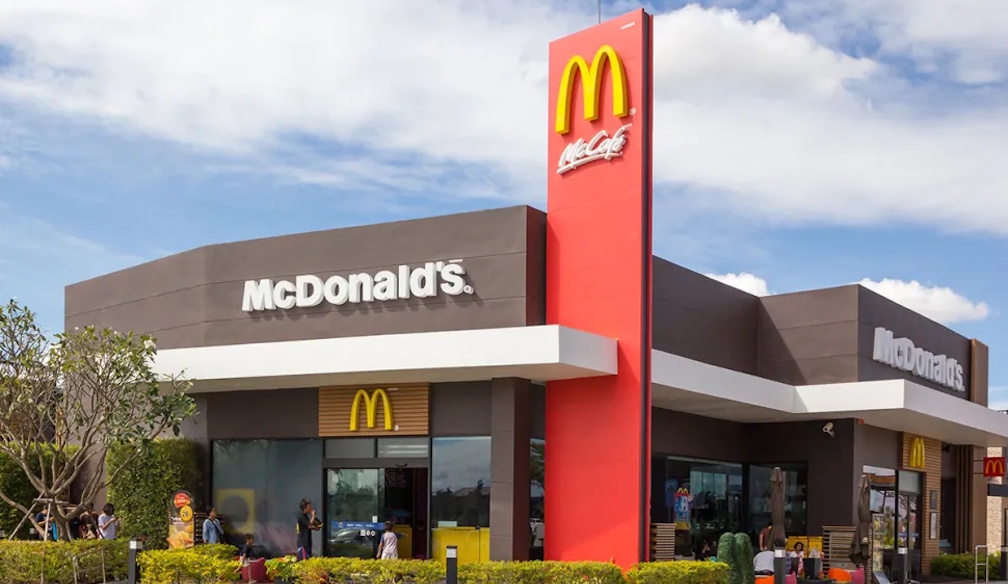
You’re hungry. There’s a McDonald’s ahead. Should you go there?
- Written by: The Times
What are the unhealthy options?
It’s a familiar moment.
You’re driving, working late, travelling, or simply too tired to cook. Hunger sets in. Then you see it—the golden arches of McDonald's ahead.
The question is immediate:
Do you pull in—or keep going?
For millions of Australians, McDonald’s is convenient, fast, and predictable. But it also sits at the centre of an ongoing debate about health, nutrition, and modern eating habits.
The reality, as always, is more nuanced than a simple yes or no.
Why McDonald’s is so hard to resist
There is a reason McDonald’s remains one of the most successful food businesses in the world.
It delivers three things exceptionally well:
-
Speed – food in minutes
-
Consistency – the same taste every time
-
Accessibility – locations everywhere
In moments of hunger, these factors matter.
Biologically, when you are hungry, your body craves:
-
Calories
-
Fat
-
Sugar
-
Salt
Fast food is engineered—very effectively—to deliver all four.
That’s why the decision often feels less like a choice and more like an impulse.
So—should you go there?
The honest answer:
Occasionally, yes. Habitually, no.
There is nothing inherently dangerous about eating McDonald’s once in a while. For many Australians, it’s part of a balanced lifestyle.
The issue arises when:
-
It becomes a regular habit
-
Portion sizes increase
-
Healthier options are ignored
In those cases, the long-term impact can be significant.
The real issue: what are you actually ordering?
Not all McDonald’s meals are equal.
Some options are relatively moderate. Others are calorie-dense, nutrient-poor, and easy to overconsume.
Understanding the difference is key.
The most unhealthy choices on the menu
If you’re pulling into McDonald’s, these are the options to be cautious about.
1. Large burger meals (especially double or triple patties)
Examples include:
-
Double or triple beef burgers
-
Extra cheese and sauce combinations
These meals are typically:
-
High in saturated fat
-
High in sodium
-
Often exceeding daily calorie recommendations in a single sitting
Add fries and a sugary drink, and the numbers escalate quickly.
2. Large fries
Fries are deceptively simple—but they are one of the most calorie-dense items on the menu.
-
Deep-fried in oil
-
High in salt
-
Easy to eat quickly
A large serving can rival or exceed the calorie count of a main meal.
3. Sugary drinks and thickshakes
Soft drinks and shakes are often the biggest hidden issue.
-
High sugar content
-
Minimal nutritional value
-
Do not create the same feeling of fullness as solid food
A large soft drink or thickshake can add hundreds of extra calories without satisfying hunger.
4. Desserts (McFlurry, sundaes, pies)
Desserts at McDonald’s are:
-
High in sugar
-
High in processed fats
-
Designed for indulgence rather than nutrition
Combined with a full meal, they significantly increase total intake.
5. Breakfast items (often underestimated)
Items like:
-
Sausage and egg muffins
-
Hotcakes with syrup
Can be surprisingly high in:
-
Sodium
-
Refined carbohydrates
-
Added sugars
They may feel lighter—but nutritionally, they can be just as heavy.
The “stacking effect”: where it goes wrong
The real problem is not usually one item.
It’s the combination.
A typical order might include:
-
Burger
-
Fries
-
Drink
-
Dessert
Individually manageable.
Together, they can exceed:
-
Daily calorie needs
-
Recommended fat intake
-
Safe sodium levels
And because fast food is easy to eat quickly, the body doesn’t always register fullness in time.
Are there better choices if you do go?
Yes—and this is where moderation becomes practical.
If you decide to stop at McDonald’s, consider:
-
Choosing a single-patty burger instead of double or triple
-
Opting for small fries—or skipping them entirely
-
Replacing soft drinks with water or no-sugar options
-
Avoiding desserts if you’ve had a full meal
These small decisions can significantly reduce the overall impact.
The psychology of the decision
When you’re hungry, you’re not making a rational decision—you’re making a biological one.
That’s why:
-
You order more than you planned
-
You choose higher-calorie options
-
You prioritise taste over health
Understanding this helps.
A simple strategy:
Pause before ordering. Decide intentionally—not impulsively.
The bigger picture: convenience vs consequence
Fast food, including McDonald’s, reflects modern life:
-
Busy schedules
-
Long commutes
-
Less time for cooking
It solves a real problem—but introduces another.
The key is balance.
Used occasionally, it’s a convenience.
Used frequently, it becomes a health risk.
Final thought
So—you’re hungry, and there’s a McDonald’s ahead.
Should you go?
Yes—if it’s a one-off, and you make conscious choices.
No—if it’s becoming routine, automatic, and excessive.
Because in the end, the issue is not McDonald’s itself.
It’s the pattern.
And in a world of convenience, the most important skill may simply be knowing when to say no—and when to choose better.