

The Golden Triangle in Commercial Kitchen Design: What It Is and Why It Matters
- Written by: The Times
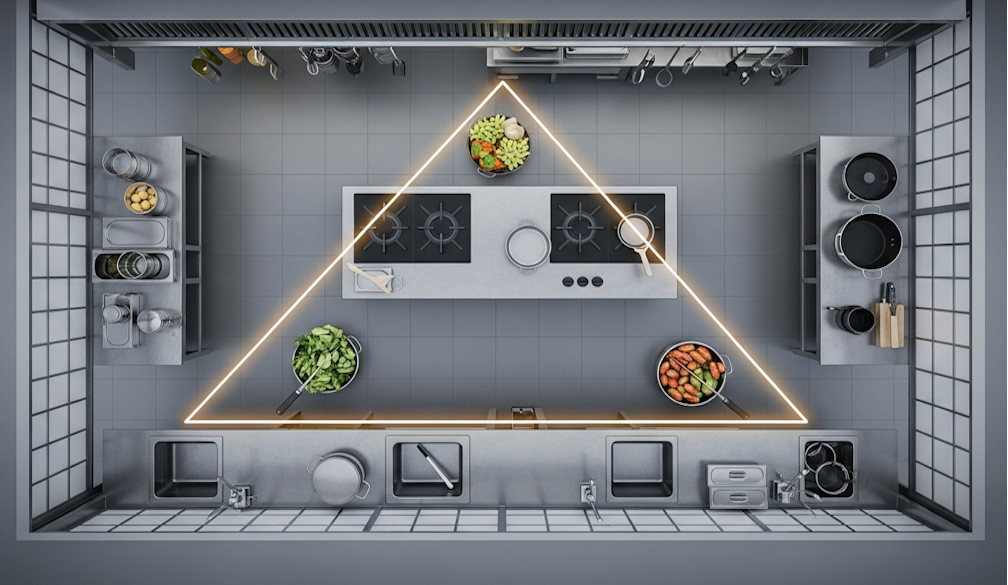
When it comes to commercial kitchen design, efficiency is everything. Whether you’re running a bustling café, a fine-dining restaurant, or a catering business, the success of your kitchen often depends on how smoothly your team can move, cook, and clean. One of the most effective design principles to achieve this flow is the Golden Triangle — a tried-and-tested layout concept that balances function, space, and safety.
Before getting into the details, it’s worth noting that a well-designed layout isn’t complete without reliable equipment. For example, integrating Turbo Air commercial refrigeration systems ensures that essential ingredients are always within reach and maintained at the correct temperature, complementing the efficiency of the kitchen’s overall flow.
What is the Golden Triangle?
The Golden Triangle refers to the optimal arrangement of three key work zones in a kitchen: the cooking area, the cleaning area, and the storage area. In a domestic kitchen, this usually translates to the stove, sink, and fridge. In a commercial setting, the principle still applies—just on a larger, more industrial scale.
By positioning these three stations in a triangular layout, chefs and kitchen staff can move quickly and safely between tasks, minimising unnecessary steps and reducing congestion during peak hours. The idea is simple: the fewer obstacles and less distance between your essential zones, the faster and smoother the workflow.
Why the Golden Triangle Matters in Commercial Kitchens
Enhanced Efficiency
In busy kitchens, every second counts. A thoughtfully planned triangle reduces the time spent moving between prep, cook, and clean stations. When the layout flows naturally, staff can focus on the quality of food and service rather than navigating a cluttered workspace.
Improved Safety
Poorly designed kitchens increase the risk of slips, burns, and collisions. The Golden Triangle helps to create logical, clear pathways, keeping hot areas separate from cold storage zones and cleaning stations. This not only prevents accidents but also ensures compliance with workplace safety standards.
Energy and Cost Savings
A smart layout can reduce energy waste. For example, placing refrigeration away from heat sources prevents equipment from overworking. Choosing energy-efficient appliances, such as Turbo Air’s commercial refrigeration units, further helps to maintain temperature consistency while lowering power consumption.
Better Staff Morale and Productivity
When staff can work efficiently without bumping into one another, morale improves. An ergonomic kitchen layout fosters teamwork, reduces stress, and ultimately boosts productivity — all of which translate to faster service and happier customers.
Applying the Golden Triangle in Your Kitchen
Every commercial kitchen is different, but the principles of the Golden Triangle can be tailored to suit any space:
- Analyse workflow: Observe how your team moves during service. Identify bottlenecks or areas where paths cross too often.
- Plan around your menu: A bakery’s layout will differ from a seafood restaurant’s. Design the triangle around your most frequent tasks.
- Choose equipment wisely: Invest in durable, efficient systems that support your workflow. Strategic placement of refrigeration, prep stations, and cooktops makes all the difference.
- Maintain flexibility: As your business grows, your kitchen layout should adapt. Modular or moveable setups allow for easy reconfiguration when needed.
The Golden Triangle isn’t just a design trend — it’s a proven framework for improving performance, safety, and satisfaction in any commercial kitchen
By combining smart spatial planning with high-quality equipment like Turbo Air commercial refrigeration, you can create a kitchen that works as hard as your team does. A well-designed workspace is the backbone of every successful restaurant — and when efficiency meets innovation, the results speak for themselves.