Vietnam’s Agriculture: Farmer-centered and Sustainable Transformation
WASHINGTON, D.C., US - Media OutReach - 8 February 2023 - Vietnam's agriculture is transforming from quantity targets towards profit, environment and farmer income targets. 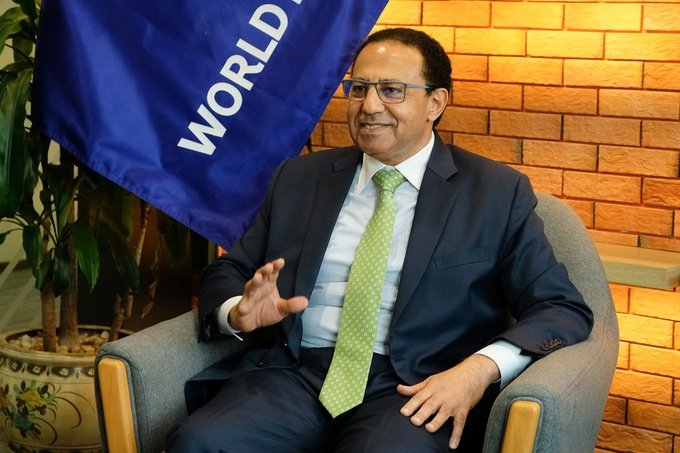
For decades, Vietnam's agriculture followed the targets of production volume. This growth model has failed to take account of income returns to farmers and all other environmental costs. This leads to a dilemma that when Vietnam's agricultural production and export revenue increased to a certain extent, farmers' incomes decreased over time. The shift to an economic growth model that put farmers at the centre will help reverse this trend, improve farmers' incomes and restore ecosystems and the rural environment.
At COP26, Vietnam pledged that it will reduce net emissions to zero by 2050.
At COP26, the Prime Minister made a commitment that Vietnam will reduce net emissions to zero by 2050 and will reduce emissions by 30 per cent by 2030 compared to 2020's level. At COP27, Vietnam submitted an updated Nationally Determined Contribution (NDC) which sets higher targets. For agriculture, the unconditional NDC target by 2030 increases from 6.8 million tons per NDC 2020 to 12.4 million tons per NDC 2022; the conditional NDC target increases from 32.6 million tons per NDC 2020 to 50.9 million tons per NDC 2022. This translates into financial needs of around US$2.1 billion and US$16.1 billion to meet conditional and unconditional targets, respectively.
Vietnam's agricultural export turnover in 2022 clearly demonstrates its strengths and comparative advantages in the global agricultural supply chain and its important role for the global food security. This result has been accompanied by strong support of international partners and efficient utilization of ODA projects.
Rice farming is the largest source of greenhouse gas emissions in Vietnam's agriculture sector, emitting about 49.6 million tons of CO2e annually. Moving to low-carbon rice production offers the highest potential for Vietnam to reduce GHG emissions, particularly methane.
The Vietnam Sustainable Agriculture Transformation Project (VNSAT), financed by the World Bank, has demonstrated that by adopting improved rice farming methods so-called 1 Must 5 Reduction (1 must: certified seeds; 5 reductions: number of sown seeds, fertilizers, pesticides, watering and post-harvest losses), it will not only help increase yield and net profits for farmers but also significantly reduce GHG emissions. At the time the VNSAT closed in June 2022, the project was able to reduce approximately 1.5 million tons of CO2e annually.
These successful experiences will be upscaled if the government expands further supports to improve infrastructure and large-scale agricultural extension services. If the improved farming methods be replicated in the remaining core rice areas in the Mekong Delta, it might help reduce over 9 million tons of CO2e annually. The implementation of the VNSAT Project in 7 years (from 2015 to 2022) is evaluated as the most successful model project ever in international cooperation in agriculture.
On this basis, the World Bank is supporting Vietnam to access global funds to finance 100 million USD from carbon payments for rice farming in the Mekong Delta and preparing the Low-carbon Agriculture Value Chain Development Project following VNSAT.
With the companionship of international partners, Vietnamese agriculture is gradually transforming its production model to meet green growth, demonstrating an increasingly important role in the international community for sustainable development, emission reduction, climate change adaptation and mitigation.
Mr. Nguyen Do Anh Tuan, Director of the Department of International Cooperation under the Ministry of Agriculture and Rural Development affirmed that "Vietnam is a responsible member of the international community and wishes to develop its agriculture in a responsible, transparent and sustainable manner. We do hope that our international partners will strengthen the cooperation with Vietnam in developing green and sustainable agriculture and achieving global food security".
The issuer is solely responsible for the content of this announcement.
Notes:
According to Mr. Ahmed Eiweida, Vietnam Sector Leader for Sustainable Development (World Bank), the new growth model of Vietnam's agriculture promotes environmental sustainability, restoring ecosystems and puttting farmers, at the heart of the development, which is aligned with global best practices.
In addition, Vietnam has made great progress in agricultural policy reform followed by concrete actions. Government strategies, such as the Strategy for Sustainable Agriculture and Rural Development for the period of 2021-2030 with a Vision to 2050 and the Mekong Delta Regional Master Plan, accurately capture the main aspects of the new growth model of agricultural economy covering both production, income, export, employment, environment, and rural development.
Corresponding to this mindset shift, the World Bank has also adjusted its focus on development assistance towards climate resilience, livelihood diversification, and low-carbon agriculture. The World Bank is also coordinating with FAO and IRRI to assist MARD in developing a standardised Monitoring, Reporting, and Verification (MRV) system for the rice subsector.