OPPO's Journey to Ultimate Smoothness: The Tech Powering ColorOS 14's Trinity Engine, Smart Features, and the Future of AI Integration
SHENZHEN, CHINA - Media OutReach Newswire - 23 February 2024 - Over the past ten years, OPPO has been working to perfect the balance between rapid responsiveness, rock-steady stability, and silky smoothness with each iteration of ColorOS.
On the newly launched ColorOS 14, OPPO has included a series of upgraded features designed for users to enjoy a real sense of fluency and efficiency by delivering consistent and fluid operations across all types of applications and scenarios.
By constantly finding new ways to blend the best hardware with the most comprehensive and in-depth optimization of the underlying software, OPPO has elevated the concept of smoothness, and even entire perceptions of performance on Android smartphones, to ensure seamless user experiences in any situation.
'Visible' and 'invisible' smoothness
One of OPPO's first breakthroughs in delivering the ultimate smooth user experience came with the release of UI First in early 2020. By prioritizing active applications, UI First prevents background applications from over consuming system resources causing the drag down towards the overall performance. The result is a significant reduction in noticeable lag and the enhancement of "visible smoothness."
However, as computing resources were directed into supporting active applications, apps running in the background were being starved of resources and effectively killed. This in turn caused delays when switching between those apps. Meanwhile, The widespread adoption of 5G increased the consumption of high-data media, entering the so-called "rich media" era, has placed additional processing pressure on the system. To address this 'invisible' smoothness issues, OPPO began optimizing ColorOS for better temperature control, stable battery life, and a more continuous and uninterrupted experience.
OPPO's chip engineers have conducted enormous volumes of in-depth analysis into the computing power distribution of each task on different processing units on the chip, the company then established mathematical models to predict performance and power consumption and optimize the computing power distribution for each task to guarantee a better battery life without sacrificing performance capabilities.
At the same time, OPPO utilized improved memory compression technology to save more memory space for users, and breakpoint reading technology to ensure a more continuous and uninterrupted experience. Now, on ColorOS 14, the system's latest release, upgraded technologies in the OS's Trinity Engine make it possible for the phone to run as many as 28 applications on the back end for up to 72 hours.
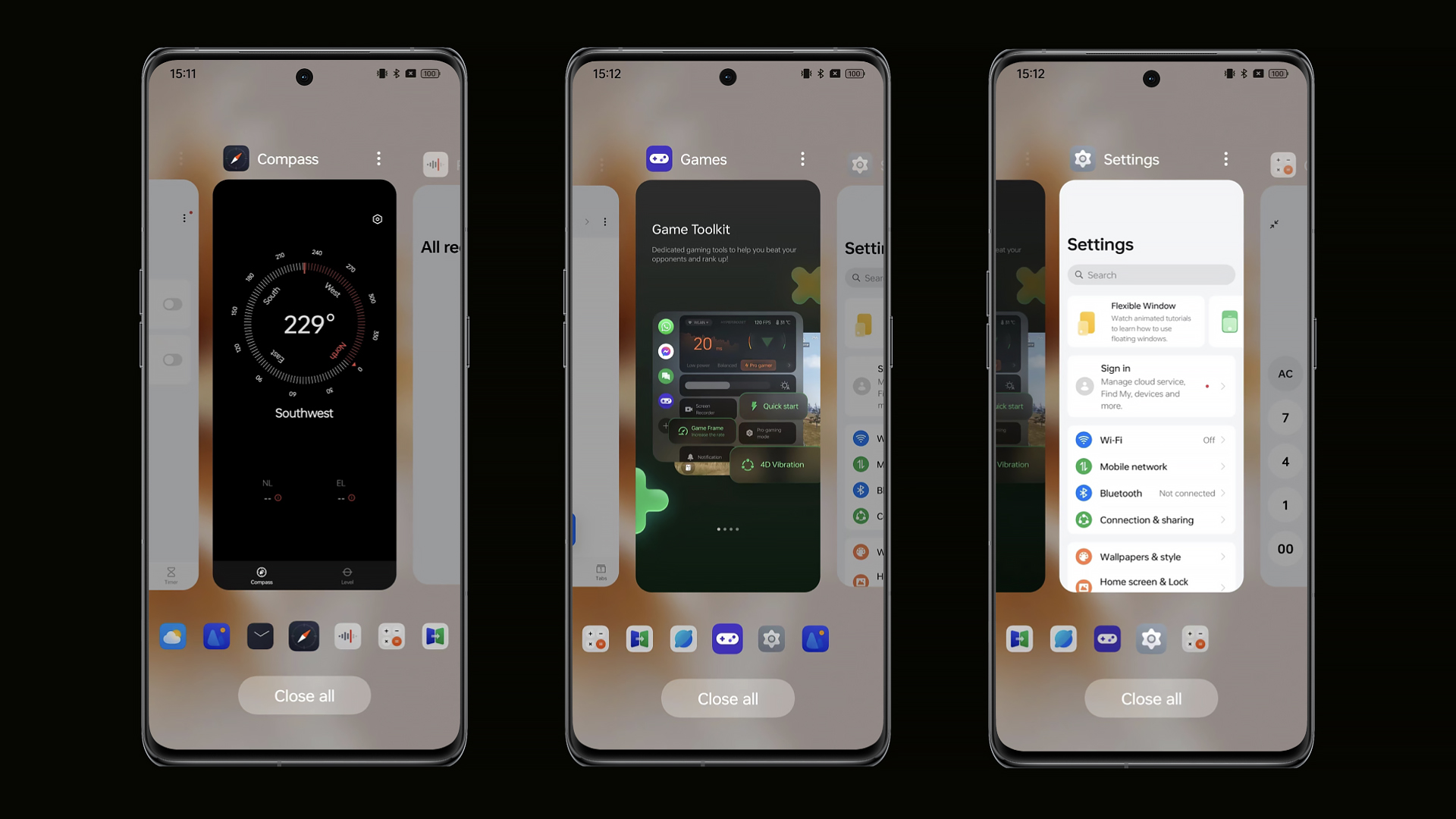
These innovations enable ColorOS to make the most of any given smartphone hardware and deliver the best results when it comes to traditional stats used for measuring smooth performance, such as app launch speeds, game frame rates, and more. Thanks to hardware scheduling capabilities like these, ColorOS now consistently ranks among the top performers in major industry benchmarks.
More human, more consistent
As OPPO's engineers continued to push the boundaries of smoothness and ColorOS received increasing recognition from tech authorities with its top benchmark scores, the team gradually came to realize that high performance and ultimate speed do not necessarily translate into a more comfortable and "smoother" user experience in all scenarios.
"As a software developer, my instinct was to always make everything as fast as possible. It's easy for us to fall into the habit of pushing to deliver the best results from a numbers perspective," said Hansheng Hong, Director of Software Technology Planning, OPPO.
"For example, we are capable of doubling the current speed of our animations, but when the user actually sees them, they appear too abrupt. Realizing this has completely changed my point of view and taught me that it's pointless to compete on data alone."
The brand-new Aquamorphic Effects in ColorOS 14 showcase how this insight has been put into practice. Contrary to what might be expected, the animations of these new effects have actually been optimized by reducing the speed from 380 milliseconds to a more user-friendly 750 milliseconds. By refining the dynamic effect logic in ColorOS 14, every interaction has been made more intuitive and fluid.
This is just one example of how OPPO has introduced Human Factors Analysis into the design of the OS. This is a discipline that specializes in the study of human interaction with machines and environments in order to make machines or systems more adaptable to human physiological and psychological characteristics. Through Human Factor Analysis, Hong learned that the human eye can only detect changes at intervals of about 100-150 milliseconds or more. If changes occur in less than 100 milliseconds, most people simply cannot tell the difference. This means that, even if the hardware is capable of doing so, there is no reason to engineer system response times as low as 50 milliseconds.
At the same time, Hong also became aware of a concept in psychology known as 'negative bias', in which people tend to remember only specific negative moments, even if the overall experience is positive. For example, if you only encounter a single delay once in every one hundred times you start an application, you are still more likely to remember this one negative moment and perceive the overall experience as being negative on the whole. The implications of this are that it is stability and consistency, rather than occasional bursts of speed, that determine how smooth the user experience is perceived.
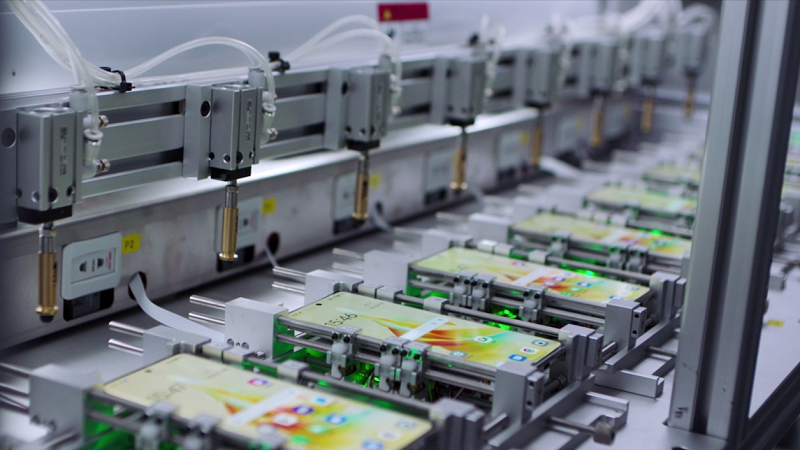
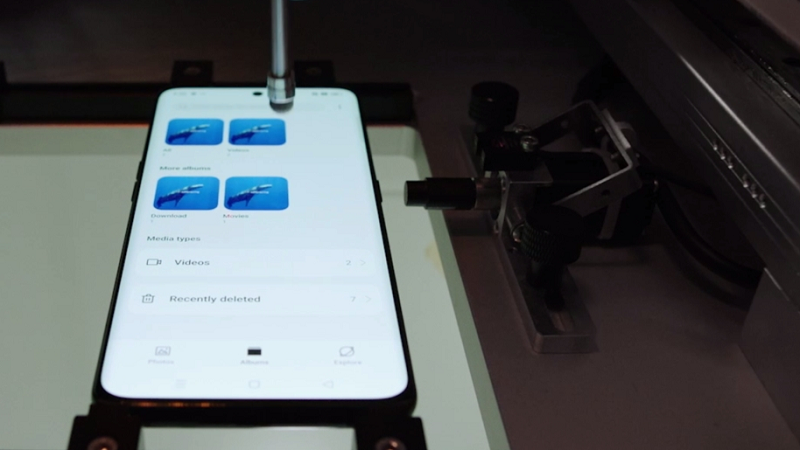
In order to provide this level of consistently smooth experience throughout the operating life of our mobile devices, OPPO has introduced Human Factors Analysis into multiple aspects of ColorOS. One of the decisions that came from this was to set the response speed of application launches to 135 milliseconds. Through millions of repeated tests, OPPO also identified and solved extremely low-likelihood consistency issues in areas like touch feedback, software concurrency, display delay, and more. The result is a consistent response time in the 100-150 millisecond range for all aspects of the UI with no perceivable fluctuations.
Embracing the possibilities of AI-generated content
Looking towards the future of smartphone and operating system experiences, the ColorOS team is mindful that the integration of AIGC (AI-generated content) is likely to place a high demand on mobile system resources, covering everything from memory and processing capabilities to battery life. Right now, OPPO is exploring and experimenting in related capabilities, for instance, on how to optimize memory use and power management techniques to cope with such high demands.
ColorOS 14's Trinity Engine exemplifies this forward-thinking approach with its advanced solutions for optimizing system smoothness and stability through fine-tuned management and scheduling of computing resources, memory, and storage at the microarchitecture instruction level.
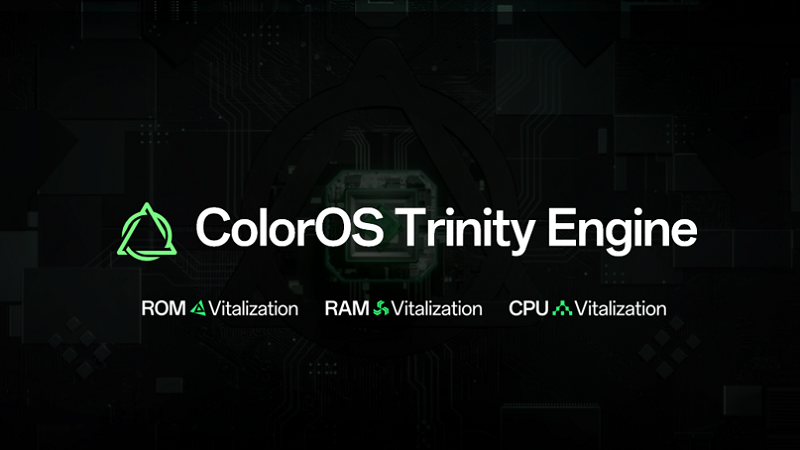
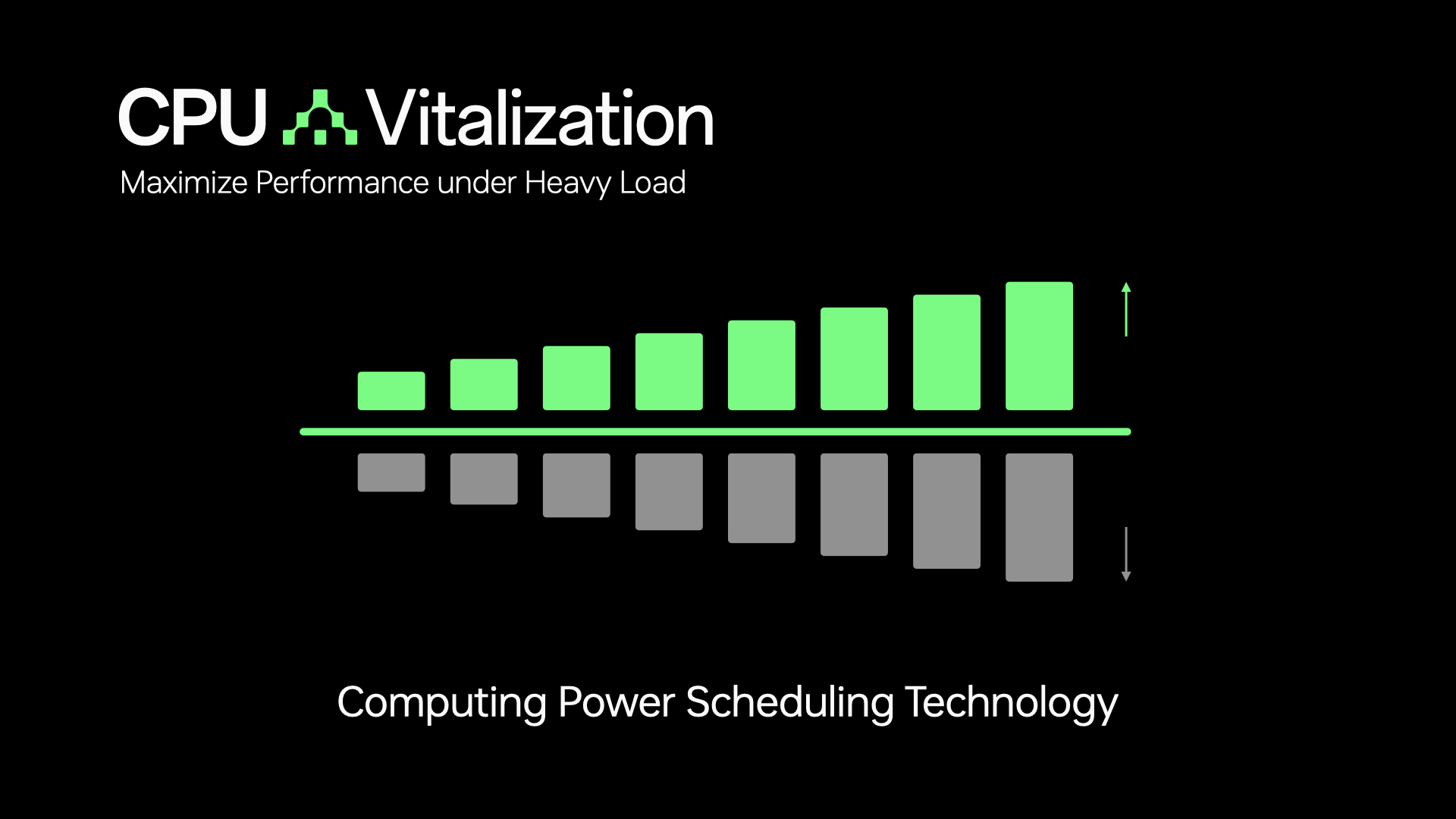
The upgraded Trinity Engine contains three core technologies: ROM Vitalization, RAM Vitalization, and CPU Vitalization. ROM Vitalization frees up more memory space by compressing app data and merging duplicated files to address performance degradation issues caused by memory filling up over the long term. RAM Vitalization works by reconstructing Android's underlying RAM mechanism and employing specialized techniques to accelerate app launch speeds and improve the level of fluidity when switching between apps. Finally, CPU Vitalization uses a sophisticated computing power model that can precisely schedule power resources while determining the best balance between performance and power consumption.
In addition to the Trinity Engine, OPPO's Instantaneous Bandwidth Technology set to be included in the forthcoming ColorOS 14 update is another example of how the memory management system has been rewritten to improve operating smoothness. OPPO developed the technology more than 18 months ahead of the release of the Google Linux open-source design by modifying more than 50 thousand lines of code in the original kernel. With Instantaneous Bandwidth Technology, memory access performance is dynamically adjusted according to smartphone usage, enabling up to 16-times faster speeds (i.e. from 4K to 64K during the transfer process from DDRAM to CPU). As the data transfer bandwidth increases, the loss of read data falls significantly, which in turn helps to improve memory utilization and reduce latency while using the phone.
By further deepening the synergy between hardware and software, ColorOS 14 brings users an ultra-smooth experience across all scenarios that's guaranteed to stay smooth for up to 48 months. Drawing on the insights of over 600 million active monthly ColorOS users, OPPO continues to use its unique position to identify global user trends and unmet needs in order to further optimize the smooth and stable experience on OPPO devices.
Hashtag: #OPPO
The issuer is solely responsible for the content of this announcement.
About OPPO
OPPO is a leading global smart device brand. Since the launch of its first mobile phone - "Smiley Face" - in 2008, OPPO has been in relentless pursuit of the perfect synergy of aesthetic satisfaction and innovative technology. Today, OPPO provides a wide range of smart devices spearheaded by the Find X and Reno series. Beyond devices, OPPO also provides its users with ColorOS operating system and internet services such as OPPO Cloud and OPPO+. OPPO has footprints in more than 60 countries and regions, with more than 40,000 employees dedicated to creating a better life for customers around the world.
About ColorOS
ColorOS is a highly customized, efficient, intelligent, and richly designed Android-based mobile OS from OPPO. With over 600 million global monthly active users, ColorOS supports 68 languages, including English, Hindi, Thai, and Indonesian.