Tanoto Foundation Backs Landmark Research to Unlock the Code of Asian Prevalent Diseases
Understanding Asian Cancers and Diabetes Through an Asian Lens
SINGAPORE - Media OutReach Newswire - 27 June 2025 - Tanoto Foundation today announced the funding of two transformative, Singapore-based medical research projects focused on diseases that disproportionately affect Asian populations: prevalent and aggressive cancers, and young-onset Type 2 diabetes.The multi-year initiatives aim to generate data-driven insights that can accelerate diagnosis, improve patient outcomes, and guide public health policy.
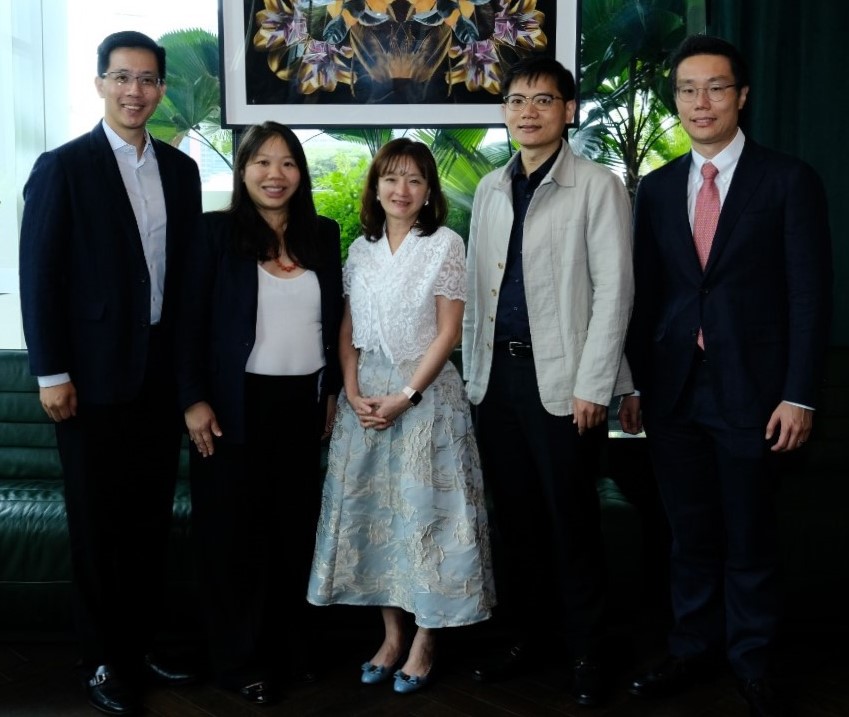
Despite global strides in medicine, Asia continues to face rising rates of cancer and diabetes – diseases that are biologically and clinically distinct in Asian populations but remain under-researched due to a lack of region-specific data. The two research projects, from National Cancer Centre Singapore and Singapore General Hospital, will focus on filling these gaps through deep genomic studies and innovative risk-prediction models.
Imelda Tanoto, Member of the Board of Trustees, Tanoto Foundation said: "Singapore is well-positioned to lead in medical science. It has strong research institutions and a population that reflects the diversity of Asia. By supporting researchers here who are focused on health issues that affect Asians, we hope to help drive discoveries that make a real difference to people's lives — both in Singapore and across the region."
Tackling Asian-Prevalent Cancers
Led by Dr Jason Chan, Medical Oncologist, National Cancer Centre Singapore, the research will investigate four types of cancers with high prevalence and poor outcomes in Asia:
- Breast Cancer in Asian Women, marked by earlier onset and biological differences compared to Western populations
- T/NK-Cell Lymphomas, an aggressive blood cancer dominant in East Asians with limited treatment options
- Bile Duct Cancer (Cholangiocarcinoma), increasingly linked to environmental exposures specific to Asia
- Rare Asian Cancers, collectively neglected but accounting for up to 25% of all cases in the region
These cancers are devastating but remain poorly understood because most research has focused on Western populations," said Dr Chan. "By decoding their molecular and genomic landscapes in Asian patients, we want to uncover new diagnostic and therapeutic opportunities to benefit patients."
A key feature of the project is its open-access commitment: anonymised data will be freely available to the broader research community to accelerate further discovery and collaboration.
Unmasking Diabetes Risk in Young Singaporeans
The second research project, led by Dr Daphne Gardner, Endocrinologist, Singapore General Hospital, will address the rising incidence of Type 2 diabetes in young adults, particularly prevalent in Singapore, where 1 in 5 young adults have prediabetes or diabetes, despite being of normal weight.
Unlike traditional assessments that rely heavily on BMI and family history, this project will develop a next-generation risk prediction tool by incorporating non-traditional indicators such as body fat distribution, continuous glucose monitoring, and health-seeking behaviour.
"Many young Asians with diabetes don't fit the usual risk profile. They're lean, may not have hypertension, and are therefore often overlooked by current screening models," said Dr Gardner. "We want to change that by identifying new risk signals and developing tools that are tailored to Singapore's population and the region."
Findings from the study aim to inform national diabetes screening guidelines and lead to earlier interventions that can curb long-term complications.
Singapore as a Hub for Medical Research Advancement
In addition to previously supported research projects, these two initiatives reflect a growing recognition of Singapore's role in advancing precision medicine for Asian populations, driven by strong clinical infrastructure, genomic capabilities, and public-private partnerships.
Imelda Tanoto added: "We believe precision health can change how we treat and prevent diseases. We're supporting researchers who are not only breaking new ground, but also making sure their work reaches people and communities across Asia. This is something deeply personal to us — it's about improving lives in a way that's inclusive, meaningful, and lasting."
This announcement marks a key milestone in Tanoto Foundation's continuing effort to improve the quality of healthcare and health standards, leading to longer and better healthspans.
Hashtag: #TanotoFoundation
The issuer is solely responsible for the content of this announcement.
About Tanoto Foundation
At Tanoto Foundation, we unlock human potential, help communities thrive, and create lasting impact. Founded in 1981 by Sukanto Tanoto and Tinah Bingei Tanoto, we are an independent family foundation that believes in providing every person with the opportunity to realize his or her full potential. To do so, we catalyse systems change in education and healthcare. Our approach is impact-first, collaborative, and evidence-based. We invest for the long term and strive to develop leaders who can drive sustained, positive outcomes.
More information is available at www.tanotofoundation.org/en/.