The Times Australia
Fisher and Paykel Appliances
News From Asia

.

ASEAN Cement Industry Unveils the World’s First Regional "2035 AFCM Decarbonization Roadmap"

BANGKOK, THAILAND - Media OutReach Newswire – 1 December 2025 - The ASEAN Federation of Cement Manufacturers (AFCM) has officially launched the 2035 AFCM Decarbonization Roadmap, marking the world's first regional decarbonization strategy for the cement sector.

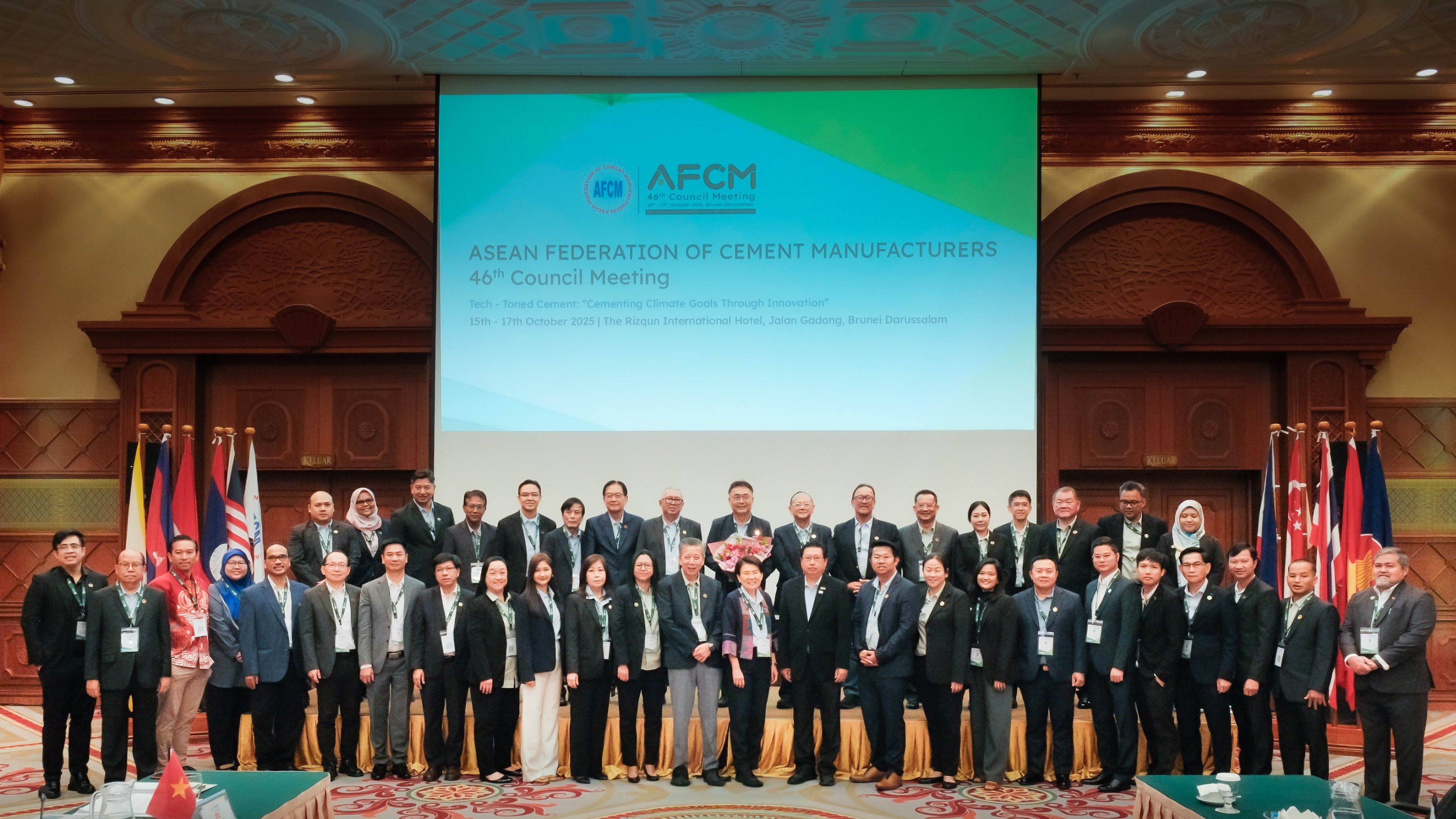
The announcement was made during the 46th AFCM Council Meeting in Brunei Darussalam, chaired by Dr. Chana Poomee and attended by leaders and representatives from cement associations across all eight AFCM member countries. The launch comes at a pivotal time as global momentum builds ahead of COP30 in Brazil, where climate action will be a central focus.
ASEAN Cement Industry Unveils the World’s First Regional “2035 AFCM Decarbonization Roadmap”

Cement manufacturing is vital to infrastructure and economic growth across ASEAN, yet it remains a significant source of CO₂ emissions. The 2035 AFCM Decarbonization Roadmap represents a unified regional commitment to accelerate decarbonization in alignment with both national climate policies and global environmental goals, strengthening AFCM's leadership in sustainable cement production.

Dr. Chana Poomee, AFCM President and Chairman of the Thai Cement Manufacturers Association (TCMA), described the 2035 AFCM Decarbonization Roadmap as a major milestone for the region's cement sector. The shared framework will guide systematic CO₂ reduction, enhancing regional competitiveness, and reinforcing AFCM's contribution to global climate solutions.

The 2035 AFCM Decarbonization Roadmap, with strong support from the Global Cement and Concrete Association (GCCA), outlines a comprehensive transition pathway built upon four strategic pillars:

  1. Expansion of low carbon cement enabled by performance-based standards,
  2. Transition to clean and renewable energy across production processes while enhancing efficiency to reduce both thermal and electrical energy consumption,
  3. Deployment of advanced decarbonization technologies, including CCUS, and
  4. Development of new supplementary cementitious materials to support next generation low carbon cement products.
The AFCM President calls on all members to consider the roadmap as a collaborative regional strategy for sustainable progress. At the regional level, these measures have the potential to reduce up to 38 million tons of CO₂ by 2035. While pursuing this collective vision, it acknowledges that the roadmap reflects the diversity of national circumstances, as each member country sets its own decarbonization targets based on regulations, industrial conditions, and available technologies. A key quick win is the reduction and phasedown of Ordinary Portland Cement (OPC), providing an immediate and impactful emissions reduction pathway, reflecting AFCM's determination to accelerate tangible progress.

AFCM member associations from Brunei Darussalam, Cambodia, Indonesia, Malaysia, the Philippines, Singapore, Thailand, and Vietnam expressed support for the regional direction outlined in the 2035 AFCM Decarbonization Roadmap and reaffirmed their commitment to advancing decarbonization in alignment with their respective national contexts. Members acknowledged that while the roadmap sets a collective vision, each country's implementation pathway will vary based on its baseline conditions, energy mix, material availability, policy framework, and market maturity. Members, therefore emphasized the importance of collaboration and supportive policies, increased use of alternative fuels, enhanced energy efficiency, wider adoption of advanced technologies, and the promotion of low carbon cement and concrete, while acknowledging specific targets and pathways may differ across countries.

"The 2035 AFCM Decarbonization Roadmap presents a significant opportunity to enhance regional competitiveness, drive sustainable development, and deliver substantial economic benefits. Government support, including policy adaptation, will be essential to ensure the roadmap's effective implementation. Through collaboration, innovation, and collective action, AFCM can accelerate the adoption of low carbon technologies, attract green investment, create new economic opportunities, and build a resilient, future-ready cement industry that makes a meaningful contribution to global decarbonization," Dr. Chana concluded.

Hashtag: #TCMA #AFCM

The issuer is solely responsible for the content of this announcement.

Times Magazine

Seven in Ten Australian Workers Say Employers Are Failing to Prepare Them for AI Future

As artificial intelligence (AI) accelerates across industries, a growing number of Australian work...

Mapping for Trucks: More Than Directions, It’s Optimisation

Daniel Antonello, General Manager Oceania, HERE Technologies At the end of June this year, Hampden ...

Can bigger-is-better ‘scaling laws’ keep AI improving forever? History says we can’t be too sure

OpenAI chief executive Sam Altman – perhaps the most prominent face of the artificial intellig...

A backlash against AI imagery in ads may have begun as brands promote ‘human-made’

In a wave of new ads, brands like Heineken, Polaroid and Cadbury have started hating on artifici...

Home batteries now four times the size as new installers enter the market

Australians are investing in larger home battery set ups than ever before with data showing the ...

Q&A with Freya Alexander – the young artist transforming co-working spaces into creative galleries

As the current Artist in Residence at Hub Australia, Freya Alexander is bringing colour and creativi...

The Times Features

Why a Holiday or Short Break in the Noosa Region Is an Ideal Getaway

Few Australian destinations capture the imagination quite like Noosa. With its calm turquoise ba...

How Dynamic Pricing in Accommodation — From Caravan Parks to Hotels — Affects Holiday Affordability

Dynamic pricing has quietly become one of the most influential forces shaping the cost of an Aus...

The rise of chatbot therapists: Why AI cannot replace human care

Some are dubbing AI as the fourth industrial revolution, with the sweeping changes it is propellin...

Australians Can Now Experience The World of Wicked Across Universal Studios Singapore and Resorts World Sentosa

This holiday season, Resorts World Sentosa (RWS), in partnership with Universal Pictures, Sentosa ...

Mineral vs chemical sunscreens? Science shows the difference is smaller than you think

“Mineral-only” sunscreens are making huge inroads[1] into the sunscreen market, driven by fears of “...

Here’s what new debt-to-income home loan caps mean for banks and borrowers

For the first time ever, the Australian banking regulator has announced it will impose new debt-...

Why the Mortgage Industry Needs More Women (And What We're Actually Doing About It)

I've been in fintech and the mortgage industry for about a year and a half now. My background is i...

Inflation jumps in October, adding to pressure on government to make budget savings

Annual inflation rose[1] to a 16-month high of 3.8% in October, adding to pressure on the govern...

Transforming Addiction Treatment Marketing Across Australasia & Southeast Asia

In a competitive and highly regulated space like addiction treatment, standing out online is no sm...