



There's no escape from scares when politicians debate industrial relations
- Written by: Michelle Grattan, Professorial Fellow, University of Canberra
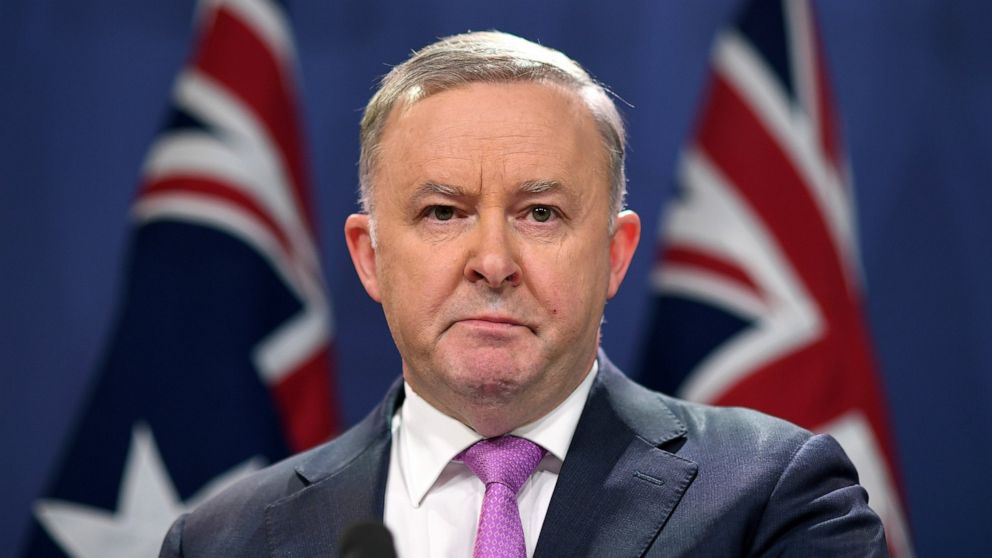
When he went out to denounce Anthony Albanese’s industrial relations policy on Wednesday, minister Christian Porter claimed it would put a “$20 billion tax burden” on business.
Just in case anyone missed the number, Porter said it 20 times during his doorstop.
Never mind that it was based on the policy going further than Labor says it actually intends (although its wording was imprecise). Porter’s costing was for “extending paid leave and long service leave entitlements to casual employees and independent contractors”.
Exaggerations and scares are the default positions when industrial relations reforms are debated.
So we now have two sets of workplace changes in the political marketplace, complete with two scare campaigns. As a hardened observer put it, “everyone is reverting to their normal battle stands”.
Industrial relations is one of the most complicated policy areas, so the heat and claims and counter claims are particularly confusing for workers and employers, many of them already hit for six by the pandemic.
The government has before parliament a clutch of measures to put more flexibility into workplace arrangements. They are generally seen as favouring employers, despite the inclusion of tougher provisions on “wage theft”.
The most controversial proposal would allow the Better Off Overall Test (BOOT) that agreements must satisfy to be put aside in certain circumstances. This would only apply to agreements made in the next two years, although the agreements themselves could run much longer.
Read more: Anthony Albanese's plan to boost protections for Australians in insecure work[1]
Labor says the government’s legislation – now before a Senate inquiry – is simply a plan to cut wages, and declares it will vote against its second reading stage in the Senate. If the bill passed that stage, however, it would re-engage on the detail.
The union movement, after months of tripartite talks organised by the government, is also fighting the legislation, with an advertising campaign that’s being stepped up.
The Coalition’s attitude is that it will try to get what it can of the bill through the Senate – if necessary jettisoning the BOOT part – but won’t invest serious political capital in the effort.
Porter is negotiating with the crossbenchers, who regard the bill as a mixed bag. He needs three of the five non-Green crossbench votes. One Nation (with two votes) will want substantial alteration to the legislation and isn’t keen on the BOOT changes.
Once the upper house has had its say – the vote will be in the week of March 15 after the committee reports on March 12 – that’s it, from the government’s point of view. It is not comfortable defending an industrial relations policy. WorkChoices was a long time ago, but is still a nasty memory in Coalition minds.
It’s a different story for Albanese. Labor regards industrial relations as good campaigning ground, where it wants to have a fight. The IR blueprint is the latest of only a few policies he’s put out – the most notable of the others is on childcare.
The workplace policy[2] is designed to be, and needs to be, one of Albanese’s central planks for the election. He must be able both to sell its positives and defend it from critics. Immediately after its release, the task of defending suddenly became the more pressing.
The policy is centred on extending to people in insecure work more rights and protections, with enhanced rewards and conditions.
A better deal is promised for workers in the “gig” economy, including minimum rates of pay, delivered via the Fair Work Commission. There would be a definition of a “casual” worker; portability-of-entitlements arrangements where practical for those in insecure work; and pay guarantees for labour hire workers.
What the policy doesn’t cover is significant – wage theft and fixing an enterprise bargaining system that is clearly no longer fit for purpose.
If the government gets through its measure on wage theft, Labor won’t have to bother with that. But whatever happens with the proposed changes to enterprise bargaining, one would think this is an area where Labor will need its own policy.
On the face of it, Labor’s proposals around insecure work should be attractive to many voters. The pandemic has highlighted job insecurity. And the gig economy has spread in recent years (of course many gig workers won’t be voters – they are international students and others on visas).
But in practice the policy is likely to be a tough “sell” for Albanese, for several reasons.
First, its announcement has come without a lot of detail and initially with some sloppy drafting. It wasn’t a “clean” launch, which facilitated the “scare”.
Second, even discounting Porter’s figure, the changes would represent a substantial cost to enterprises. Just as the government’s legislation is, broadly, a policy for employers, so the opposition’s plan is a policy for workers. Therefore, as Labor anticipated, there has been a business backlash.
Third, it is nearly impossible for Labor to answer legitimate questions about this cost to business – or indeed the effect on prices of, for example, delivered food.
Read more: Low wage, low growth: Porter's industrial relations bill is only good in parts[3]
This is because so much would depend on exactly what the Fair Work Commission decided, how individual businesses responded, and other unknowns.
While it’s worse than petty to complain pizza prices could go up if the delivery person got a decent remuneration, such points will be pushed by opponents.
Labor is deploying various defences against the onslaught from government and business over cost. On the one hand it’s saying that the fundamental issue is fairness to workers and, on the other, insisting the policy has limits.
But uncosted policy is always dangerous for Labor, as we saw so clearly last election with the opposition’s climate change pitch.
Equally, if Labor made a stab at costing, that would carry its own risks.
In the absence of a costing, critics will have free range; if estimates were forthcoming, the debate would bog down in their detail.
Fourth, the preoccupation with COVID – among the public, the politicians and the media – remains nearly all-consuming, so it is very difficult for Labor to cut through with any policies. And that segues to the question of Albanese’s ability to get messages across.
Albanese finds himself caught both ways. He is increasingly under pressure to produce policies. But the COVID fog means their impact will be less than in normal times. How he performs on this one will be watched very closely by nervous colleagues.
References
- ^ Anthony Albanese's plan to boost protections for Australians in insecure work (theconversation.com)
- ^ The workplace policy (anthonyalbanese.com.au)
- ^ Low wage, low growth: Porter's industrial relations bill is only good in parts (theconversation.com)









