

Prime Minister's address to National Press Club
- Written by: Scott Morrison
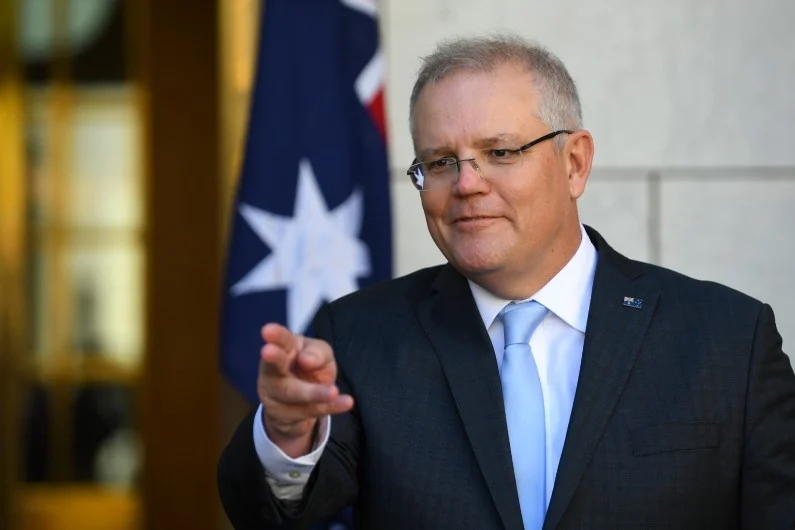
PRIME MINISTER: Thank you very much, Sabra. It's good to be back here again at the Press Club and this all-important week leading up to next year’s- next week's I should say, Budget.
And it's great to be joined by so many of my colleagues here today. The Deputy Prime Minister, of course, Michael McCormack, and I commend him on his tremendous speech he gave yesterday. The new Richard Mercer of Australian politics with his calls for Australians to go to bush and support with the harvest, I strongly endorse his comments yesterday. It's good to have the Leader of the Government in the Senate, Mathias Cormann, and Mathias will be leaving us at the end of this year. They'll be very big shoes to fill in our Government, and this will be his last Budget and I want to thank you, Mathias for the tremendous work you’ve done. Not just on this Budget, but the six prior to it. It has been a herculean effort. Today the Treasurer is still back there with a sharpened pencil as he works through the time touches of the Budget for next week. I also want to thank the Treasurer for the tremendous job he's been doing together with Mathias Cormann to bring forward what will be a very important Budget next week. To Karen Andrews who joins us here today - what I'm presenting to you today is absolutely the product of her labours over not just many weeks, but over many, many months, and I'm looking forward to presenting that today. Karen, and I thank you for your leadership in this area in particular. We're joined by other ministers, of course, as well. We have Keith Pitt in resources and energy and Angus Taylor - sorry, resources and Northern Australia, I haven't made any changes, Angus, don't worry, or Keith. You'll be pleased to know, nor do I intend to. They're both doing a tremendous job in all of those portfolios. They share a department together and they’ve got it absolutely cranking on all cylinders. And tomorrow you'll hear in Sydney from the assistant minister Ben Morton who’ll be speaking more about the Government’s deregulation agenda.
Can I begin - can I also acknowledge Nev Power, I’ve just seen him here, as the chair of the National COVID Commission. And Nev, thank you for the great work you have been doing with the Commission. As you know, together with Andrew Liveris, what we have been speaking about today has been importantly informed by the great work that you and your team have been doing in its previous and now its new form.
Can I begin today by acknowledging the Ngunnawal people of course, their elders - past, present and emerging for the future.
Can I also, as is my custom, to acknowledge and pay my respects to any veterans or serving members of the Australian defence forces who are here with us today or joining us from outside this place and simply say on behalf of a grateful nation, thank you for your service to our country.
The 2020-2021 Budget, to be delivered by the Treasurer next [Tuesday], will be arguably one of the most important, if not the most important since the end of the Second World War.
This year, the global economy is forecast to contract by around four and a half per cent. The world economy during the GFC declined by 0.1 per cent. So in simple terms, the economic contraction we’re expecting this year in the global economy is 45 times greater than the GFC.
The scale of what is occurring today is incredibly sobering.
Never before have we experienced a global recession of this magnitude in a truly modern, interconnected world and global economy, no longer insulated by geography and old technology. Global recessions now occur in real time.
So this Budget will be necessarily different in scale to those we have seen in many generations. It will respond responsibly to the challenge of our time and consistent with the principles that we laid down at the outset of the pandemic back in March.
The Budget will confirm the strong plan we have to recover from the COVID-19 recession and to build our economy for the future.
To cushion the blow of the pandemic recession.
To recover what’s been lost - the jobs, the livelihoods, the hours, the incomes, the customers, the clients.
But importantly to take new ground by rebuilding our economy for the future.
And we’ll do this, importantly, while honouring our guarantee to the essential services that Australians rely on - the schools, hospitals, Medicare, aged care, disability services.
And we’ll do it while keeping Australians safe. And we’ll do it without increasing taxes.
That's what the 2020-21 Budget is all about.
The work though, is already underway. Unemployment was falling. More Australians were in jobs than ever before, the female participation rate at an all time high. More working age people were off welfare and into jobs. Our AAA Credit Rating had been secured. And our Budget was back in balance.
This meant that, as the pandemic hit, we could act quickly and confidently to cushion the blow.
Treasury advises that some 700,000 additional jobs would have been lost in measured unemployment were it not for the measures the government undertook - JobKeeper, JobSeeker, cashflow support and many, many more.
We are also working to recover what has been lost. 760,000 jobs that were either lost or reduced to zero hours as the COVID crisis hit, have already come back into our economy. This is a great tribute to the resilience of Australians and the Australian economy, its fighting spirit, the Australians who make our economy work each and every day.
Our effective unemployment rate has fallen from 14.9 per cent, as the crisis hit, back to 9.3 per cent. But that’s not good enough. there are further risks, there are further challenges ahead, there are further unknowns.
We are not through this yet not by a long shot. And there is still much more to be done.
We are rebuilding our economy for the future through our JobMaker economic plan that I first spoke of right here at this platform.
Our plan for affordable and reliable energy will secure our liquid fuel reserves and lower emissions. It will get the gas we need for manufacturing to succeed, for households to have more money in their pockets, to firm up the reliability of renewables, like solar and wind, and to transition our energy economy into the future.
This transition will be guided by our comprehensive technology investment roadmap, released by Angus Taylor recently. To deliver reliable, scalable, lower cost, lower emissions technologies to underwrite our economy over the next 30 years and beyond. A plan not driven by taxes but by technology.
We’re delivering lower taxes for businesses and individuals. Australians are already benefiting from the tax cuts made in the last two budgets. Just this year alone, in the billions. The small and medium-sized businesses tax rate has been cut to 26 per cent and the instant asset write off extended and expanded to investments of up to $150,000.
Australians are keeping more of what they earn, as we promised they would. But there is still more to be done and there will be more next week.
Major changes have been introduced to how we do skills training. Our $1 billion JobTrainer program with the states and territories is boosting the number of training places in this year alone by 340,000 places, that’s good news for school leavers and those who are looking for those training places, coming out of jobs.
We have secured a new heads of agreement on skills reform, as I said we would do, with the States and Territories through the National Cabinet to ensure Australians acquire the skills they need for the jobs that businesses need them to be able to do. The National Skills Commission and Commissioner has been established to guide these investments, not just by the Commonwealth but by the States and Territories also.
The Government has committed $2.8 billion to keep up to 180,000 apprentices in this country on the tools at some 90,000 small and medium-sized businesses through to the end of March next year. And yesterday, the Education Minister Dan Tehan announced an extra 12,000 places for students going to university next year to help them upskill and get job ready.
We are working to fix the problems in our industrial relations system so we can employ more people.
The Attorney-General Christian Porter has brought unions and employer groups together in search of common ground to boost employment, to grow our economy. One thing is very clear from this process, and particularly recent events out at Port Botany, that we cannot afford “business as usual” in industrial relations. It keeps people out of jobs.
We continue to bring forward record investments in infrastructure in our three key infrastructure grids, as the Deputy Prime Minister well knows and leads that work - our transport grid, our water grid and of course our energy grid.
Major projects like Inland Rail, Western Sydney Airport, the North South Connector in Adelaide, Stage 3A of Gold Coast Light Rail in Queensland, the Bunbury Outer Ring Road in Western Australia.
The $484 million Dungowan Dam project, where we’re committing half those funds. In NSW that will increase storage capacity from 6.3 gigalitres to 22.5 gigalitres. Design, geotech and environmental assessments that are underway at the site. Then there’s the Emu Swamp Dam, a 12 megalitre irrigation dam and water supply scheme on the Severn River in Queensland. It is under construction, boots and utes on the ground.
We are working with the states to accelerate the critical energy infrastructure identified in the AEMO Integrated System Plan. We are bringing forward projects like Marinus Link, VNI West and Project Energy Connect by at least 12 months, it’s creating over 4,000 jobs and helping ensure reliable, affordable energy for families and for businesses to create jobs.
We’re making it easier for business to do business, cutting red tape, streamlining approvals, particularly for major projects, including our new single touch approvals reform under the EPBC Act.
Our Digital Plan I announced with the Treasurer earlier this week will upgrade the circuit boards of our economy, making it safer and easier to get paid, to make payments, to connect with customers and deal with government. It will drive uptake of digital technologies across businesses, that will in turn boost productivity and innovation, especially vital for our manufacturing sector which is our topic today.
That plan brings together some $7 billion of investments in cyber-security, NBN, 5G applications, digital skills capability, RegTech, FinTech, open banking, consumer data right, many things I suspect people looking on today would not be familiar with, but they’re going to make a big difference to how businesses operates in this country in this new age.
Assistant Minister Morton, as I said, will be outlining more changes tomorrow, a further update on the work of our Deregulation TaskForce he leads on my behalf.
We are continuing to prise open new markets for Australian business overseas, that work hasn’t stopped. More than 70 per cent of all our two way trade is now covered by export agreements, that compares to just 26 per cent when we came to government, giving Australian companies preferential access to more overseas markets. And we are not just stopping there.
Second round market access discussions as part of the UK FTA negotiations are underway this week. Our EU FTA negotiations are continuing. Our landmark deal with Indonesia has come into force in July and we’ve set a new benchmark for digital economy agreements with our high-quality deal with Singapore.
More affordable and reliable energy. More effective and better resourced skills training and development. Lower taxes. Boosting infrastructure investment in our water, energy and transport grids. Cutting red tape and making it easier to do business. Fixing problems in our industrial relations system to get more people into jobs. Opening up access to more overseas markets for Australian exporters.
That’s our plan.
Our economic response has meant that, despite the hardships that Australians have suffered, Australia is still one of just a handful of economies, along with South Korea, Taiwan and Norway, leading the world in both the economic and the health response to the pandemic.
Our June quarter contraction of 7 per cent, which hit hard, we must remember compares to falls of more than 20 per cent in the UK, falls of more than 10 per cent in Canada, New Zealand, Italy and France, and falls of almost 10 per cent in Japan, the US, Germany and the OECD on average as a whole.
Today, I want to talk about our JobMaker plan for the future of manufacturing in Australia.
We make things in Australia. We make them well, we do it well. We need to keep making things in Australia. And under our plan we will.
Manufacturing employs some 860,000 Australians, and prior to the pandemic it generated more than $100 billion in value for our economy each year and over $50 billion in exports.
It is also a large driver of research and development. Manufacturing contributes around a quarter of total R&D investment in Australia, roughly four times its share of the economy.
Manufacturing is particularly important to regional economies, in places like the Hunter, north and central Queensland, Tasmania, regional Victoria.
Over recent decades, in time, our manufacturers have largely moved on from the mass production of standardised goods. Long gone are the days of trying to compete with labour-intensive, low-cost manufacturing economies.
Gone too are any pretensions of protectionism as a viable strategy for domestic manufacturing.
That’s not where our future is. Manufacturing in Australia has been transformed and will continue to transform, today it is more agile, more dynamic and less monolithic.
Today’s advanced manufacturing enterprise stretches from the labs doing the research and development, the skilled workers doing the design and engineering, through to sales, marketing and after-sale services.
Increasingly, this is where most of the value is created - around half of the jobs in manufacturing are actually in these parts of the manufacturing process.
Even the assembly line is changing through the increased use of intelligent robotics and 3D printing.
We need a deeper appreciation that advanced manufacturing is not just about what we make – it’s about how we make it, how we sell our products domestically and internationally. So what is to be done?
Now an accomplished engineer before she entered Parliament, Karen Andrews, our Minister for Industry, Science and Technology, has taken up this question with gusto, providing the leadership for the strategy I am outlining today. And I thank her for her work. I also thank and recognise the role of the National COVID Coordination Commission’s Manufacturing Taskforce led by Andrew Liveris. Under Andrew’s guidance, the taskforce has consulted widely and provided practical advice to inform our work, including valuable insights from best-practice overseas where he has had great involvement.
So to our modern manufacturing strategy. The objective is to build scale and capture income in high-value areas of manufacturing where Australia either has established competitive strength or emerging priorities.
This will require our manufacturing sector to be even more productive and highly-skilled. To be more collaborative, at the leading edge of R&D, commercialisation and technology adoption. To be more outward-looking in searching relentlessly for footholds in global markets.
At a government level, we must first understand that a successful manufacturing sector will depend on broader economic policies that support greater productivity.
Again, affordable and reliable energy. Lower taxes. Industrial relations changes. Training and skills development. Cutting red tape. Infrastructure investment. All of this supports manufacturing and there is more.
Too often in the past industry policy has ignored these foundational elements in the vain hope that isolated programs, subsidies and work-arounds could make up for the broader deficiencies in economic settings.
We also need to get more targeted and apply greater discipline to how we invest in these sectors as a government. It must be part of a longer term planning.
Our Government is determined to set a ten-year time horizon under this strategy where all parties - industry, workforce including unions, governments at all levels, capital including superannuation funds and our scientific and research community - are pulling together in the one direction.
Our practical strategy has three components.
Firstly, create a business environment where our manufacturers can be more competitive. Secondly to align resources to build scale in areas of competitive strength. And thirdly to secure sovereign capability in areas of national interest.
That’s our plan. And we will be investing an additional $1.5 billion in specific industry measures, over and above what we’ll be doing in tax, energy, infrastructure and the like, to back our plan in next week’s Budget.
Now, firstly, creating a business environment in Australia where our manufacturers can be more competitive. That is foundational, as I have said.
You can invest all the resources you like in industry programmes, but if taxes are too high, if industrial relations systems are too complicated, the adoption of digital technology is patchy, if energy is too expensive, if approvals take too long and are too costly, if the roads are clogged, and employees do not have the right skills, and you are shut out of overseas markets, then you are wasting your time. That’s why all those things - correcting all those things is important.
For manufacturing to be successful in Australia, all manufacturers, we must become a more competitive place for manufacturers to do business. Whether it be aluminium smelting in Gladstone, steel processing in Port Kembla and Whyalla, ethanol production at Shoalhaven Heads down on the south coast, fertiliser production in Mount Isa, aerospace at Fishermans Bend for Boeing or ships at Port Adelaide and Henderson in Western Australia. And that is what our JobMaker plan is all about - creating the right incentives and enablers for businesses to compete so they can create more jobs and keep more Australians employed.
Our broader JobMaker plan is the foundation of our manufacturing strategy, benefitting all manufacturers, especially when it comes to tax incentives for investment, energy, skills, R&D and technology.
Now the Treasurer will have more to say about those particular issues next week, especially when it comes to investment and R&D incentives, so I will not touch on those issues today.
In a manufacturing context, it is especially important to highlight the necessity of our efforts to create a competitive domestic gas market.
The NCCC advised us that gas is up to 40 per cent of many industries' cost structures in manufacturing. Combined with higher electricity costs, the NCCC said that has moved many firms into a ‘doom loop’ where they are living ‘turnaround to turnaround’, making existential decisions about their operations at each point of the next major maintenance decision, rather than decisions, that they’d prefer to be making, in technology and much-needed productivity improvements to remain competitive in the future. This needs to change.
That is why, as part of our gas-fired recovery plan, we have committed to resetting our east coast gas markets, unlocking gas supplies, establishing a new gas hub and improving our gas grid distribution systems. If you’re not for gas, you’re not for manufacturing and heavy industries and the jobs that they support. For many manufacturers, gas is half the problem that they confront and that is why reforming that sector is so foundational to that achievements we hope for in the manufacturing sector.
Now the second component is to align resources to build scale in areas of competitive strength. The reality is we cannot and should not seek to reach global scale in a large number of sectors, we can’t be all things to all. This is an important lesson from other small and I’d say medium-sized high income economies like ours, which have leveraged home-grown manufacturing into global success, this has happened in Singapore, the UK, Germany and Canada. all circumstances and areas that we have looked at.
A lesson is don’t try to do everything. It’s all about alignment, across different levels of government, with industry and with the research and education sectors and siloed programs don’t work.
Against that backdrop, the Government has identified six National Manufacturing Priorities in areas of established strength and emerging priority. They are:
- The resources technology and critical minerals processing
- Food and beverage manufacturing
- Medical products
- Clean energy and recycling
- Defence industry, and
- The space industry.
As the world’s leading mining economy, Australia can capture min-tech and critical minerals processing based on our natural resource endowment. Our high-skilled workforce and world-class technological capability. And I particularly welcome the announcements made today by BHP to that end. They have set, I think, a leading standard.
Australia’s Mining Equipment, Technology and Services sector, the METS sector, already plays a key role in adding value beyond resource extraction in the mining supply chain. At the same time, we know demand is increasing for critical minerals that are inputs to batteries, and renewable technologies and other manufactured materials - from partners like Japan, the US and Europe providing us with opportunities to just move up that value chain.
Food and beverage manufacturing, like Bickford’s down there in South Australia, one of the fastest growing parts of our manufacturing sector in recent years and the largest employer in our manufacturing sector. It is the second area of focus as part of this strategy. Australia’s status as a leading agricultural producer with a premium reputation for safe, clean produce gives us a real edge here, a vital edge.
Thirdly, the COVID-19 pandemic has highlighted our gold standard health and medical research and manufacturing capability. This provides a key platform for commercialising new medicine and medical product breakthroughs right here in Australia. Firms such as Cochlear, CSL, ResMed have shown what can be achieved when you combine high-quality manufacturing, major investment in commercialising great ideas and a global outlook, supported critically by world-class primary research and a stringent regulatory framework to support it. All of those things, particularly CSL playing such a critical role as we respond to COVID.
Then there is clean energy and recycling, an important part of the government’s broader challenge. Something we believe we can make a major contribution to.
As Energy and Emissions Reduction Minister Angus Taylor highlighted last week, Australia has a great opportunity to make a global contribution in areas like battery storage and hydrogen technology in particular.
So too the fast growing waste and recycling sector offers Australian firms great potential and global scale underpinned by research strengths in the circular economy in places like the University of Sydney’s Waste Transformation Research Hub and the UNSW’s Centre for Sustainable Materials Research and Technology. When I was in New York about this time last year, Sims metal does all the recycling for New York. An Australian company, doing a big job on a global scale. We know how to do this stuff.
Our defence sector provides Australian manufacturers with the opportunity to provide sophisticated defence equipment and supplies to the Australian Defence Force, but not just them, but also as well as for export markets and part of global supply chains as we’ve seen with the Joint Strike Fighter project.
The Defence Sovereign Industrial Capability Priorities are about targeting investment to build national capability and capacity through manufacturing, and it’s backed by the National Naval Shipbuilding Plan, the Defence Export Strategy, and the $1 billion Defence Innovation Hub and the $1.3 billion Next Generation Technologies Fund.
Space opens up a further area of emerging sovereign capability where Australia is in a position to leverage close alignment between governments, the research community and industry - all under the umbrella of the Australian Space Agency, which Minister Andrews has already established down in South Australia.
The space sector is estimated to reach some $1 trillion globally by 2040. And we want to be a part of that.
Achieving scale in these areas and all of these areas I have spoken about will be a multi-year project which is why we are taking a ten-year perspective. Immediate action will be taken though, with additional investment, a refocusing of existing programs and deeper alignment across all parts of the manufacturing innovation system.
Firstly, we will commit $52.8 million in additional funding to a second round of the successful Manufacturing Modernisation Fund, focusing on larger projects. The Fund will provide grants of between $100,000 and $1 million on a three-to-one funding basis to support transformational investment in technologies and processes. This new round is expected to support around 150 businesses in our priority areas.
The centrepiece of our strategy though, is a $1.3 billion Modern Manufacturing Initiative (MMI) it will provide a new investment vehicle geared to overcoming barriers to scale. We’ve got to get the scale. The MMI will leverage co-investment with states and territories, industry and research institutions across three streams of activity.
- Firstly, collaboration – investment of around $80 million each on average to foster long-term, large-scale production or R&D facilities involving consortia of businesses and other organisations, including physical clusters – like at the Western Sydney aerotropolis
- Secondly, translation – investments of around $4 million on average for industry-led projects translating research and bringing new products to the market.
- And thirdly, integration – investments also of around $4 million connecting local firms with global value chains, giving businesses the tools they need to access export markets and create economies of scale.
Now through this initiative we will both target priority areas and invest in the cross-cutting technologies and processes that enhance production efficiency - such as automation, digitisation, data analytics, artificial intelligence and other enabling technologies, which make everything else work.
Additional investment will occur in tandem with a comprehensive review of existing programs in the Industry, Science and Technology portfolio to better align them with the strategy. As part of this, we’re providing an additional $50 million to the Industry Growth Centres initiative to support projects in the priority areas out until the end of June of 2022.
Now having established those six priority areas, the next phase will involve partnering with industry to co-design roadmaps geared to build scale in each area.
These industry-led roadmaps will identify growth opportunities, barriers to scale and required actions along the entire value chain in each of our priority sectors. They will guide future investment and action from both government and industry, getting that alignment.
Now these will be finalised by April next year before the Budget. The roadmaps will set clear goals and performance indicators - so how many more jobs, what level of R&D and how much more investment - so we can track it over the next two, five and 10 years. Where appropriate, they will draw on the previous Industry Growth Centre Sector Competitiveness Plans and the lessons learnt from those efforts.
To aid this effort, Minister Andrews will enlist a refocused and refreshed Industry, Innovation and Science Australia Board in a key advisory role.
That will occur under the continued leadership of Andrew Stevens, the former head of the Advanced Manufacturing Growth Centre, and the new IISA Board will provide expert advice to the Minister. And Minister Andrews will have more to say on the governance arrangements and new appointments to that board over the coming weeks.
Now, the third imperative of our Modern Manufacturing Strategy is to build national resilience by securing sovereign capability in areas of national interest.
We cannot ignore the obvious. The efficiency benefits of hyper-globalisation and highly fragmented supply chains can evaporate very quickly in the event of a major global shock like the COVID-19 pandemic as we have seen.
Armed with this experience, it is only sensible that Australia consider, as so many other countries are, more options to guard against supply chain vulnerability for critical necessities and to secure us against future shocks.
To this end, a whole-of-government review of Australia’s supply chain vulnerabilities in the wake of the COVID-19 pandemic is underway. And for the most part, Australia has performed very well, with limited disruptions to critical supplies of manufactured products through this pandemic.
This achievement can be attributed in no small measure to the agility and adaptability of our domestic manufacturing industry. But equally it would be irresponsible for any Australian Government to not consider new mechanisms to support local capability for critical materials, equipment and services in the wake of this shock.
So that is what we are doing.
The Government will invest $107 million in a new Supply Chain Resilience Initiative. This will support Australian manufacturers investing in capabilities to address areas of identified acute vulnerability domestically, and to ensure they are in a position to contribute to the supply chains of trusted partners and like-minded countries.
Sovereign Manufacturing Capability Plans will be developed in key areas and a range of policy options will be considered, including procurement and long-term contracting arrangements, as well as actions to promote better information sharing and collaboration between government and industry.
It is not to overcome each and every source of vulnerability based on domestic production alone. The current crisis is not an excuse for protectionist policies that subsidise inefficient firms and industries.
Hence we are complementing our actions to boost domestic sovereign capability through greater collaboration with like-minded countries. Already, this has been an area of fruitful discussion with other world leaders as part of the Smart COVID-19 Management Group convened by the Austrian Chancellor.
So in conclusion, Australian manufacturing will play a key role in our economic recovery from COVID-19, creating and supporting jobs in cities, in towns and regional communities and rural areas right across Australia. It’s a plan for all of Australia and all Australians.
Our efforts to grow Australia’s manufacturing sector begin by creating a stable and competitive business environment, through our JobMaker plan, but it does not end there. Our Modern Manufacturing Strategy will open a new chapter based on:
- Building scale in areas of competitive strength
- In driving collaboration and better aligning resources across governments, industry and the research community
- Enlisting expertise to set clear goals for global success
- Making science and technology work for industry and for Australians
- And finally, strengthening sovereign resilience in areas of strategic importance.
That is how you create jobs. That is how you recover from the COVID 19 recession. That is how you build your economy back for the future, which is what our Budget will be all about. That’s our plan.
Thank you very much for your attention.
SABRA LANE: Thank you. You touched on industrial relations a couple of times in your speech and in fact the last time that you were here, as you acknowledge, you launched JobMaker, where you talked about the need for change on industrial relations and you voiced a time-bound approach with September as the deadline with a number of round-table groups, where you also appealed to people to put down their tribal - traditional tribal allegiances to one side. September's come and gone. Can you tell us where that process is at? Is IR reform still part of your agenda? And will it be announced in the weeks ahead?
PRIME MINISTER: It certainly, certainly definitely is. I want to thank all of those who have participated in what has been a fairly feverish paced possess and there has been a lot of good faith and goodwill. There have been a few disagreements along the way, not to be unexpected. But at the same time, people have remained at the table. And the Attorney-General and I have been very grateful for that, as has the Treasurer. And we have finished that round of the process, and that is being distilled by the Attorney-General, as Minister for Industrial Relations, and he is now fashioning a plan that will come forward to the Cabinet. We've already had a number of discussions about where that would take us. I think we have been able to make some good progress and the government will make further decisions about how much further we would go beyond what has been discussed because ensuring that we have an industrial relations system that can employ more people, particularly now, is so critical. We can't have the rather militant response and approach that we're currently seeing out there in Port Botany. I mean, we're talking about a dispute here where they are seeking to reduce automation technology at our waterfront. To resist the improvements in productivity that will support farmers get their products to international markets. I mean, the process has to be, surely, about making the enterprises that employ people work better for everybody. Our ports are a critical link in our economic chain with the world. And we can't do industrial relations that way. My hope is that that is an outlier, that that is an aberration, that that is not a position that is more broadly shared amongst those in the industrial relations area. And so I hope some commonsense will prevail there and the interests of Australians right across the country, from the paddock to the cities, will be respected in resolving that as quickly as possible.
LANE: Reminder to my colleagues, please, one question per person. David Crowe.
DAVID CROWE: Thank you Sabra. David Crowe from the Sydney Morning Herald and The Age. Thanks for your speech, Prime Minister. You mentioned research and development several times during your speech. Before the Senate at the moment, the government has a bill that changes taxation on R&D, saves money. One of the critics of that bill is a company called ResMed, which of course has made a big contribution this year by making ventilators.
PRIME MINISTER: True.
CROWE: At the moment, you seem to be spending $1.5 billion on manufacturing, at the same time you save $1. 8 billion on R&D tax concessions. Does that make sense? Are you open to rethinking the R&D tax changes so that you can actually encourage more research and development?
PRIME MINISTER: We certainly want to encourage more research and development. And our answer to that question will be delivered by the Treasurer next Tuesday night.
CROWE: So there will be more in the Budget?
PRIME MINISTER: His answer will be to that question in the Budget next Tuesday night.
CROWE: Can I have a third question?
LANE: That is very cheeky.
CROWE: Can you offer any more guidance as to what kind of changes you are thinking about?
LANE: Goodness gracious.
PRIME MINISTER: The Budget speech starts soon after 7:00pm.
LANE: Thank, David. Rosie Lewis. From The Australian.
ROSIE LEWIS: Rosie Lewis from The Australian. Treasury's best case assumptions in the July budget were quickly derailed.
PRIME MINISTER: Sorry, can you start that again Rosie?
LEWIS: Treasury's best case assumptions in the July budget update were quickly derailed. We had Victoria's lockdown extended and new border closures come into play. How confident can you be in next week's Budget assumptions as the country reopens again and how vital is it that once states do open they stay open?
PRIME MINISTER: On the last point, I mean absolutely important. That is why we have to be patient about the process we're currently engaged in. We do not want to see a third wave in Victoria or a second wave anywhere else in the country. So that's why getting it right and making sure the testing, tracing and the outbreak containment measures are totally up to the mark and to ensure that we contain any outbreaks that may occur and it wouldn't be surprising to see other cases occur as states and territories open up. But as New South Wales has demonstrated, you can do that and keep your economy open. I think New South Wales, as I've said on many occasions, provides the gold standard about how you actually achieve this. In relation to the Budget numbers themselves, Australia is in as good a position, if not better than most, to be able to assess where our finances will go and how our economy will perform. But we are living in the most uncertain times any of us have seen in trying to get an understanding of what these numbers will be. I think what we've seen over the last four or five months, backed up the wisdom of having the Budget now, not in May. It would have been a very different budget in May. I am sure Mathias would agree to what we are now handing down next week. And it was wise to be patient, to not rush, to ensure we better understood what was happening with COVID-19 and our capacity to deal with it. Now, Australia has been able to balance both the health and the economic objectives better than almost every other country in the world today. Certainly every other developed country. As I said, only Norway, economies like Taiwan, then countries like South Korea and Finland as well, I could probably add to that list, have been able to combine these dual objectives as well as Australia has. But that said, we're in the same global economy as everyone else. Australia's economy, we can do everything we can to boost it here in Australia, through the measures that will be in next week's Budget and the JobMaker plan over the next five years. But we will also be vulnerable to the global economy. 4.5 per cent fall this year, 45 times worse than the GFC. That is something to reflect on. So, in that environment, I think Treasury's task, and the Reserve Bank's task for that matter, the OECD and others, their task is very, very difficult. And so that's what we will know next week. If circumstances change again in the future, as you've seen the government do, we've quickly come together, considered any changes that are necessary, and we've acted. And that's what you have seen for the last six months. That's what Australians will continue to see.
LANE: Phil Coorey.
PHIL COOREY: Hi, PM. Phil Coorey from the AFR. Just on your comments on sovereign manufacturing capability plans, you said the crisis is not an excuse for protectionist policies to subsidise inefficient firms to make things here locally. Do you consider government procurement protectionist? In other words, a state or federal government agreeing to effectively underwrite the manufacture of critical products here by agreeing to by them. Do you see that as protectionist or otherwise?
PRIME MINISTER: On those issues, we will always abide by the World Trade Organisation rules and they are always a key consideration in how we frame our procurement policies. And we cast them as being Mathias's responsibility as Finance Minister for setting those. You have to balance your ambitions as an open, trading nation and you do that by respecting those rules and playing your part in upholding those rules, and modernising those rules, which we're doing. But at the same time, understanding that we have a great opportunity through how we procure as a country, whether it is in defence or anywhere else. I mean, I was advised today that 95.7 per cent by volume and 91.6 by value of the contracts awarded by the Australian government in 2018-19 were to businesses with an Australian address. I think Mathias has done a pretty good job on that. That has been assisting, supporting, modernising, energising Australian small and medium-sized businesses all around the country. So, Phil, you abide by the rules, and that's what the rules are designed to protect against - that is against protectionism. And if you are complying with those rules, well, I think you're in the right spot. That is where we find ourselves.
LANE: Andrew Probyn.
ANDREW PROBYN: Prime Minister, Andrew Probyn from the ABC. In recent weeks and months, you and the Treasurer and perhaps Mathias Cormann as well have been talking about aggregate demand. And for those people who haven’t studied economics, it is basically getting a lot of consumption, whether it is through government spending, business investment or through household investment. My question is about households. Given that we can probably expect some tax cuts next week, how, what are the methods by which you can get households to consume and spend in the stimulatory way that the Budget requires?
PRIME MINISTER: You're right to point to aggregate demand. And I set out there were three components to the Budget. The first one was to cushion the blow. The second one was to recover what was lost. And the third to build for the future. Now, the JobMaker plan, of which the manufacturing strategy forms an important part, is very much part of that five-year to 10-year plan around boosting the productivity and performance of the Australian economy. So, as we shock absorb the blow of COVID and we recover what was lost, then we can grow into a more productive economy domestically. But the second point around recovery and cushioning that blow goes very much to aggregate demand. And with aggregate demand, those measures have included JobKeeper, it included JobSeeker, it included cashflow support, it also included the boost to the instant asset write-off. It's already had in place, I mean, the wisdom of getting in place personal income tax cuts two years out from when this occurred. So right here, right now, Australians have more money from what they have earned in their pocket in a time when they have needed it more than at any other time. That was something worth fighting for. It was something worth fighting for at the last election and Australians were right to endorse it and we were right to legislate it. And we had our opponents. We had those who tried to stop us. We had those who actually ran against us at the last election not wanting those income tax to come into place. They are important contributors to aggregate demand. There have been support payments that have been made through the welfare system, to welfare beneficiaries and particularly to pensioners and those on the disability pension and other benefits. All of these combine together to support the volume of activity in our economy. And that's why they do play an important part in our demand.
PROBYN: But you don't want them to save it. You want them to spend it.
PRIME MINISTER: That is what aggregate demand is.
PROBYN: I know. My question was about how do you encourage people to spend it rather than save it?
PRIME MINISTER: Well, point 1 - I never tell people what to do with their own money. Ever. Because you know why? It's theirs. And particularly when you are talking about income tax cuts, they're just getting to keep more of what they earn. Now, in these times, we have seen, particularly when it comes to retail and particularly on household items, we have seen, I think, quite extraordinarily an increase in the response in those areas, and that has responded to the aggregate demand stimulus we have put into the economy. So I would argue, Andrew, that the measures that we have put in place have done exactly what you are suggesting should be done. And measures like that will continue to get those outcomes and they will be important and they're an important part of the Budget.
LANE: Katharine Murphy.
PRIME MINISTER: But I'm not going to get into giving an edict to Australians about how they should spend their money. There are plenty of people out there who like to tell people how to spend their money. The Liberal and National parties are not two of those organisations.
LANE: Katharine Murphy.
PRIME MINISTER: Andrew, Katharine. As always. I am sure you guys set this up. You’ve had a meeting, said that should be the process.
KATHERINE MURPHY: Almost like someone set it up. Hello, Prime Minister. Katharine Murphy from the Guardian. You have been critical of Labor in the past for failing to quantify the costs of their climate and energy policies. So, in that vein, has the government quantified the cost to taxpayers of your gas-led recovery? Obviously, you have telegraphed $53 million in the Budget next week. But you have also foreshadowed opening a number of new gas basins, you have foreshadowed potential underwriting of infrastructure and common sense tells us that some of these projects may require taxpayer indemnities. So, what is the total cost? Has the government modelled the impact of these initiatives on your own government's climate policies? And also, where do your employment estimates come from, given the Grattan Institute in a forthcoming report indicates that only 1 per cent of manufacturing workers work in gas-intensive manufacturing?
PRIME MINISTER: 40 per cent of their costs, as Andrew Liveris tells us, is in gas. I mean, the thing about gas that I think has been misunderstood - gas is both a way of supporting renewable investment, renewable energy sources to firm it. Because when you look at the costed per unit cost of electricity that comes from all the various sources, whether it's solar, or wind or gas or others, you need to compare it on a reliability measure. And to make the record investment that we've had in renewables work better for the system, it needs the firming capacity. Now, we know that batteries are not at that scale yet. They're not at that scale yet. That is understood. And gas is, as I said, it selects itself because there is not another resource that can so quickly peak to support the renewables, to ensure that it has that reliability to support heavy industries. So, I would contest the assumptions that have been made that you have referred to, because gas not only provides the energy support, but it provides the feed stock. I mean, you can't make plastic with wind. You can't make plastic with solar. You make it with gas. You can make it with hydrogen as well. But gas is both a feed stock to support industry and manufacturing sectors, and it is also a source of power that supports households. Now, the interventions that we may undertake are interventions that we would prefer to be done in the market sector, and, in particular, whether it is the gas peaking plan, as Angus and I have been talking about up in the Hunter, we would prefer if AGL did that. And they’re going through their estimates at the moment. If we were to do it, well it wouldn’t be so much central government that would be doing it, it would be Snowy Hydro that would do it. They would do it on a commercial basis. That would be part of their business plans. In terms of what investment may be made in areas of the distribution networks, again, I think there are very strong commercial arguments for how that infrastructure can be expanded. But at this point, the gaps in that and the costs of that are yet to be determined and so we will consider that at the time. When it comes to our investment in the Clean Energy Finance Corporation and ARENA, we have set those costs out in terms of where we are going to be investing. Those investments in both of those initiatives, their purpose is to lower emissions, and that's why we believe both ARENA and the CEFC require a broader remit. Because if the purpose is to lower emissions, why would you leave out things that lower emissions? We actually know to achieve, whether it is our 2030 target or those that get set for beyond that, then you need to be investing in the technology that achieves that more than 10 years from now. And so that's why we want to expand the remit of the CEFC, that’s why we want to extend the remit of ARENA and we have set out what those costs are. So at present time, there is a clear direction of government policy. We want to see actually the private sector invest in these areas. Where the private sector, for whatever reason, because sometimes that's the way oligopolies work, sometimes oligopolies like supply to be constrained so prices can be higher. We don't share that view. We know that if we don't increase the supply, whether it's of gas or otherwise into the system, for energy prices after Liddell goes, that electricity prices will go up. That's not an outcome we're prepared to countenance. So, I don't think these are easy assessments. There will be plenty of models that make all sorts of punts at this but those models will struggle, I think, in the current environment to make a lot of sense of this. But the direction that we have set, I think, is very clear. Gas is the transition fuel. It is what enables us to move from the energy economy we have now to an energy economy that's going to be there in the future. And importantly, as a feed stock, and through no less an advisor than Andrew Liveris, who knows a bit about this, he made it pretty clear - if you don't fix gas, you can't fix manufacturing. It is in vain.
MURPHY: And just a quick one...
LANE: No. I'm sorry, Katharine, everybody else has got to get a crack. Mark Riley. And one question.
MARK RILEY: One question, one question.
PRIME MINISTER: You had about 30 on the weekend, Mark.
RILEY: I know, I have had plenty, thanks, PM. Mark Riley from the Seven Network. Prime Minister, we are talking today about developing the manufacturing industries of the future. I want to ask you about an apparent deep problem with the manufacturing industries of the present. COVID aside, the data from the website today for the Department of Employment and Skills, which is just pre-COVID, shows serious skills shortages in areas like sheet metal workers, fitters, mechanics, panel beaters, bricklayers, carpenters and joiners, glaziers, plasterers, plumbers, electricians, refrigeration mechanics - it goes on and on and on. We are going to have a record pool of young potential employees and record skills shortages. What will you do to match those two issues?
PRIME MINISTER: That is why many, many months ago I came here and said we needed a JobTrainer fund. That is why we put $1 billion, together with the states and territories, to create 340,000 new training places for exactly those sorts of things this year. This very year. And that commitment of an additional half a billion dollars by the federal government, which I brought to the Premiers and Chief Ministers through our National Cabinet process, and I said you match this. But I don't want you to just match it for this year, we need to move to a whole different way in which we run skills investment in this country. It is run with a rear vision mirror. It is run trying to train people for jobs that were needed five years ago. We need to turn that around. That is why we set up the National Skills Commission, which is now operational. Adam Boynton, the Skills Commissioner, has already briefed the National Cabinet and Federal Cabinet on where those future opportunities are, and how we have to redirect resources into those sectors, particularly those sectors that will be supporting the skills sectors, the sorts of industries I talked about today. By setting priorities, which is what we are doing here, people talked about picking winners. No. We are setting priorities. All manufacturing businesses will be winners from dealing with industrial relations, from getting energy costs down, from getting their taxes lower, by getting the skills areas that we're now talking about, Mark. To be able to support that. They will all win from that. Then we focus on priorities and particular priorities in the roadmaps in each of the sectors, which Karen has been assiduously working on, is to ensure there are training plans and skills development plans in the skill areas they are going to support. Whether it is in aerospace, or whether it is in plastics manufacture and composites to support robust armoured vehicles. That is where we need the people. In the past, I have been an immigration minister and I was furiously frustrated at the way skills were being identified that were actually informing the skills list for immigration. It was terribly outdated. And these were things that were fed up from the ground and were so outdated by the time they hit a list, it just created great frustration. We've turned that on its head with the establishment of the National Skills Commission and now the National Skills Commission is identifying where the future opportunities are. That gets plugged into these plans. That gets plugged into where the billion dollars is spent. That is what the National Cabinet ministers - premiers, I should say - and chief ministers, together with myself, have agreed to with a whole new skills agreement that has already signed a heads of agreement that I referred to earlier. So, Mark, it is a massive part of the manufacturing plan. That's why skills I have been focusing on every single day in this job.
LANE: Prime Minister, we're almost at time. But given your speech went over, are you happy to take some more questions?
PRIME MINISTER: As always, Sabra.
LANE: Excellent. Chris Uhlmann
CHRIS UHLMANN: Prime Minister, Chris Uhlmann Nine News. More than 90 per cent of Australian's pharmaceuticals are manufactured offshore. You have set a priority focus on medical products. Does that include pharmaceuticals? And should perhaps that industry given the circumstances we have recently seen, be geared up a little bit more quickly, with a little bit more government money?
PRIME MINISTER: The short answer to that question is yes. And that is why medical is a key - one of the priority sectors we have identified for exactly that purpose. We are going to see that pretty soon, should we get the vaccine, go through its trials. $1.7 billion on its way to have two vaccines produced here in Australia. And not just for Australians - every Australian would get a vaccine, but that would also extend to countries in the Pacific and hopefully also to support in South-East Asia as well. Yes.
LANE: Kieran Gilbert.
KIERAN GILBERT: Kieran Gilbert, Sky News. PM, thanks for the address. You mentioned a few times that up to 40 per cent of costs for industries - their cost structures are gas. Is there scope - are you willing to enforce retailers to reduce their price closer to the wholesale price? For those industries?
PRIME MINISTER: Yep. Well, the netback price, I think, is what you're referring to. There are three things we are doing in gas. I outlined this up in the Hunter a few weeks ago. The first one is we need to unlock more of the gas. So I welcome the decision in New South Wales on Narrabri. I think it is great. We are talking about massive investment here, thousands of jobs, both in construction and ongoing. The boost into that, as Michael McCormack will know, into that region of New South Wales will be tremendous. With a lot more rain recently, the Narrabri is looking a lot brighter than it has looked for some time. I think that is to be welcomed. So you have got to get more access to the gas. You have to increase the supply of gas to actually get the price down. The second thing you have got to do is ensure the distribution networks through the grid are not serving the interests of gas companies but serving the interests of customers. And that in particular includes not just household customers, but business customers as well. That's why we are taking a similar approach to a gas grid and gas hub. Modelled in part on what occurs with the Henry hub in the United States. Because a distribution and hub system gives you greater certainty about the - both the supply and the forward pricing of gas, which means people can make judgements about where they are investing in their future lines and what the price of gas might be. There is too much volatility, there’s too much uncertainty, but more certain distribution and through a hub arrangement actually deals with that. Then there are market reforms that come on top of that. That's what the National Cabinet is working on, has been tasked with through the energy subcommittee that Angus Taylor leads. And the market reforms there, combined with the work that is being done with the exporters of gas on ensuring that we don't send offshore what we need here in Australia. There is work being done around a reservation system to that end. So, there's all of those things working together. There is no-one thing that does it. You have got to do all of it. That is why we announced such a comprehensive plan to reset, in particular, the east coast gas market, which Angus is leading.
LANE: Stela Todorovic.
STELA TODOROVIC: Thank you. Stela Todorovic, Network Ten. Thanks for your address, Prime Minister. With this particular announcement you're looking at hopefully creating some 80,000 direct jobs, even more indirect jobs. If you were to combine your announcements to date since the start of the year, how many realistically- how many job seeking Australians will be in these roles and employed by Christmas time?
PRIME MINISTER: We have already seen, as I said, some 760,000 jobs come back into Australia. That isn't just jobs - that, what you called measured employment. But these are jobs that were reduced to zero hours. And when the pandemic hit, I was pretty up-front with everyone. Even though the measured unemployment rate - you know, was not above 10 per cent, I said the true story is far worse than that. It got up to almost 15 per cent in what we call the effective rate of unemployment. Now, that takes into account jobs that have been reduced to zero hours, people who have left the labour force. Now, that has been reduced down to 9.3 [per cent]. And that has seen 760,000 jobs already come back. Now, that - we lost 1.3 million, by the way. So there is still - still a long way to come back. Now, I would hope to see by Christmas, particularly as we see Victoria open up, and we see the restrictions around the borders ease, the opening, I hope very soon to see New Zealanders coming and holidaying in Australia. I can't tell you when Australians will be able to holiday in New Zealand, but that's their problem. I'm happy for the Kiwi tourists to come here and spend money in New South Wales and South Australia. They're very, very welcome. And I hope we can do that very soon. The more we have shown in the past, particularly as we led up to June. The more you open up, the more you get back on the front foot, the more you will see these jobs come back. That is potentially in the hundreds of thousands. As we have already seen, with the record jobs recovery that we have seen in the months up until now. Now many of the things I have talked about today aren't just about jobs over the next three months. They're about jobs over the next five years, over the next 10 years, and I was - and to give you an idea of how it goes even longer than that. I was down at the Osborne shipyards in Adelaide on Saturday now, that is now the most - with Mathias Cormann - the most modern technologically advanced shipyard in the world. It is going to build 9 frigates. $45 billion dollars. I met the young apprentices who were just coming on board there. Their children will work at that shipyard. So, it's not just jobs for now, it is jobs for tomorrow and it is jobs for the future.
TODOROVIC: Thank you.
LANE: But you can't put a number on it before Christmas?
PRIME MINISTER: Look, no, I don't think - in this environment and the uncertainties that exist today, I think making those sorts of punts would be, could be very misleading.
LANE: Brett Mason.
BRETT MASON: Thanks PM. One of the big impacts on the economic growth for the next financial year will be the migration mix. We know that permanent migration will fall probably to one of its lowest levels. Are there mechanisms where refugees who are in Australia on temporary protection visas can help fill that void, given we know these are remarkably resilient taxpayers, often highly skilled, highly motivated that want to make a contribution to the Australian economy?
PRIME MINISTER: Yes. And there already are. We already have visas that enable people in particular who are afternoon temporary protection visas to go out and work and live in regional areas. I was the Minister that introduced it. And I would encourage them to take it up. Because there are more jobs out there and I would encourage them to go get them. Because they work hard and will find themselves with a lot of opportunity. And under the [inaudible] process, if you are there for three year, then you can actually establish a pathway. And so those arrangements are already in place.
MASON: New mechanisms was the crucial word - new, in this Budget?
PRIME MINISTER: You don't need to fix something that's not broken. There is already a mechanism there to provide for that.
LANE: Michelle Grattan.
MICHELLE GRATTAN: Michelle Grattan from The Conversation. Prime Minister, you've had the income - retirement incomes review since July. There is a big debate going on about the future of the superannuation contribution and you will make a decision in a few months. Why don't you release that fact-based report immediately so the debate can be better informed.
PRIME MINISTER: Right now, Michelle, we are very focused on the Budget. And the Budget measures that relate to areas of superannuation - they will be announced next week. As I said to Mark in the interview we did on the weekend, the Superannuation Guarantee levy rise is not scheduled to take place until July of next year. We've always been quite cautious through the course of this pandemic to try and make decisions at a time when the information is at its best. And we're not at that point, when it comes to making a number of those decisions. And so we would seek to make that before July of next year, and so there will be plenty of opportunity, I think, to work through those issues between now and then, but for now we will focus on the Budget and when it comes to the release of that review we will make further announcements after the Budget.
LANE: Lanai Scarr.
LANAI SCARR: Lanai Scarr from The Western Australia. Thank you for your speech. Prime Minister, we know the pandemic has had a hugely detrimental impact on the mental health of Australians. Kids Helpline this week released data that showed there'd been a 39 per cent increase between March and August of duty of care interventions. So that is where an ambulance or police had to be sent out to a child's house. So, the government is yet to respond to the Productivity Commission review into mental health. It's hard to see how Australians can get back to work in the way that we need them to when they're struggling with their mental health. What is the government going to do about this? And are we going to see some significant funding in the Budget on mental health?
PRIME MINISTER: I'm glad you asked me that question. As you know, there are two initiatives - the Productivity Commission on mental health and there is also the report I will be receiving later this year from Christine Morgan, who is my national advisor on suicide prevention. There is also the Royal Commission in Victoria, which is dealing with the same set of issues. You will recall in last year's Budget, three-quarters of a billion dollars in additional investment was put into mental health resources. That included around half a billion dollar packages on suicide prevention. Now, since then, there has been hundreds of millions of additional that has been put through in the course of the COVID crisis, particularly into mental health. The telehealth initiative alone, which I think is now seeing almost 50 per cent or thereabouts of consultations that are happening in mental health, are actually happening through a telehealth provider. That has been a significant investment of resources to support mental health. In addition to that, there's been further resources provided, whether it's to lifeline, or headspace or other many of the other providers. That's been incredibly important. 15 walk-in mental health centres in Melbourne have been established and are operating right now for the very reasons you have outlined. At the moment and over these last few months, we have been very focused on, if you like, the acute needs of dealing with the crisis on the ground and the many places which have been affected. We have not held back a cent. Not a dollar. Not an effort when it has come to addressing the mental health needs of people going through this terrible crisis. And in the areas where it's been felt most severely, and that has been in Melbourne. I mean, the stories of stress and distress that have been on families, they have been dealing with loss of employment or being kept at home for long periods of time, young children, also trying to homeschool at the same time as do your own job, this has put enormous stress on people. That is why we put the resources in. Now, we will provide a comprehensive response to the Productivity Commission, to the report provided to me by Christine Morgan and also working with the Victorian government on the Royal Commission as well. And that will be substantively in next year's Budget. But we will continue to invest heavily in mental health resources right here and right now and that will continue on and we haven't had to wait for budgets to make those announcements. We have poured the resources into mental health. I talked to Pat McGorry actually quite regularly. We have a Deputy Chief Medical Officer Ruth Vine who has been appointed specifically to focus on the issues of mental health. I speak to Ruth, along with Christine, several times a week. And where there is need for additional resources, it flows. So, you won't have to wait till next week. You haven't had to wait until next week. It's been flowing each and every day. Where there's a need, we have been rising to the occasion to meet it. The longer term structural, well, there was the first instalment of that in last year’s Budget, three-quarters of a billion dollars into those resources. I said it was a national priority and it is and the budgets that have happened under my stewardship have all reflected that and will continue too.
LANE: Everybody, please join me in thanking the Prime Minister Scott Morrison.