Joint Statement by the Prime Ministers of Singapore and Australia
- Written by: Scott Morrison & Lee Hsien Loong
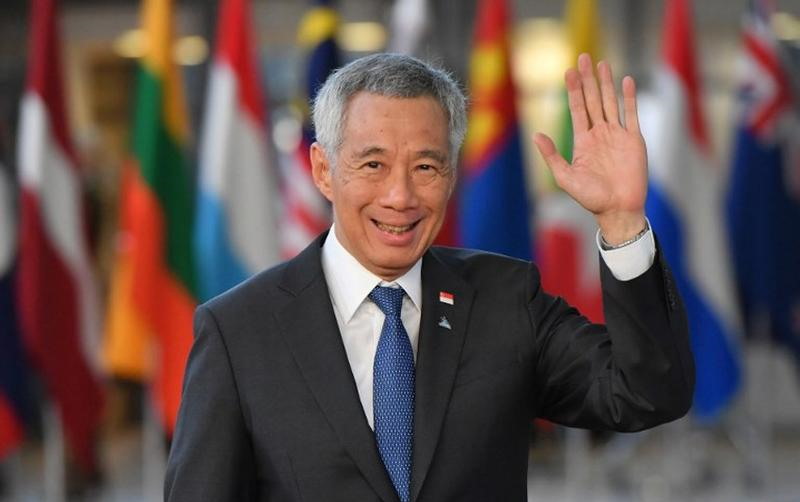
1. Prime Minister Lee Hsien Loong hosted Prime Minister Scott Morrison on 10 June 2021 in Singapore for the sixth Australia-Singapore Annual Leaders’ Meeting. The Prime Ministers acknowledged the longstanding friendship and deep bilateral collaboration between the two countries, anchored in shared strategic and economic interests. They reaffirmed the Australia-Singapore Comprehensive Strategic Partnership as unique in its ability to be constructive, expansive and forward-looking, and welcomed the progress made since the virtual fifth Annual Leaders’ Meeting in March 2020, in spite of the challenges presented by COVID-19. They also welcomed the entry into force of the Singapore-Australia Digital Economy Agreement in December 2020.
2. The Prime Ministers agreed that in an increasingly uncertain and complex strategic environment, Australia and Singapore are like-minded partners with a high degree of strategic trust. They welcomed the entry into force of the Treaty on Military Training and Training Area Development in 2020. The leaders undertook to increase the frequency and complexity of professional exchanges, dialogues and training activities between the two countries. The Prime Ministers also reaffirmed their commitment to the Five Power Defence Arrangements, which is in its 50th year. Prime Minister Morrison affirmed Australia’s commitment to expanding its defence presence in the region.
3. The Prime Ministers acknowledged the importance of open borders to the post-pandemic recovery and committed to resuming two-way cross-border travel when the public health situation in both countries permits. They welcomed the ongoing discussions between border, health, transport, and other officials to identify detailed operational requirements for COVID-19-safe travel, including discussions on health and vaccination certificates. They also discussed cooperating on welcoming the return of Singaporean students to Australia to continue with their studies.
4. The Prime Ministers welcomed the following new initiatives which will deepen the Australia-Singapore Comprehensive Strategic Partnership.
a) Driven by their mutual support for practical action on climate change, and building on progress under the 2020 MoU on low emissions solutions, the Australian and Singaporean governments will join business in a public-private partnership on low emissions maritime and shipping, with a combined initial contribution of up to A$30 million. The initiative will see business and government in Australia and Singapore work together on low emissions fuels and technologies, including clean hydrogen and clean ammonia, to drive down emissions in maritime shipping and port operations.
b) Both sides will start discussions on an Australia-Singapore FinTech Bridge. The FinTech Bridge will enhance cooperation on FinTech policy and regulation and look for opportunities for collaboration on joint innovation projects, as well as facilitate investments and new business opportunities in digital trade and financial services. The FinTech Bridge will build on the strong foundations of the Digital Economy Agreement between the two countries.
c) Both health ministries have signed a new MoU to enhance cooperation on healthcare and health technologies, which will facilitate deeper exchanges of information, knowledge and expertise to support timely and affordable access to medicines and health technologies for Singaporeans and Australians.
d) The Australian Federal Police and Singapore’s Home Team Science and Technology Agency have agreed to sign a MoU on operational science and technology cooperation to develop and enhance capabilities for homeland security and law enforcement agencies to prevent crime and maintain law and order.
e) Singapore Symphony Orchestra and Melbourne Symphony Orchestra will renew their MoU on cooperation as an important marker that despite the pandemic, our cultural exchanges continue to flourish through innovative and digital ways of working and performing together.
5. The Prime Ministers also exchanged views on regional cooperation and international issues. They discussed COVID-19’s impact on communities, health systems, economies and supply chains. They agreed to continue to share best practices in tackling the pandemic, work closely together to keep markets open and supply chains functioning, and support regional efforts for a sustainable and resilient recovery. They reiterated their commitment to the region’s access to safe and effective COVID-19 vaccines, including through the COVID-19 Vaccines Global Access (COVAX) Facility.
6. The Prime Ministers recognised that a strong, cohesive, and responsive ASEAN is vital to the region’s success and recovery. They reaffirmed their commitment to ASEAN centrality and the ASEAN-led regional architecture, particularly the East Asia Summit as the region’s premier Leaders-led forum for strategic discussion. They agreed to work together to further enhance the ASEAN-Australia relationship, and expressed support for an open, inclusive, rules-based and resilient region, consistent with the principles of the ASEAN Outlook on the Indo-Pacific. They also welcomed the signing of the Regional Comprehensive Economic Partnership (RCEP) Agreement, as a signal of support for the multilateral rules-based trading system underlining the importance of free and open trade and investment for COVID-19 recovery, and urged continued efforts by RCEP signatories to ensure the entry into force of the RCEP by 1 January 2022.
7. The Prime Ministers shared their concerns on developments in Myanmar and called for an immediate cessation of violence, the release of all political detainees including foreigners, and inclusive dialogue between all parties. They agreed that ASEAN could play an important role in facilitating a peaceful solution in Myanmar and called for implementation of the Five-Point Consensus on Myanmar adopted at the ASEAN Leaders’ Meeting on 24 April 2021, as soon as possible. They reaffirmed their shared commitment to maintain and promote peace, security and stability in the region, as well as the peaceful resolution of disputes, including full respect for legal and diplomatic processes, without resorting to the threat or use of force, in accordance with international law, including the 1982 United Nations Convention on the Law of the Sea (UNCLOS), which is universal in character and sets out the legal framework within which all activities in the oceans and seas must be carried out. They underlined Australia and Singapore’s strong support for freedom of navigation, overflight and unimpeded trade in the South China Sea. They also emphasised the importance of non-militarisation of disputed features and self-restraint in the conduct of activities that would complicate or escalate disputes and affect peace and stability. They urged all claimants to take meaningful steps to ease tensions and build trust, including through dialogue. They acknowledged work towards a Code of Conduct in the South China Sea, and emphasised the importance of the Code being effective and consistent with international law, including the 1982 UNCLOS. They agreed Australia and Singapore would remain in close contact on regional issues.