Joint Media Statement - Japan-Australia Partnership on Decarbonisation through Technology
- Written by: Scott Morrison
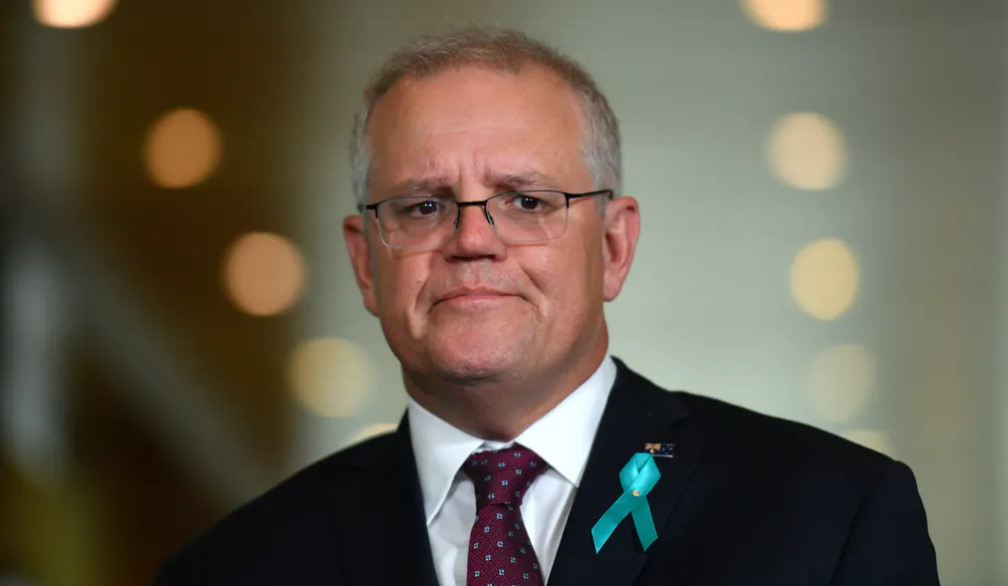
Japan and Australia emphasise their shared values and close relationship, their common commitment to ambitious action to achieve the goals of the Paris Agreement, and their determination to further collaboration on efforts to achieve decarbonisation and a net zero emissions future. We recognise that climate change is one of the defining challenges and opportunities of our time, and that all countries must play their part in the global response. Japan reaffirms its commitment to transition to net zero emissions by 2050. Australia reaffirms its commitment to achieve net zero emissions as soon as possible, preferably by 2050.
Japan and Australia consider a technology-led response is critical to reducing greenhouse gas emissions while also ensuring economic growth and job creation. We share an ambition to accelerate the development and commercialisation of low and zero emissions technologies as soon as possible, as achieving cost parity with high emitting alternatives is vital for decarbonisation efforts.
Japan and Australia are determined to make low and zero emissions technologies that will underpin decarbonisation strategies to make them globally scalable and commercially viable, through collaboration on technology research and development, in order to rapidly accelerate global emissions reduction and reach net zero emissions.
In this regard, Japan and Australia commit to collaborate and coordinate together, and with key likeminded partners regionally and multilaterally, on ways to support economic growth and resilience of the Indo-Pacific region and particularly amongst ASEAN members. This commitment will be displayed, by supporting regional partners in their pragmatic and clean energy transitions in various forms, which reflect their own circumstances and increasingly utilise low and zero emissions technologies and energy resources, to meet the region’s growing energy demands. We, together with their partners, will coordinate approaches wherever possible on support for clean, pragmatic and realistic energy transitions in the region, including for developing countries, through finance, capacity building, technology development and deployment support, and knowledge sharing.
To this end, Japan and Australia commit to jointly support initiatives that will help drive the transitions to net zero emissions. We take on to increase our joint focus on lower emissions LNG production, transport and use; clean fuel ammonia, clean hydrogen and derivatives produced from renewable energy or from fossil fuels with substantial carbon capture, utilisation and storage; carbon capture utilisation and storage; carbon recycling; and low emissions steel and iron ore.
In support of this shared objective, Japan and Australia will provide financial support, as appropriate, to advance initiatives that will contribute to the development and deployment of low and zero emissions technologies. We commit to collaborate on the development of initiatives that would leverage funding from other sources, including subnational governments and the private sector.
This partnership builds on our already strong cooperation through initiatives and statements such as the Hydrogen Energy Supply Chain (HESC), the Japan-Australia Energy and Resources Dialogue (JAERD) and the Australia-Japan Joint Statement of Cooperation on Hydrogen and Fuel Cells.
We take on to develop initiatives under this Partnership as soon as possible, with the aim of further progress in advance of COP26. The Minister for Energy and Emissions Reduction will lead work to develop joint initiatives under this Partnership for Australia side. The Minister of Economy, Trade and Industry will lead work to develop joint initiatives under this Partnership for Japan side. Ministerial follow-up is expected to take place through existing frameworks such as Ministerial Economic Dialogue (MED), where appropriate. Officials’ level follow-up is expected to take place through existing officials’-level frameworks, such as the JAERD, where appropriate.