Cleared to Land — and Cleared to Die: How a Runway Failure Killed Two Pilots in Seconds
- Written by: The Times Editorial Team
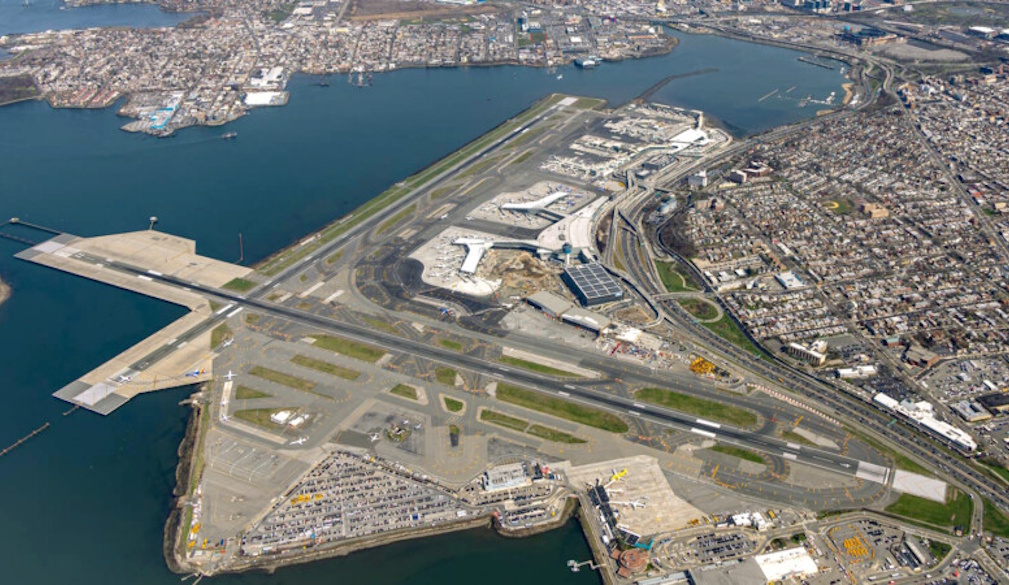
A modern passenger jet, operating under full clearance, descending onto a controlled runway at one of the world’s busiest airports — and yet, within seconds, it collided with a vehicle that should never have been there.
The fatal crash involving an aircraft operated by Air Canada at New York’s LaGuardia Airport is not just another aviation tragedy. It is a stark reminder that even in one of the most tightly regulated industries on earth, catastrophic failure can still occur — not from mechanical fault, but from human systems breaking down at precisely the wrong moment.
A Catastrophe in Plain Sight
The aircraft, a regional jet on final approach, had been cleared to land. That clearance — one of the most fundamental assurances in aviation — meant the runway ahead was confirmed clear.
At the same time, a fire truck responding to a separate emergency was cleared to enter or cross that very same runway.
Those two decisions, made within seconds of each other, created a deadly overlap.
There was no evasive manoeuvre available. No margin for correction. As the aircraft touched down and began its landing roll, it struck the vehicle directly.
Two pilots are now dead.
The Illusion of Safety
Modern aviation is built on layers of redundancy:
-
strict communication protocols
-
mandatory readbacks
-
separation rules
-
surveillance systems
And yet, this incident bypassed all of them.
The failure was not technological. It was procedural.
At its core, the crash represents what aviation experts call a “runway incursion” — a scenario where an unauthorised object occupies a runway intended for aircraft use. But this was not an unauthorised intrusion. Both the aircraft and the vehicle were, by all indications, authorised.
That is what makes this event so confronting.
Where the System Broke
Responsibility now centres on Air Traffic Control — the system designed to ensure that such conflicts never occur.
Air traffic controllers operate as the single coordinating authority between air and ground movements. Their role is absolute: a runway cannot be simultaneously allocated to two parties.
If early indications are confirmed, then this was not a minor lapse. It was a fundamental breach of separation protocols.
Several systemic pressures may have contributed:
-
Controller workload, particularly if one individual was managing both ground and landing traffic
-
Emergency conditions, which increase complexity and urgency
-
Communication breakdowns, including missed or misunderstood instructions
But in aviation, context does not excuse outcome. The standard is binary: the runway must be clear — or it must not be used.
Seconds That Could Not Be Recovered
At the moment of impact, the aircraft was travelling at speed. Even at reduced landing velocity, a jet cannot stop or swerve in time to avoid a ground vehicle.
Pilots rely entirely on the integrity of the system ahead of them. Once committed to landing, their options are effectively gone.
This is the brutal reality of runway operations:
When the system fails, there is no backup.
Who Is Liable?
The legal consequences are likely to be complex but predictable.
Because U.S. air traffic control is operated by the Federal Aviation Administration, liability will almost certainly centre on government responsibility.
Airlines, including Air Canada, are typically required to compensate passengers regardless of fault, before seeking recovery from responsible parties.
Investigations will also examine:
-
whether ground crews followed correct procedures
-
whether safety systems were active or bypassed
-
whether staffing levels or fatigue played a role
A Global Warning
Runway incursions are among the most feared — and studied — risks in aviation. They are rare, but when they occur, they are often catastrophic.
This incident will reverberate far beyond New York.
Airports worldwide, including across Australia, will now be forced to re-examine:
-
runway crossing protocols
-
emergency response procedures
-
controller workload and staffing
-
the effectiveness of automated warning systems
More Than Human Error
It would be easy to label this as “human error” and move on.
That would be a mistake.
What unfolded at LaGuardia was not a single error, but a chain of failures:
-
a clearance issued too soon
-
a vehicle entering too late
-
a system unable to detect or correct the conflict in time
In high-risk systems, accidents rarely have a single cause. They emerge when multiple safeguards fail simultaneously.
That is exactly what happened here.
The Final Question
Aviation has long been held up as a model of safety — an industry where lessons are learned, systems evolve, and risk is relentlessly reduced.
But this tragedy raises an uncomfortable question:
If a fully cleared aircraft can still collide with a vehicle on an active runway — what other assumptions about safety are we getting wrong?