Fair Dinkum! Aussie slang takes a decade to learn
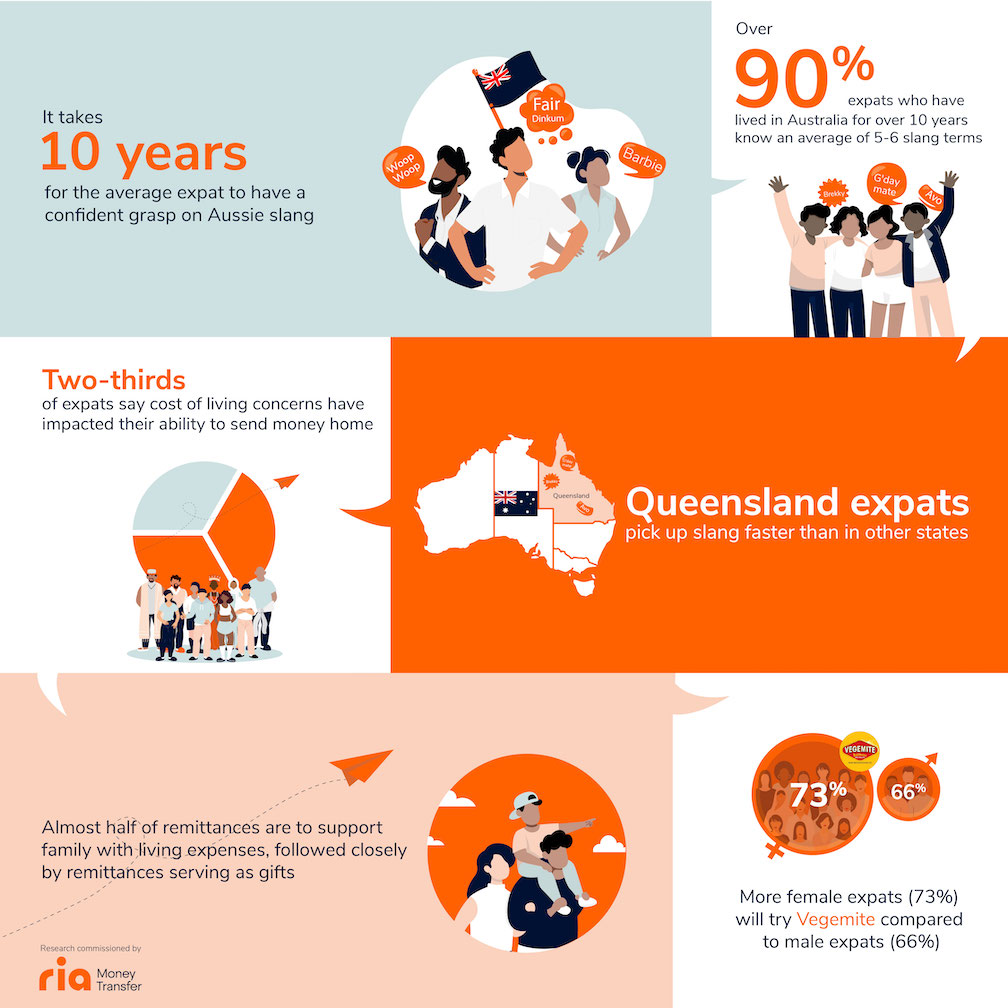
- Takes 10 years for the average expat to have a confident grasp on Aussie slang
- Queensland expats pick up slang faster than in other states
- More female expats will try Vegemite vs. males
Over 1,000 immigrants shared their unique experiences of assimilating to Australia, with interesting data revealed in new research commissioned via Ria Money Transfer.
Responses from expats included their take on culture shock and local customs, as well as their willingness to try Aussie snacks.
With more than a quarter of Australia’s population born overseas, the findings of the research reflect the powerful cultural exchange occurring within Australia, and give insight to the enrichment the international-born population provides to Australia’s own cultural landscape, with their connections to home.
Part of this exchange is through the sharing of resources and remittances, with a third of immigrants sending money overseas an average of 14 times a year.
Expats who have settled down under in more recent years cite cost-of-living to be a greater culture shock than the language, suggesting both an increase in globalism and the serious economic change our country is facing.
Other interesting findings, broken down by state, nationality, generation, and gender, include:
- Over 90% of expats who have lived in Australia for over 10 years know an average of 5-6 slang terms
- In their first year of living in Australia, 88% of expats will experience a local custom, like trying a Tim Tam or attending an AFL match.
- 14% of Gen Z immigrants send more than half of their wages to family overseas, despite cost-of-living pressures
- More female expats (73%) will try Vegemite compared to male expats (66%)
- Settlers in Queensland pick up Australian slang more effectively than in other states
- Expats from Africa pick up slang quicker than those from Asian and South American countries (fair dinkum, woop woop, goon, devo, durry, dunny, etc.)
- Two-thirds of expats say cost of living concerns have impacted their ability to send money home
- Almost half of remittances are to support family with living expenses, followed closely by remittances serving as gifts
Simon Wilding, Country Manager Australia and New Zealand of Ria Money Transfer, said the survey exposes the voices of the nation, even if they weren’t born here.
“While it was a surprise to see from these results that our unique Australianisms cause massive culture shock, unfortunately it’s not a surprise to hear that the cost-of-living crisis we’re all facing in this country is confronting to migrants.
“Our expats and immigrants help bring dimension, life, and strength to our multicultural population. As the leading global money transfer operator, we are so pleased to serve communities from all around Australia so their home away from home can be one that not only serves them, but their families back in their country of origin.
“Australia is one of the most diverse countries in the world, which makes remittances and money transfers a staple tool for Aussies to support extended families across the world financially.”
Clarissa Tan said sending money to friends and family forms a crucial part of keeping their connection alive.
“I love living in Australia, where my personal and professional life has flourished.
“I miss home but being able to send a bit of money here and there to support and treat my loved ones helps fill the void, not because we’re money-focused people, but because it’s straightforward and effective. It cuts out the concerns of postage and exchange rates - leaving me able to both say to and show my family that I love them.”