How the world's biggest Islamic organization drives religious reform in Indonesia – and seeks to influence the Muslim world
- Written by: Ahmet T. Kuru, Professor of Political Science, San Diego State University
After its return to power in Afghanistan, the Taliban are again imposing their religious ideology[1], with restrictions on women’s rights[2] and other repressive measures. They are presenting to the world an image of Islam that is intolerant and at odds with social changes.
Islam, however, has multiple interpretations. A humanitarian interpretation, focusing on “rahmah,” loosely translated as love and compassion, has been emphasized by a group I have studied[3] – Nahdlatul Ulama, which literally means “Reawakening of the Islamic Scholars.”
Nahdlatul Ulama, or NU, was founded in 1926 in reaction[4] to the Saudi conquest of Mecca and Medina with their rigid understanding of Islam. It follows mainstream Sunni Islam[5], while embracing Islamic spirituality and accepting Indonesia’s cultural traditions.
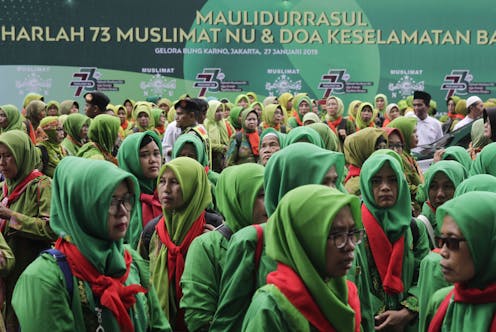
Functioning in Indonesia, the country with the largest Muslim population, Nahdlatul Ulama is the world’s biggest Islamic organization with about 90 million members and followers[6]. In terms of membership, the organization hugely outstrips that of the Taliban – yet this face of Islam has not been sufficiently recognized on the international stage.
In 2014, NU responded[7] to the rise of the Islamic State group and its radical ideology by initiating an Islamic reform[8]. Since then, it has elaborated on this reform that it calls “Humanitarian Islam[9].”
Humanitarian Islam
During the past seven years, NU’s general secretary, Yahya Cholil Staquf[10], has organized several meetings of the organization’s Islamic scholars with a reformist agenda. They made public declarations for reforming Islamic thought on controversial issues, including political leadership, equal citizenship and relations with non-Muslims.
The Nahdlatul Ulama declarations include crucial decisions[11] that differentiate “Humanitarian Islam” from other interpretations. First of all, they reject the notion of a global caliphate, or a political leadership that would unite all Muslims. The concept of a caliphate has been accepted by both mainstream Islamic scholars[12], such as those in Al-Azhar[13] – Egypt’s world-renowned Islamic institution – and radical groups, such as the Islamic State group and al-Qaeda.
Moreover, the NU declarations emphasize the legitimacy of modern states’ constitutional and legal systems, and thus reject the idea that it is a religious obligation to establish a state based on Islamic law.
Additionally, these declarations stress the importance of equal citizenship by refusing to make a distinction between Muslims and non-Muslims as legal categories.
They call for a deeper cooperation among Muslims, Christians and followers of other religions to promote world peace.
Nahdlatul Ulama has taken practical steps for realizing these aims. For example, it has established a working relationship with the World Evangelical Alliance[14], which claims to represent 600 million Protestants, to promote intercultural solidarity and respect.
These NU declarations may sound insufficient from a Western liberal point of view, since they do not touch upon some issues such as LGBTQ rights. To better understand the importance of NU’s perspective and its limits requires an examination of the Indonesian context.
Indonesia’s tolerant Islam

My research[15] on 50 Muslim-majority countries finds that Indonesia is notable because it is one of the few democracies among them.
Indonesia’s foundational credo, Pancasila[16], means “five principles” and basically refers to the belief in God, humanitarianism, Indonesia’s national unity, democracy and social justice.
About 88% of Indonesia’s population of 270 million are Muslim. Both Nahdlatul Ulama and Muhammadiyah[17], the country’s second-biggest Islamic organization, have been respectful of these principles. Like NU, Muhammadiyah also has tens of millions of followers, and these two organizations often cooperate against radical Islamist groups[18].
Robert Hefner[19], a leading expert on Indonesia, documents in his 2000 book “Civil Islam”[20] how NU and Muhammadiyah made important contributions to the country’s democratization in the late 1990s. During this process, the leader of NU, Abdurrahman Wahid, became Indonesia’s first democratically elected president in 1999.
Wahid, who died in 2009, left a religious legacy, too. During my conversations, senior NU members[21] repeatedly referred to Wahid’s reformist ideas as the main source of inspiration for Humanitarian Islam.
Indonesia’s intolerant Islam
Not all Islamic theories and practices in Indonesia are tolerant toward diversity. The country’s Aceh province has enforced certain rules of Islamic criminal law, including the punishment of caning for those who sell or drink alcohol.
Another example of religious and political intolerance is the country’s blasphemy law[22], which resulted in the 20-month imprisonment of the capital city Jakarta’s Chinese Christian governor, Basuki Purnama[23] in 2017-2018, for a statement about a verse[24] in the Quran.
In January 2021, the story of a Christian female student being pressured by the school principal to wear a Muslim headscarf went viral on Facebook[25]. In two weeks, the Indonesian government responded with a decree that banned public schools from making any religious attire compulsory[26].
In short, there is a tug-of-war between tolerant and intolerant interpretations of Islam in Indonesia. Even within NU, there exist disagreements between conservatives and reformists.
Nonetheless, Nahdlatul Ulama reformists are becoming more influential. One example is the current minister of religious affairs, Yaqut Cholil Qoumas[27], a leading NU member and the younger brother of NU’s reformist general secretary. He was one of the three ministers who signed [28] the joint decree banning the imposition of headscarves on students in February.
NU’s Humanitarian Islam movement might be crucial to promote tolerance among Indonesia’s Islamic majority. But can it have an effect beyond Indonesia?
Influencing the Middle East
This reform movement’s reception in the Middle East[29], the historical center of Islam, is important if it is to have a global impact. Humanitarian Islam has been mostly ignored by scholars and governments of Middle Eastern countries, who generally see it as a competitor of their own attempts to influence the Muslim world[30]. As a nongovernmental initiative, Humanitarian Islam is different from Middle Eastern efforts to shape the Muslim world, which are mostly government-led schemes.
With its reformist emphasis, Humanitarian Islam may appeal to some young Middle Eastern Muslims[31] who are discontent[32] with their countries’ political and conservative[33] interpretations of Islam.
In order to reach a Middle Eastern audience, the Humanitarian Islam movement is launching an Arabic-language version[34] of its English website. Whether this Indonesian initiative can have an impact in the Middle East and become a truly global movement for Islamic reform remains to be seen.
[Explore the intersection of faith, politics, arts and culture. Sign up for This Week in Religion.[35]]
References
- ^ religious ideology (moderndiplomacy.eu)
- ^ women’s rights (apnews.com)
- ^ I have studied (siapabilang.com)
- ^ 1926 in reaction (www.baytarrahmah.org)
- ^ mainstream Sunni Islam (brill.com)
- ^ 90 million members and followers (www.religiousfreedominstitute.org)
- ^ NU responded (www.nytimes.com)
- ^ Islamic reform (sr.sgpp.ac.id)
- ^ Humanitarian Islam (baytarrahmah.org)
- ^ Yahya Cholil Staquf (www.wsj.com)
- ^ The Nahdlatul Ulama declarations include crucial decisions (www.baytarrahmah.org)
- ^ mainstream Islamic scholars (www.lettertobaghdadi.com)
- ^ Al-Azhar (edinburghuniversitypress.com)
- ^ with the World Evangelical Alliance (worldea.org)
- ^ My research (www.cambridge.org)
- ^ Pancasila (www.britannica.com)
- ^ Muhammadiyah (maarifinstitute.org)
- ^ cooperate against radical Islamist groups (libforall.org)
- ^ Robert Hefner (www.bu.edu)
- ^ his 2000 book “Civil Islam” (press.princeton.edu)
- ^ NU members (baytarrahmah.org)
- ^ blasphemy law (theconversation.com)
- ^ Basuki Purnama (www.mdpi.com)
- ^ statement about a verse (www.nytimes.com)
- ^ viral on Facebook (www.facebook.com)
- ^ public schools from making any religious attire compulsory (www.nytimes.com)
- ^ Yaqut Cholil Qoumas (en.qantara.de)
- ^ three ministers who signed (www.hudson.org)
- ^ reception in the Middle East (www.nytimes.com)
- ^ a competitor of their own attempts to influence the Muslim world (www.hudson.org)
- ^ Middle Eastern Muslims (www.bbc.com)
- ^ discontent (www.bbc.com)
- ^ political and conservative (theconversation.com)
- ^ an Arabic-language version (arabic.baytarrahmah.org)
- ^ Sign up for This Week in Religion. (theconversation.com)