
Why not take up photography? Start with the moon
- Written by: The Times
You do not need an expensive camera, a studio or a distant destination to discover the pleasure of photography. Sometimes all you need to do is look up.
The moon is one of the most familiar sights in our lives, yet it rarely looks quite the same twice.
On some evenings it rises large and golden above the horizon. On others it is a fine silver crescent, barely visible against the fading blue of the sky. It appears between buildings, above a beach, behind a gum tree or through a thin veil of cloud.
We have all seen it. But how often do we stop to look at it?
Photography gives us a reason to pause. It encourages us to notice the light, the landscape and the small details that might otherwise pass us by.
And getting started can be as simple as taking your phone outside.
You already have a camera
There is a temptation to believe that photography begins with a serious investment: a professional Nikon or Canon, several lenses, a tripod and a bag full of accessories.
Those things can be useful, and for some people they become part of the enjoyment. But they are not a condition of entry.
The iPhone or Android phone in your pocket is a capable camera. It allows you to experiment, review your photographs immediately and try again without paying for film or processing.
More importantly, it is usually with you when something catches your eye.
The moon may be visible on many days and nights of the year, although its appearance depends on its phase, the time, your location and the weather. Around the new moon it is difficult or impossible to see, and it can rise or set during daylight.
That changing availability is part of the appeal. You begin to notice where it is, when it rises and how its appearance changes through the month.
The moon has many faces
A full moon is the obvious place to begin. It is bright, unmistakable and often dramatic as it rises.
But the other phases offer their own rewards.
A crescent moon can be delicate against the evening sky. A half moon reveals a clear divide between light and darkness. A fuller moon can illuminate clouds and cast light across water.
You might photograph it on successive evenings and see how its shape and position change. Or return to the same location each month and compare the results.
This is where photography becomes more than collecting pictures. It becomes an invitation to observe.
Put the moon in a setting
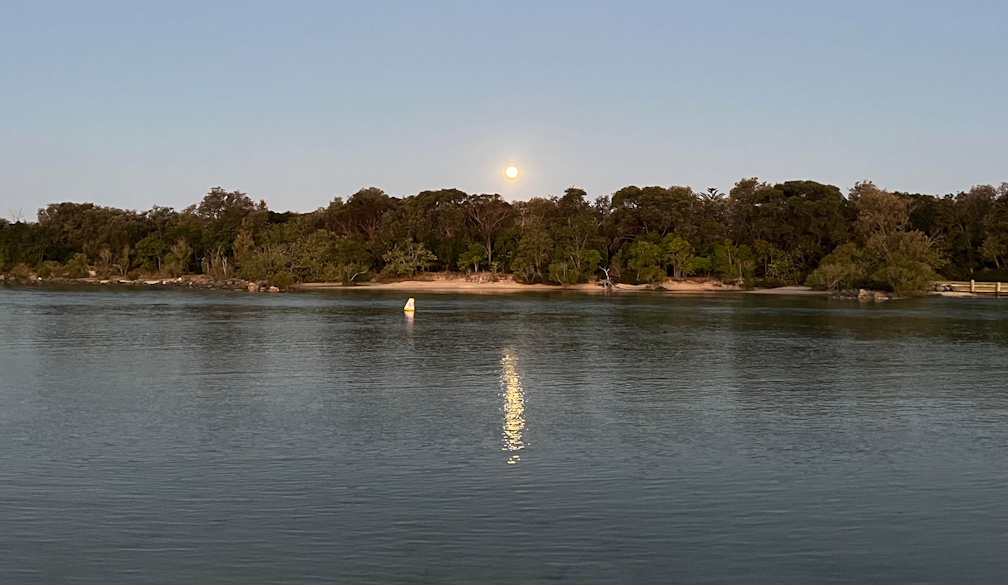
A phone photograph of the moon alone may be disappointing. Even when it looks impressive to the eye, it can appear as a small bright dot in the finished picture.
That does not mean the photograph has failed. It may mean the moon needs company.
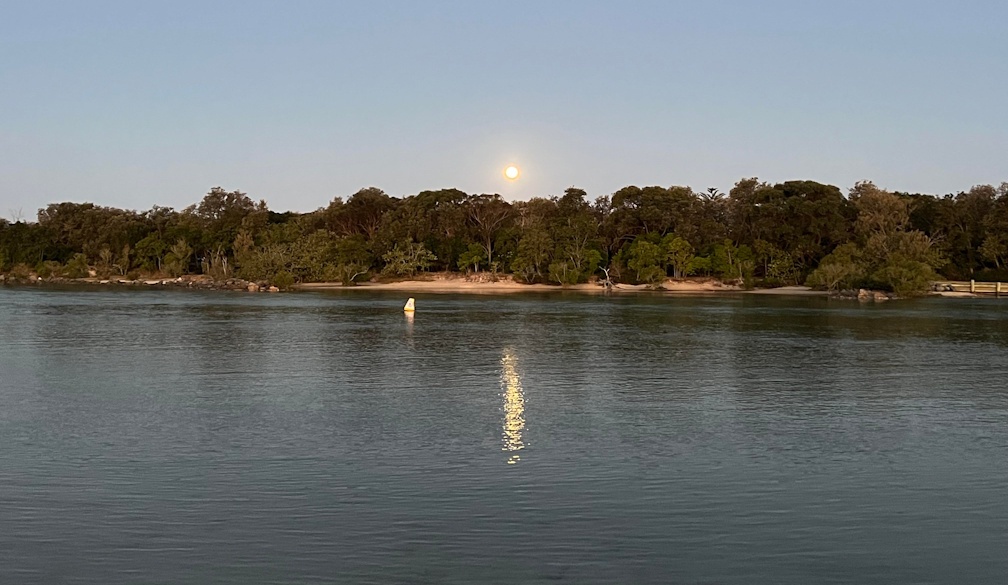
Try placing it above a headland, beside a lighthouse or between the branches of a tree. Photograph it rising over a suburban street, a city skyline, a country paddock or a favourite stretch of coast.
The moon gives the image a point of interest, while the surroundings tell a story about where you were.
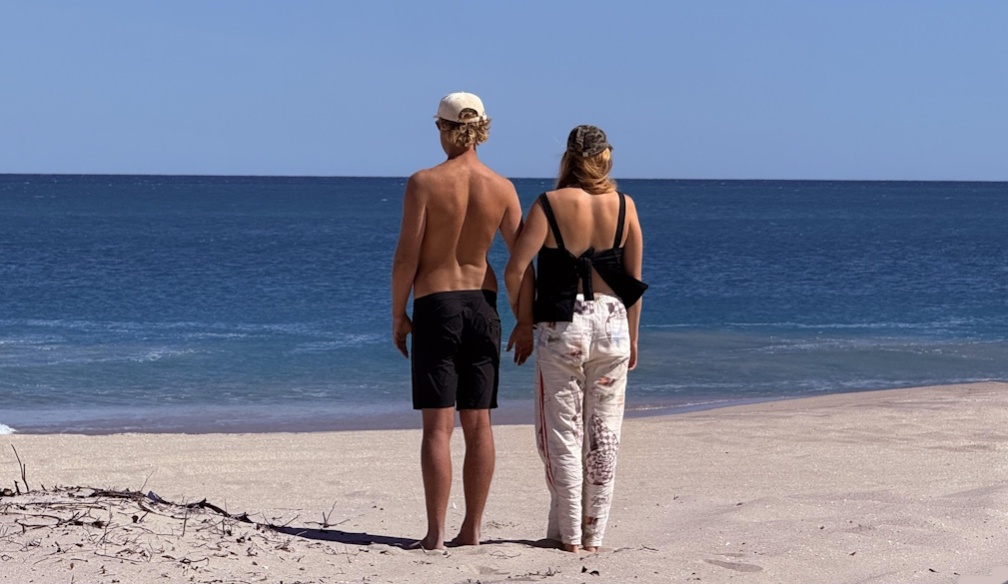
A small moon above a quiet beach can be more evocative than a large, technically perfect image of its surface. The photograph may also become a record of an evening you shared with someone.
Watch for colour
The moon can appear white, silver, yellow, orange or even reddish, depending on its position and the conditions through which you are viewing it.
When it is low on the horizon, its light travels through more of the atmosphere. That can give it a warmer appearance. Smoke, dust, haze and cloud can also affect what you see.
The sky around it changes too. A pale moon in a blue afternoon sky makes a different photograph from a golden moon rising into the last colours of sunset.
You do not need to travel far to find variety. The view from your own backyard can change from night to night.
Give your phone a workout
Start by cleaning the camera lens. A fingerprint or a little dust can soften an otherwise promising photograph.
Then experiment with the settings available on your phone:
- Tap the moon on the screen. Your phone may adjust focus and exposure around the point you select.
- Reduce the exposure. If the moon appears as a bright white blob, try tapping it and lowering the brightness control. You may recover some detail, although the foreground can become darker.
- Try the zoom carefully. Some phones have a dedicated optical zoom lens; others rely more heavily on digital zoom. The more you enlarge an image digitally, the more detail you may lose.
- Keep the phone steady. Rest it against a fence, wall or railing, or use a small tripod. A timer can help prevent movement when you press the shutter.
- Experiment with night mode. It can work well for the surrounding landscape, though a long exposure may make the bright moon look overexposed. Try a photograph with night mode and another without it.
- Take more than one photograph. Change the brightness, composition or position and compare the results later.
Different phones process moon photographs in different ways. Some use substantial computational enhancement, so if your interest is in recording the moon’s actual surface, explore what your camera settings are doing.
You do not need to master all of this on the first evening. Take a picture, look at the result and try something different.
Turn an outing into an occasion
A moonrise can provide an excuse to go somewhere, even if that somewhere is only the local beach or a lookout a few minutes from home.
Take a partner, a friend or the children. Bring a picnic, watch the light change and see who can find the most interesting photograph.
Children may notice things adults overlook: a reflection in a puddle, the shape of a cloud or the moon framed by playground equipment. Give them a phone or camera and let them show you what they see.
The outing does not need to produce a masterpiece. The experience is part of the reward.
If you are heading somewhere unfamiliar after dark, choose a safe viewing spot and take a torch. Be mindful of tides, uneven ground and other people using the area.
Look beyond the moon
Once you begin photographing the moon, you may find that your attention starts to wander.
The sky changes colour. Birds settle into trees. Lights appear in houses. A passing shower catches the sunset. Someone walks along the beach with a dog.
Suddenly there are photographs everywhere.
That is one of the quiet pleasures of photography. It changes the way you move through familiar places. A street you have walked along for years can look different in morning light, after rain or as the sun goes down.
You may start to notice the texture of an old building, the character in a person’s face or the way a shadow falls across a table.
The camera is useful, but the real instrument is your attention.
A hobby that can grow with you
If you discover that you enjoy photography, there are many directions to explore.
You might become interested in landscapes, wildlife, portraits, architecture or family life. You may eventually want a dedicated camera and a lens suited to the subjects you enjoy.
Equally, you may be perfectly happy with your phone.
There is no obligation to become a professional, enter competitions or publish your photographs. You can take pictures simply because you enjoy taking them.
Keep a few favourites. Print one. Share one with a friend. Look back at them in a year and see the places, people and moments you might otherwise have forgotten.
The Times View
The moon is a useful reminder that an interesting subject does not have to be rare, expensive or far away.
It has been part of every life we have lived, changing above us while we attend to the business of the day. Photography gives us a reason to look again.
Tonight, if the moon is visible where you are, take your phone outside and see what you can make of it. You may come home with a photograph. You may also discover a new way of seeing the world around you.