Don't wear earphones all day – your ears need to breathe
- Written by: Charlotte Phelps, PhD Student, Bond University
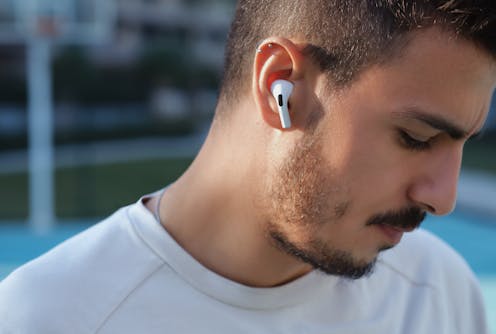
Wireless earphone sales are booming, with Apple alone selling an estimated 100 million sets of AirPods[1] in 2020. Being untethered from our phones or devices means we are likely to wear earphones for longer periods.
As a result, you might notice your ears feeling more sticky or waxy. Is this common? And what happens to our ears when we wear earphones?
Although wireless earphones are fairly new to the market, there is a large amount of research investigating the long-term use of hearing aids[2], which in many cases, have a similar mechanism. From this research, it appears prolonged use of in-ear devices can cause problems with earwax[3].
Read more: Are your kids using headphones more during the pandemic? Here's how to protect their ears[4]
What does earwax do?
The production of earwax (also known as cerumen[5]) is a normal process in humans and many other mammals. There should always be a thin coating of wax near the opening of the ear canal.
This wax is a waterproof and protective secretion. This acts to moisten the skin of the external ear canal and works as a protective mechanism to prevent infection, providing a barrier for insects, bacteria, and water[6]. Wet earwax is brown and sticky, whereas the dry type is more of a white colour.
In fact, earwax is such a great barrier, in the 1800s there were reports of it being used as an effective balm for chapped lips[7]!
Earwax is a naturally occurring substance produced in the external portion of the ear canal[8]. It is created by the secretions of oil glands and sweat glands[9] released by the hair follicles[10], which then traps dust, bacteria, fungi, hairs and dead skin cells to form the wax.
The external ear canal can be thought of as an escalator system, with the wax always moving towards the outside, preventing the ears from becoming filled with dead skin cells.
This migration of earwax is also aided by natural jaw movements. Once the earwax reaches the end of the ear, it simply falls out.
Read more: Curious Kids: how do scabs form?[11]
How earphones might affect this system
The ear is self-cleaning and best performs its function without interruption. However, anything that blocks the normal progression of earwax moving outside can cause issues.
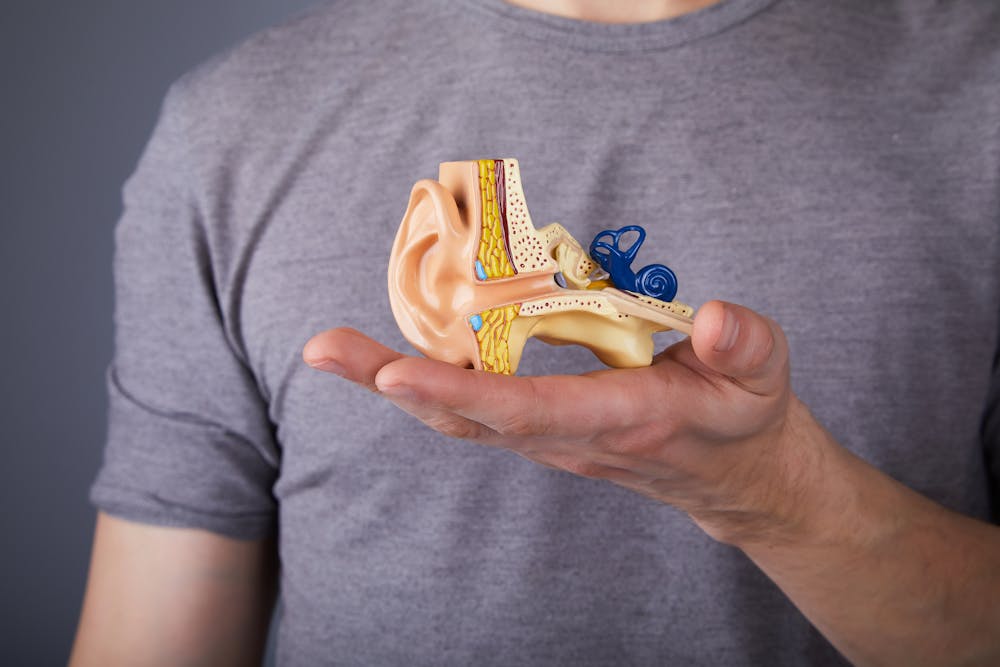
Normal use of in-ear devices don’t often[13] cause a problem. But prolonged earphone use, such as if you leave them in all day, could:
- compress the earwax, making it less fluid and harder for the body to naturally expel[14]
- compact the earwax to the extent the body induces inflammation. This results in white blood cells migrating to the area, increasing the number of cells in the blockage[15]
- impact air flow and stop wet earwax drying out. When earwax retains its stickiness for prolonged periods of time, it encourages build-up
- trap sweat and moisture in the ears, making them more prone to bacterial and fungal infections[16]
- create a barrier to the earwax’s natural expulsion, which ends up stimulating the secretory glands and increasing earwax production[17]
- reduce overall ear hygeine, if the pads of the earbuds are not cleaned properly, or contaminated[18] with bacteria or infectious agents
- damage your hearing[19] if the volume is set too high.
If the build-up accumulates, excessive earwax can cause hearing problems[20], along with other symptoms such as pain, dizziness, tinnitus, itching, and vertigo.
If you need to listen for a prolonged period of time, using over-ear headphones may help a little. These offer a small amount of extra airflow[21] compared to the in-ear earphones and earbuds. However, this is not as good as leaving the ears open to the outside air, and an accumulation of earwax can still occur.
As they sit outside the ear canal, over-ear headphones are also less likely to cause any earwax compaction, or introduce bacteria or pathogens to the ear canal.
Read more: Health Check: is it bad to regularly sleep wearing earplugs?[22]
Nothing smaller than your elbow
In most cases, the best way to control earwax is to leave it alone[23]. It is not recommended to use cotton buds frequently, as this can force earwax back into the ear canal. The longstanding advice[24] is not to put anything smaller than your elbow in your ear – in other words, don’t put anything in there!
Some traditional methods, such as olive oil drops or ear candles, may also have adverse effects and are not helpful.
If your have ear wax or related hearing concerns, your family doctor will have a range of treatment options to assist, and can also direct you to the correct health service if it requires longer-term management.
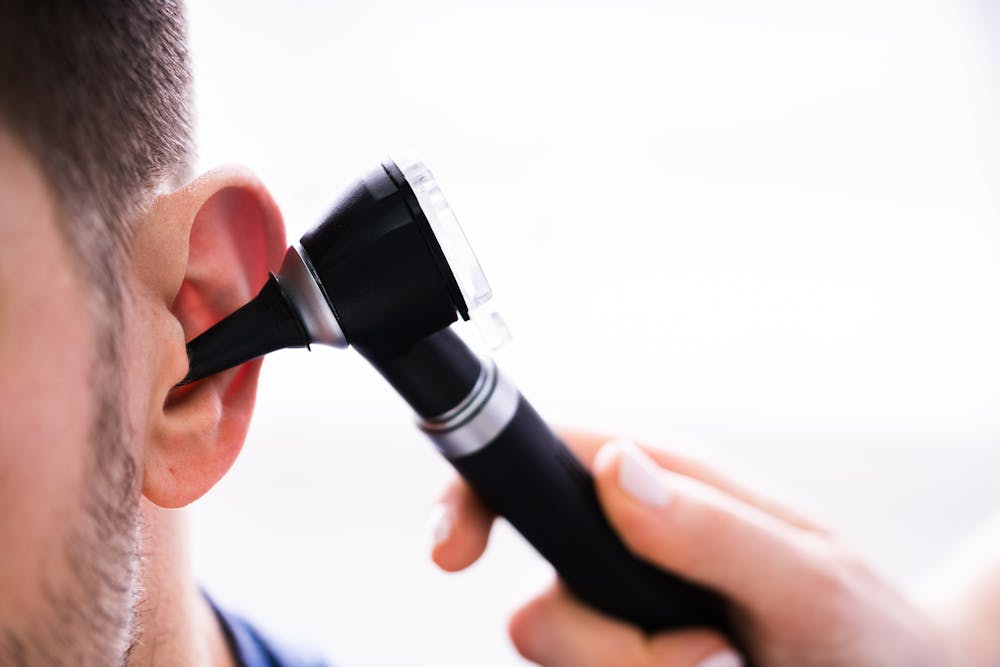 An otoscope helps visualise any wax build up in the ear.
Shutterstock[25]
An otoscope helps visualise any wax build up in the ear.
Shutterstock[25]
Initially, they will look into your ear with a special instrument (otoscope) and see the extent of any blockage or dysfunction[26].
In the meantime, the ear has a wonderful process of self-cleaning, and we should do our best to let this occur naturally. In most cases earphones are fine, but it might still be helpful to stay aware of how long you spend wearing them. Finally, be sure to always keep the volume at safe levels.
References
- ^ 100 million sets of AirPods (www.businessofapps.com)
- ^ hearing aids (pubmed.ncbi.nlm.nih.gov)
- ^ earwax (www.ncbi.nlm.nih.gov)
- ^ Are your kids using headphones more during the pandemic? Here's how to protect their ears (theconversation.com)
- ^ cerumen (www.ncbi.nlm.nih.gov)
- ^ insects, bacteria, and water (www.ncbi.nlm.nih.gov)
- ^ chapped lips (theconversation.com)
- ^ ear canal (www.ncbi.nlm.nih.gov)
- ^ oil glands and sweat glands (pubmed.ncbi.nlm.nih.gov)
- ^ hair follicles (www.ncbi.nlm.nih.gov)
- ^ Curious Kids: how do scabs form? (theconversation.com)
- ^ Shutterstock (image.shutterstock.com)
- ^ don’t often (www.ncbi.nlm.nih.gov)
- ^ expel (pubmed.ncbi.nlm.nih.gov)
- ^ blockage (www.aafp.org)
- ^ infections (journals.lww.com)
- ^ earwax production (www.ncbi.nlm.nih.gov)
- ^ contaminated (www.ncbi.nlm.nih.gov)
- ^ hearing (www.abc.net.au)
- ^ hearing problems (www.ncbi.nlm.nih.gov)
- ^ extra airflow (www.wellandgood.com)
- ^ Health Check: is it bad to regularly sleep wearing earplugs? (theconversation.com)
- ^ leave it alone (www.scientificamerican.com)
- ^ advice (www.ncbi.nlm.nih.gov)
- ^ Shutterstock (image.shutterstock.com)
- ^ dysfunction (www.mayoclinic.org)
Read more https://theconversation.com/dont-wear-earphones-all-day-your-ears-need-to-breathe-168742