Microsoft's rise and fall points to one thing — don't fix what isn't broken
- Written by: Erica Mealy, Lecturer in Computer Science, University of the Sunshine Coast

Twenty years on from the public release of Windows XP, the popular operating system is still regarded one of Microsoft’s greatest achievements.
As of August this year, Windows XP still maintained a greater market share[1] than its successor, Windows Vista.
When mainstream support for XP ended in April 2009, it was running on a huge 75% of Windows computers[2] and about 19% of people were still using XP when extended security support[3] finished in 2014. Microsoft provided security support in a few special cases, such as for military use, until 2019 — an incredible 18 years after the initial release.
But what made XP excel? And what has Microsoft learned in the two decades since its release?
Read more: Airports, ATMs, hospitals: Microsoft Windows XP leak would be less of an issue, if so many didn't use it[4]
The rise and rise of Windows XP
Windows XP launched on October 25, 2001, during a golden age at Microsoft when the company was achieving its highest revenues yet[5], dominated the PC market, and had taken a strong lead over Netscape in the browser wars[6] (after the latter led the race through the 1990s). XP also came at a time when more people than ever were buying their first personal computer.
These personal and business computers arrived with a full suite of Microsoft software pre-installed[7] and ready to use. As a result, the Windows operating system defined many people’s computing experience.
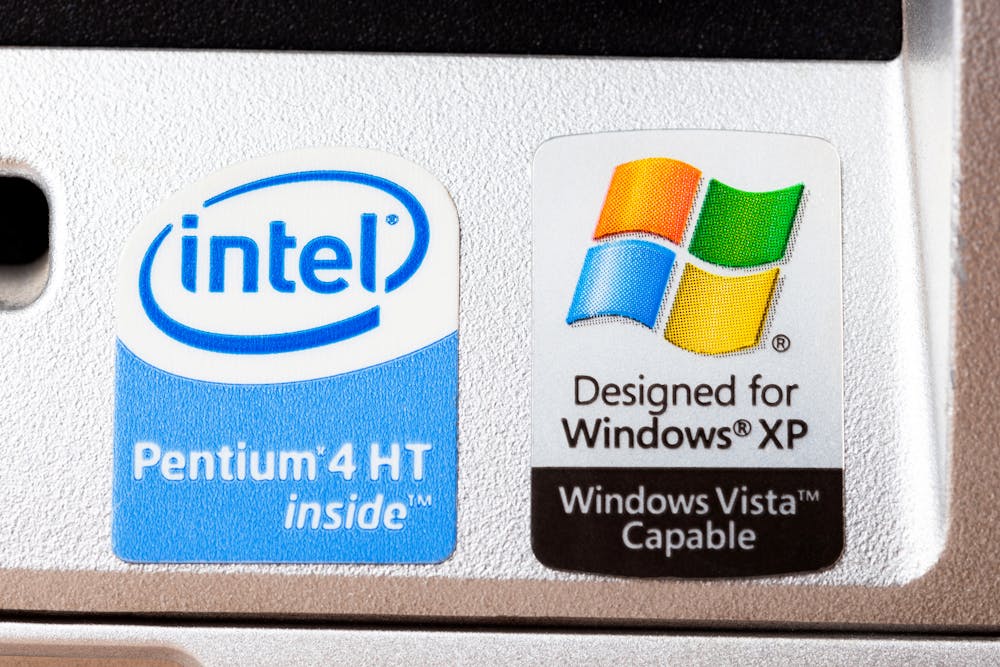
Built on the core of the highly successful Windows NT operating system (also the foundation for Windows 2000), Windows XP provided an option which, for the first time, looked and felt the same whether it was being used at home or at work.
The prioritisation of users’ needs in this way represented a watershed moment for Microsoft, and was a key ingredient in the long reign of XP. XP also featured several innovations[8] including the introduction of the Microsoft Error Reporting platform.
Earlier versions of Windows had become infamous for the so-called “blue screen of death[9]” that appeared when the system encountered an error. XP replaced this with a small pop-up to collect data about the error and send it to Microsoft’s engineers to help them improve the software.
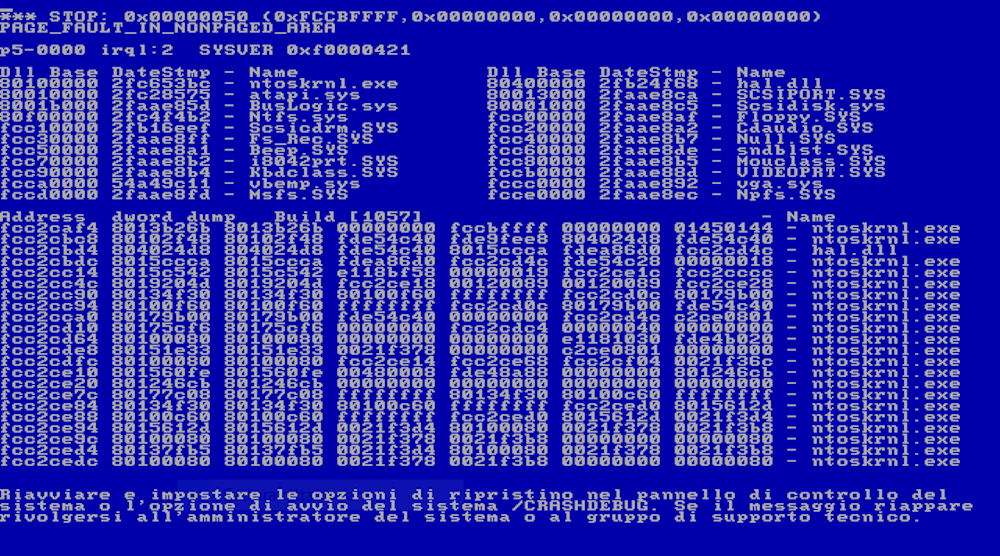 The original ‘blue screen of death’ from Windows NT would have been largely nonsensical for most people. The most current version of this screen includes a sad-face emoticon and a QR code for troubleshooting.
Wikimedia[10]
The original ‘blue screen of death’ from Windows NT would have been largely nonsensical for most people. The most current version of this screen includes a sad-face emoticon and a QR code for troubleshooting.
Wikimedia[10]
During the tenure of XP, Microsoft also launched Visual Studio .NET[11], a software suite for building new Windows programs. This combined all their developer tools for a variety of programming languages, including Visual C++ and Visual Basic, and the new “object-oriented” language C# – a rival to the popular Java[12] language.
This was further evidence of changing attitudes at Microsoft; the company was centred on prioritising users. But it didn’t last.
The fall of Vista and Windows 7
In 2007, Windows Vista — the successor to XP — was released. It was considered an inferior, bloated and unusable system[13] by many commentators, including Time magazine[14]. Designed for high-powered computers, Vista was often excruciatingly slow and frustrating to use on older machines that comfortably ran XP.
Windows 7 followed Vista in 2009, confronting users with massive changes. It initially forced users on computers with a keyboard and mouse into a tablet-style interaction on the home screen.
The familiar icons and desktop format vanished. Instead, users were greeted with differently-sized tiles, and scrolling mechanisms that were perfect for touch-screens but awkward for mouse navigation.
It seemed Microsoft no longer had users’ wishes as its priority. It wasn’t until the release of Windows 8 in 2012 that the company returned to its user-first paradigm. And this change was spurred in no small part by having to compete with Apple’s MacOS (Macbooks), iOS (iPhones and iPads) and Android phones and tablets.
Branching away from PCs
Although released at the same time as Windows XP, Microsoft’s first tablet offering was widely regarded a failure too. The Windows XP tablet was based on a cut-down operating system and a completely different family of processors.
The tablet’s system was hamstrung by connectivity issues related to its need for consistent and stable internet connection (which even now is not a given in the mobile world). It was also incompatible with existing software offerings.
A similar story[15] unfolded in the mobile phone space. Early Windows phones such as Windows Phone 7, released in 2010 without many basic functions such as copy and paste[16], were never serious competitors for Apple’s iPhones or Google’s Android phones.
In 2013 Microsoft purchased Nokia’s mobile and devices division (later abandoned and resold in 2016), but its phones were still unsuccessful.
Although Windows phones are still available, Microsoft changed lanes in 2014. Incoming chief executive Satya Nadella said the new agenda was “mobile first, cloud first[17]”, meaning cloud-connected mobile computing was the focus. Nadella outlined a desire to create a Windows NT for the internet[18].
This is something the Microsoft Azure cloud-computing service and Surface Pro tablet — now with the same processors as its PC cousins and the ability to run without a constant internet connection — have achieved.
Cloud or service-oriented computing means you can use any type of device to access your operating system (known as “platform as a service”), and office productivity tools such as Office365 (“software as a service”).
Azure represents a return to Microsoft providing computing that serves the needs of businesses and people.
If it’s not broken, don’t fix it
Modern computing is a balance between portability, power consumption, usability and speed, among other factors. Companies can no longer just throw advanced hardware at a problem and expect the public to tolerate poor user experience.
The success of XP, and subsequent failures of its successors, present many lessons to the technology sector — the chief of which is this: if it’s not broken, don’t fix it.
By acknowledging earlier mistakes and reverting to a user-first policy, Microsoft could indeed secure its place in the market for decades to come.
Read more: We're just not compatible any more: why Microsoft finally dumped Internet Explorer[19]
References
- ^ market share (gs.statcounter.com)
- ^ 75% of Windows computers (gs.statcounter.com)
- ^ extended security support (docs.microsoft.com)
- ^ Airports, ATMs, hospitals: Microsoft Windows XP leak would be less of an issue, if so many didn't use it (theconversation.com)
- ^ the company was achieving its highest revenues yet (news.microsoft.com)
- ^ the browser wars (thehistoryoftheweb.com)
- ^ pre-installed (cloudblogs.microsoft.com)
- ^ several innovations (www.techradar.com)
- ^ blue screen of death (www.howtogeek.com)
- ^ Wikimedia (en.wikipedia.org)
- ^ Visual Studio .NET (www.codemag.com)
- ^ Java (www.java.com)
- ^ an inferior, bloated and unusable system (www.zdnet.com)
- ^ Time magazine (content.time.com)
- ^ similar story (www.theverge.com)
- ^ copy and paste (mspoweruser.com)
- ^ mobile first, cloud first (news.microsoft.com)
- ^ Windows NT for the internet (www.forbes.com)
- ^ We're just not compatible any more: why Microsoft finally dumped Internet Explorer (theconversation.com)