What is the value of a wave? How changes to our coastline could wipe out surfing’s benefits
- Written by: Ana Manero, Research Fellow, Australian National University
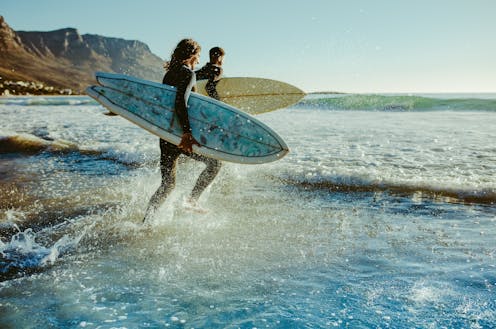
Before COVID-19, global surf tourism spending[1] was estimated at up to A$91 billion per year. And since the start of the pandemic, demand for surfing has boomed[2] as people increasingly turn to outdoor[3] activities.
But surfing’s benefits to human well-being aren’t often studied in economics terms. This is a major knowledge gap we are now trying to fill.
Such research is important. Changes to the coastline – such as from sea walls and groynes – can dramatically reduce the quality of surfing waves. But the consequences of coastal developments on surfing[4] are often poorly understood[5] and rarely quantified before projects start.
It’s crucial we understand the real value of surfing, before we lose the myriad of benefits they bring – not only to Australia’s 1.2 million active surfers[6], but to hundreds of coastal towns where surfing underpins the local economy and lifestyle.
Surfing economics
There are many studies[7] on the economic value of Australian beach pastimes such as fishing[8], swimming[9] and diving[10]. But not for surfing.
Internationally, we know surfing is a major direct contributor to the economy of wave-rich places[11]. However, until recently, the value of surfing to human well-being has been largely unaccounted for.
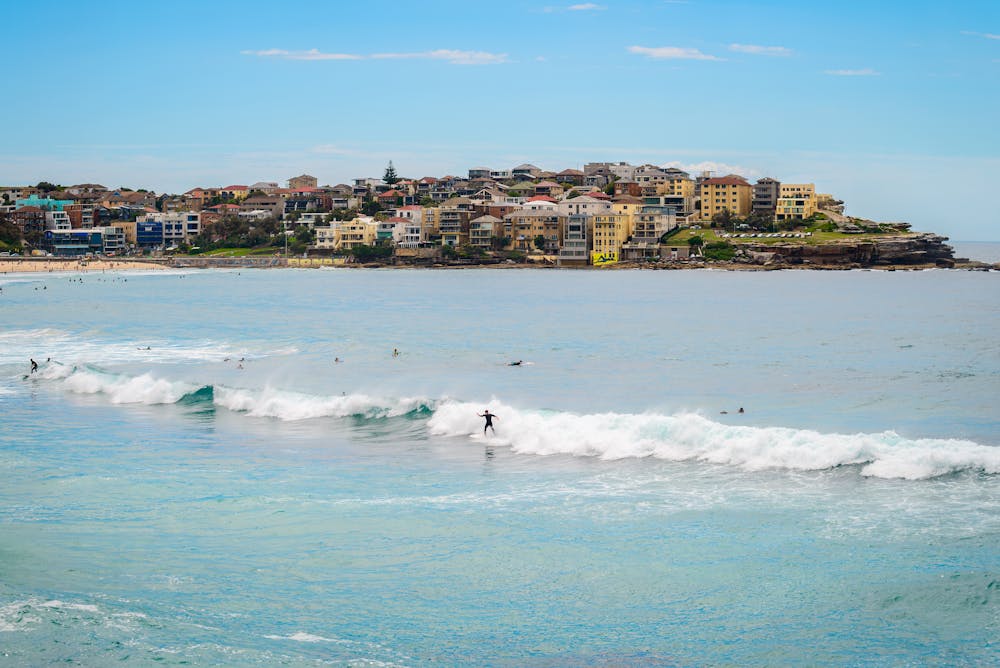
This is despite recent evidence pointing to surfing’s positive social[12] and health[13] outcomes, including among war veterans[14] and children with chronic illnesses[15].
Surfing Economics[16] is an emerging field of research that documents and quantifies the total economic value of surfing. This can include, for example, increased house prices[17] near good quality breaks, or social welfare benefits[18] people derive from visiting surf beaches.
Read more: Girls Can't Surf shows how determined women battled sexism in their sport[19]
Building on the few previous surfing economics[20] studies in Australia[21], our research aims to calculate the total economic value of surfing.
Our forthcoming study on the Noosa World Surf reserve, so far, demonstrates that the local economic contribution of surfing is in the order of hundreds of millions of dollars. This in terms of surfers’ welfare, as well as direct spending on surf gear and travel.
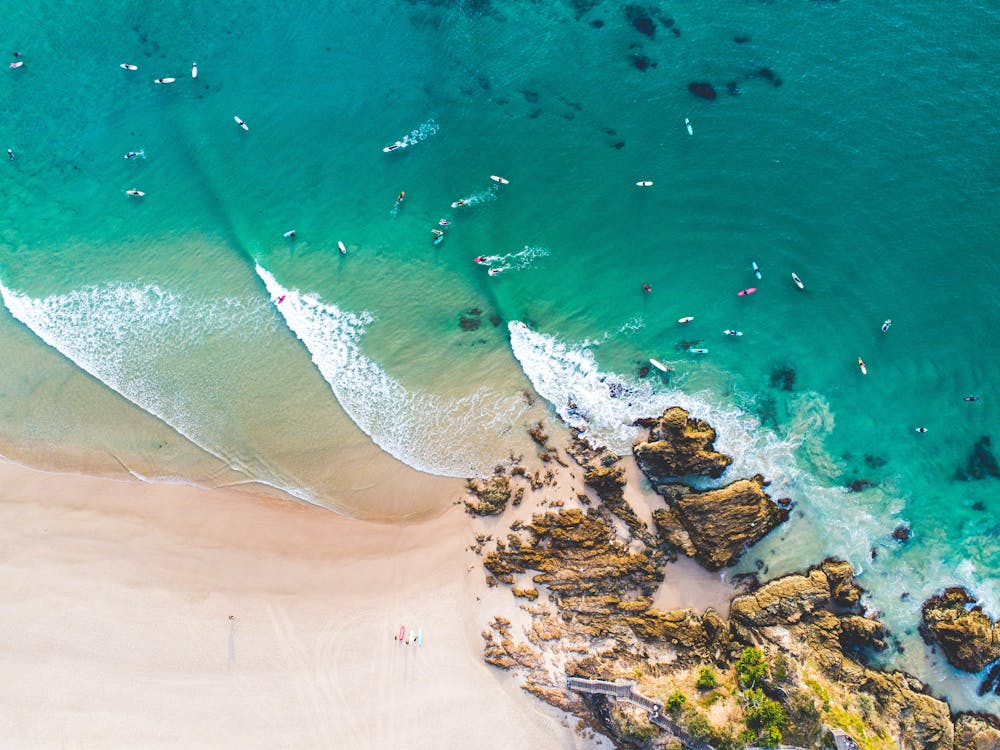 Waves forming around rocks in Noosa.
Shutterstock
Waves forming around rocks in Noosa.
Shutterstock
Overseas, the economic contribution is a little clearer. A 2017 study[22] used satellite imagery to demonstrate that economic activity grows faster near good-quality surf breaks, particularly in developing countries such as Indonesia and Brazil.
In the UK alone, the overall annual impact[23] of surfing on the national economy is calculated at up to £5 billion (over A$9 billion).
How coastal projects make or break waves
Swell waves are typically formed[24] by winds blowing many kilometres offshore. It’s perhaps easy to think that this natural, distant origin[25] means there’s nothing we can do about the formation of waves.
But the truth is surfing waves are the product of complex interactions between waves, tides, currents, wind and the shape of the seabed[26]. Shallow coral reefs, headlands and sand banks are responsible for making highly sought-after waves.
By directly or indirectly impacting any of these factors, wave quality has been changed for better[27] – or for worse[28].
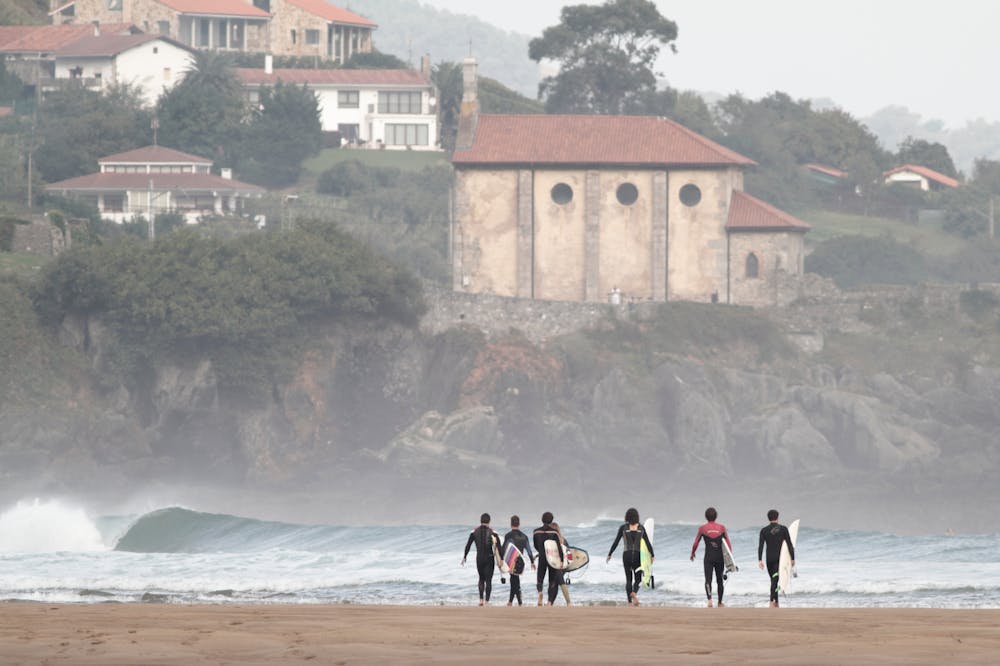 Mundaka in Spain had world-renowned waves, until dredging in a nearby river affected the swells.
Shutterstock
Mundaka in Spain had world-renowned waves, until dredging in a nearby river affected the swells.
Shutterstock
The world-renowned Mundaka wave, in northern Spain, temporally disappeared because dredging of the nearby rivermouth changed ocean dynamics[29]. This resulted in a decline in economic activity[30] and the cancellation of the Billabong Pro World Championship in 2005 and 2006.
In the Portuguese island of Madeira, the construction of a rock-wall severely disrupted[31] the formation of the Jardim do Mar wave in 2005, and a fall in local economic growth rates followed. In Peru, the extension of a fishing pier negatively impacted Cabo Blanco[32], one of Peru’s best barrelling waves, by shortening its length.
Closer to home, the Ocean Reef Marina[33], currently under construction in Perth’s north, will significantly impact three local surf breaks. About 1.5 kilometres of mostly unmodified beaches are being redeveloped into a brand new marina.
Read more: Why surfing is an antidote to the relentless march of capitalism[34]
Studies have shown that well planned coastal management interventions can dramatically increase benefits to surfers and non-surfers alike.
One of the most iconic examples is the “Superbank” at Snapper Rocks in the Gold Coast. There, a world class wave forms thanks to river sediment being relocated[35] through the Tweed Sand Bypassing Project[36].
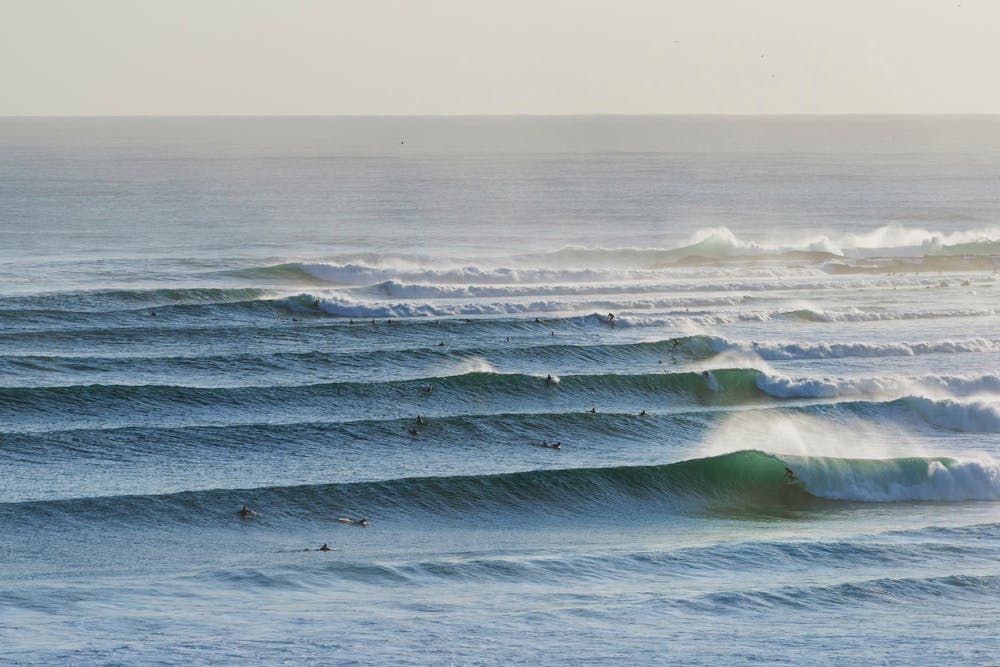 World-class waves at Snapper Rock in the Gold Coast.
Shutterstock
World-class waves at Snapper Rock in the Gold Coast.
Shutterstock
The project is costly to operate, but its expenses are outweighed by improvements to surf quality and beach amenity, which underpin the local economy[37] and the nature-based, active lifestyle the Gold Coast is famous for.
Giving waves legal protection
Building on efforts nearly 40 years ago to protect[38] Victoria’s iconic Bells Beach wave, Peru[39] and New Zealand[40] have granted statutory protection to their surf breaks under environmental protection laws.
In practice, this means threats to surf breaks by coastal activities, such as sewage discharges[41] or building offshore structures, must be avoided or mitigated.
Read more: Australia's pristine beaches have a poo problem[42]
Similar recognition and valuation of surfing resources is necessary and would be highly beneficial for Australia.
A rigorous, science-based evaluation of surfing’s total economic value could serve to inform cost-benefit analysis of coastal management programs. These may include fighting erosion[43] to protect the coastline, or building artificial surf reefs[44].
In these uncertain times of COVID-19, many of us cannot yet travel far away. But with 85% of Australians living by the coast[45], many of us can still catch a wave at our doorstep – and that is priceless.
Read more: White sharks can easily mistake swimmers or surfers for seals. Our research aims to reduce the risk[46]
References
- ^ surf tourism spending (www.sciencedirect.com)
- ^ has boomed (www.bbc.com)
- ^ turn to outdoor (www.abc.net.au)
- ^ on surfing (www.savethewaves.org)
- ^ poorly understood (www.jstor.org)
- ^ 1.2 million active surfers (issuu.com)
- ^ studies (www.valueofwaves.org)
- ^ fishing (www.sciencedirect.com)
- ^ swimming (www.sciencedirect.com)
- ^ diving (link.springer.com)
- ^ the economy of wave-rich places (www.savethewaves.org)
- ^ social (journals.sagepub.com)
- ^ health (pubmed.ncbi.nlm.nih.gov)
- ^ war veterans (pubmed.ncbi.nlm.nih.gov)
- ^ chronic illnesses (cahs.health.wa.gov.au)
- ^ Surfing Economics (www.surfingeconomics.org)
- ^ increased house prices (journals.sagepub.com)
- ^ benefits (novaresearch.unl.pt)
- ^ Girls Can't Surf shows how determined women battled sexism in their sport (theconversation.com)
- ^ surfing economics (www.ingentaconnect.com)
- ^ Australia (www.sciencedirect.com)
- ^ 2017 study (crawford.anu.edu.au)
- ^ overall annual impact (www.sas.org.uk)
- ^ typically formed (oceanservice.noaa.gov)
- ^ distant origin (www.bom.gov.au)
- ^ shape of the seabed (www.nationalgeographic.org)
- ^ better (www.swellnet.com)
- ^ worse (thesourcenews.com)
- ^ changed ocean dynamics (www.savethewaves.org)
- ^ decline in economic activity (crawford.anu.edu.au)
- ^ disrupted (crawford.anu.edu.au)
- ^ Cabo Blanco (theconversation.com)
- ^ Ocean Reef Marina (www.parliament.wa.gov.au)
- ^ Why surfing is an antidote to the relentless march of capitalism (theconversation.com)
- ^ sediment being relocated (www.sciencedirect.com)
- ^ Tweed Sand Bypassing Project (www.tweedsandbypass.nsw.gov.au)
- ^ local economy (www.valueofwaves.org)
- ^ protect (openresearch-repository.anu.edu.au)
- ^ Peru (www.theinertia.com)
- ^ New Zealand (www.trc.govt.nz)
- ^ sewage discharges (www.sas.org.uk)
- ^ Australia's pristine beaches have a poo problem (theconversation.com)
- ^ fighting erosion (www.mediastatements.wa.gov.au)
- ^ artificial surf reefs (raisedwaterresearch.com)
- ^ 85% of Australians living by the coast (soe.environment.gov.au)
- ^ White sharks can easily mistake swimmers or surfers for seals. Our research aims to reduce the risk (theconversation.com)