Drinking water can be a dangerous cocktail for people in flood areas
- Written by: Ian Wright, Senior Lecturer in Environmental Science, Western Sydney University
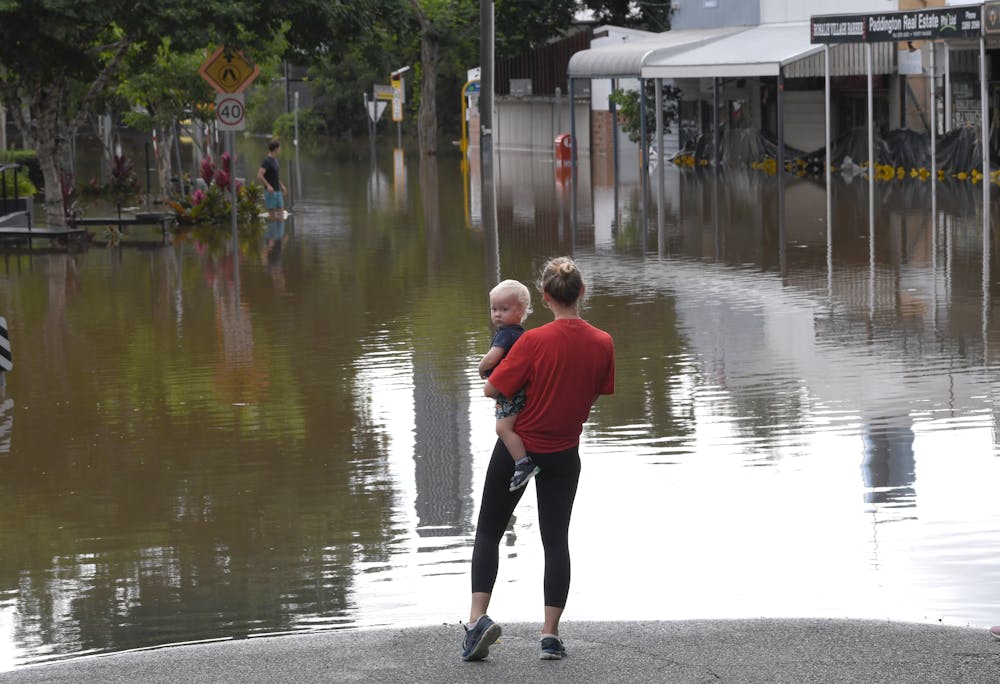
Parts of south east Queensland and northern NSW have been experiencing what has been called a “rain bomb[1]”. Despite the heavy falls, south eastern Queenslanders in Brisbane, Logan, Ipswich, Moreton Bay and the Lockyer Valley have been asked to conserve drinking water[2].
Water authorities explained extreme weather and heavy rain forced the closure of two SEQ drinking water treatment plants (Mt Crosby and North Pine Water Treatment Plants) early on Sunday morning. North Pine has since restarted and the Gold Coast Desalination plant is supplementing supply.
People living in areas experiencing flooding, particularly in south east Queensland, can help by using a minimum of tap water. This will help authorities reserve supply as they work to return their water treatment system to normal.
But what could have caused this in a time of excess of water?
Dangerous waters
After an already wetter than normal summer[3], very heavy rain on saturated catchments has quickly generated dangerous volumes of flood waters.
The high energy and velocity of flood waters is causing erosion of soil and, in turn, river banks. As a result, SEQ Water estimates[4] the cloudiness in raw water has increased by up to 100 times the normal amount.
Pictures and footage of flood waters, show it a milky chocolate brown. This is a dangerous sight to those in the water industry and raises concerns if it enters their water supply.
People should be very wary of wading into flood waters[5] as they are often highly contaminated with disease causing germs from human and animal faecal wastes. Urban sewage systems may also overflow in times of wet weather and flood.
Cloudiness in water causes major problems for drinking water too. Referred to as “turbidity” in the water industry, it is caused by solid particulates[6] in water. This suspended matter might be soil, silt or clay.
The dirty water can create significant problems[7] for treatment[8] of clean and safe drinking water. In particular, dirty water can overwhelm various stages of the treatment system, for example, by clogging filters. It can also reduce the effectiveness of water disinfection.
High standards
A particularly important process in treatment of drinking water is the addition of chlorine[9], sometimes in combination with other chemicals. This helps ensure water is free of disease-causing germs by the time it travels through pipes to the tap in your home. Effective treatment of drinking water results in water free of any cloudiness. Water has to have “crystal clear” turbidity for disinfection to be effective.
Australian drinking water suppliers are required to meet the highest standards of safe and clean drinking water quality. They need to comply with an extensive series of stringent protocols covered by the Australian Drinking water Guidelines[10]. If they are unable to meet the standards at any time, they need to notify their customers.
For example, after bad storms hit Victoria[11] in June last year, storm damage to water infrastructure allowed potential contamination to enter the system. This led Yarra Valley Water to issue a warning[12] to customers in some suburbs not to drink tap water at all. Unusually, the authorities warned customers that boiling water would “not remove contaminants[13]” to make it safe to drink.
When such suspected water contamination enters the drinking water system, the entire system needs to be flushed. Extensive water testing is then conducted before the “all clear” is given to drink tap water again. In the case of the Yarra Valley Water, this process took two days[14].
Read more: Victoria's wild storms show how easily disasters can threaten our water supply[15]
A changing climate
Experts have long warned[16] Australia’s water security is under threat due to climate change.
As with flooding, bushfires too can cause problems for drinking water supply. Heavy rain, storms and flooding after bushfires are a very bad combination. Bushfires can produce burnt residue with high nutrients, metals and many other contaminants[17].
There were several water quality problems after Australia’s Black summer bushfires, including fears for the quality of water[18] in Sydney’s largest water storage facility: Warragamba Dam.
This was due to high intensity bushfires removing catchment vegetation. Then heavy rains and flooding carried loose ash, soil and debris into the storage reservoir.
Clean-up after such an event can be very difficult. Contaminants may be filtered from streams and containment booms deployed on rivers and storages to collect floating debris[19].
Read more: Climate change is warping our fresh water cycle – and much faster than we thought[21]
Be prepared
If you are concerned about the quality of your tap water it pays to think ahead.
Firstly, watch for reports about water quality problems in the media, from health authorities or from your water supplier. If flooding is coming your way, consider filling up some large containers of water from the tap, just in case!
If you live in a low-lying location – that is, on a floodplain, near a river, close to sea or ground-level, where flooding is more likely – be prepared. As well as packing some clothes and food in case of flooding or other natural disaster, pack some containers of clean drinking water. You may not have much warning that a “rain bomb” is coming your way.
Given the already soaked landscape from such a wet summer, flood waters will likely rise far more quickly than expected. Be guided by the helpful list[22] prepared by the SES on the preparations and supplies you should have ready, but hopefully won’t need, in case of flood.
If you are in an area that is already flooded, follow the advice from authorities on safe drinking water, whether it requires boiling or avoiding altogether.
References
- ^ rain bomb (www.theguardian.com)
- ^ conserve drinking water (www.seqwater.com.au)
- ^ already wetter than normal summer (www.theguardian.com)
- ^ estimates (www.seqwater.com.au)
- ^ wading into flood waters (theconversation.com)
- ^ solid particulates (www.waterquality.gov.au)
- ^ significant problems (www.sciencedirect.com)
- ^ treatment (www.seqwater.com.au)
- ^ addition of chlorine (www.cdc.gov)
- ^ Australian Drinking water Guidelines (www.nhmrc.gov.au)
- ^ hit Victoria (www.abc.net.au)
- ^ issue a warning (www.yvw.com.au)
- ^ not remove contaminants (theconversation.com)
- ^ took two days (www.yvw.com.au)
- ^ Victoria's wild storms show how easily disasters can threaten our water supply (theconversation.com)
- ^ long warned (www.climatecouncil.org.au)
- ^ burnt residue with high nutrients, metals and many other contaminants (www.epa.nsw.gov.au)
- ^ fears for the quality of water (www.abc.net.au)
- ^ collect floating debris (www.abc.net.au)
- ^ AAP Image/Darren England (photos-cdn.aap.com.au)
- ^ Climate change is warping our fresh water cycle – and much faster than we thought (theconversation.com)
- ^ the helpful list (www.ses.nsw.gov.au)