These recent research breakthroughs give us renewed hope for its survival
- Written by: Paul Hardisty, CEO, Australian Institute of Marine Science
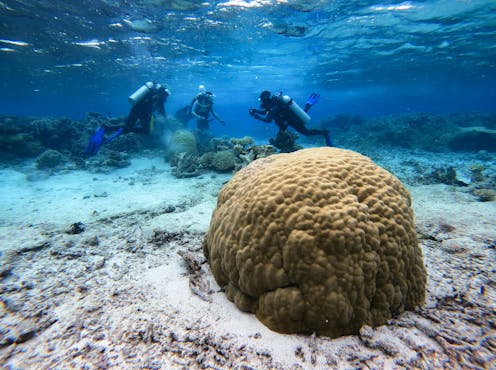
With yet another coral bleaching event underway on the Great Barrier Reef, we’re reminded of the tragic consequences of climate change.
Even if we manage to stop the planet warming beyond 1.5℃ this century, scientists predict[1] up to 90% of tropical coral reefs will be severely damaged.
But we believe there’s a chance the Great Barrier Reef can still survive. What’s needed is ongoing, active management through scientific interventions, alongside rapid, enormous cuts to global greenhouse gas emissions.
In 2020, the federal government announced the Reef Restoration and Adaptation Program[2], which aims to help coral reefs adapt to the effects of warming oceans. It included research and development[3] funding into 35 cutting-edge technologies that could be deployed at large scale, from cloud brightening to seeding reefs with heat-tolerant corals.
Now, two years into the effort, we’re seeing a number of breakthroughs that bring us renewed hope for the reef’s future.
Bleaching on the reef
Aerial surveys of the entire reef are currently underway to determine the extent and severity of current bleaching. These should be complete before the end of March.
Meanwhile, United Nations’ reef monitoring delegates are visiting the Great Barrier Reef this week to determine whether its World Heritage status should be downgraded.
Early indications suggest bleaching is most severe in areas of greatest accumulated heat stress, particularly in the area around Townsville. In some places, water temperatures have reached 3℃ higher[4] than normal.
Read more: Adapt, move, or die: repeated coral bleaching leaves wildlife on the Great Barrier Reef with few options[5]
 It seems bleaching is most severe in the area around Townsville. AIMS, Author provided
  This is the fourth bleaching event in the reef since 2016. LTMP, Author provided
Researchers involved in the Reef Restoration and Adaptation Program are examining a wide range of interventions to repair coral reefs. Unlike current reef restoration efforts, which are done by hand on a few square metres of reef, these interventions are designed to be applied at tremendous scales – across thousands of square kilometres.
Major scientific, technological, process, communication and management breakthroughs are required to see this become successful. We’re pleased to report that we’re already seeing the first successes, with others becoming more likely as research and development continues.
Early success stories
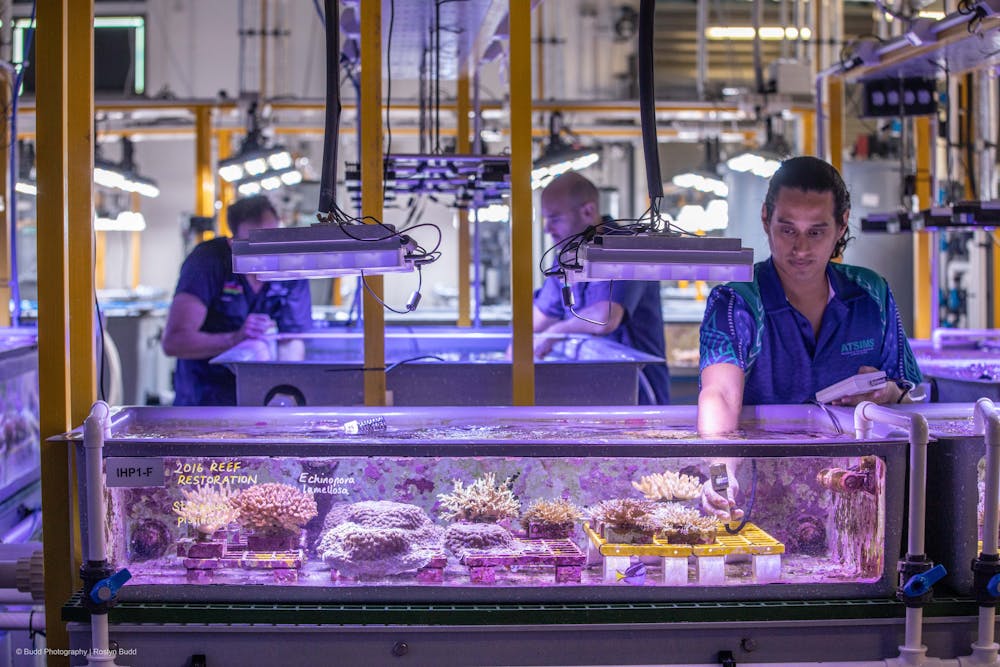
One key family of possible interventions involves culturing and deploying millions of heat-tolerant corals onto selected reefs.
Over the last two years, the research team has accelerated the natural adaptation[6] of several coral species to warmer temperatures, allowing them to survive up to an additional four weeks of 1℃ excess heat stress. We believe a total of eight weeks of 1℃ excess heat stress can be achieved.
This level of additional heat tolerance can make a real difference for reef survival if we can limit greenhouse gas emissions driving climate change.
 Reef interventions are designed to be applied across thousands of square kilometres. Marie Roman, Author provided
Read more: If we can put a man on the Moon, we can save the Great Barrier Reef[7]
We’ve also developed novel seeding devices[8], which allow mass delivery of juvenile corals to reefs in a way that enhances their survival, paving the way for larger field trials.
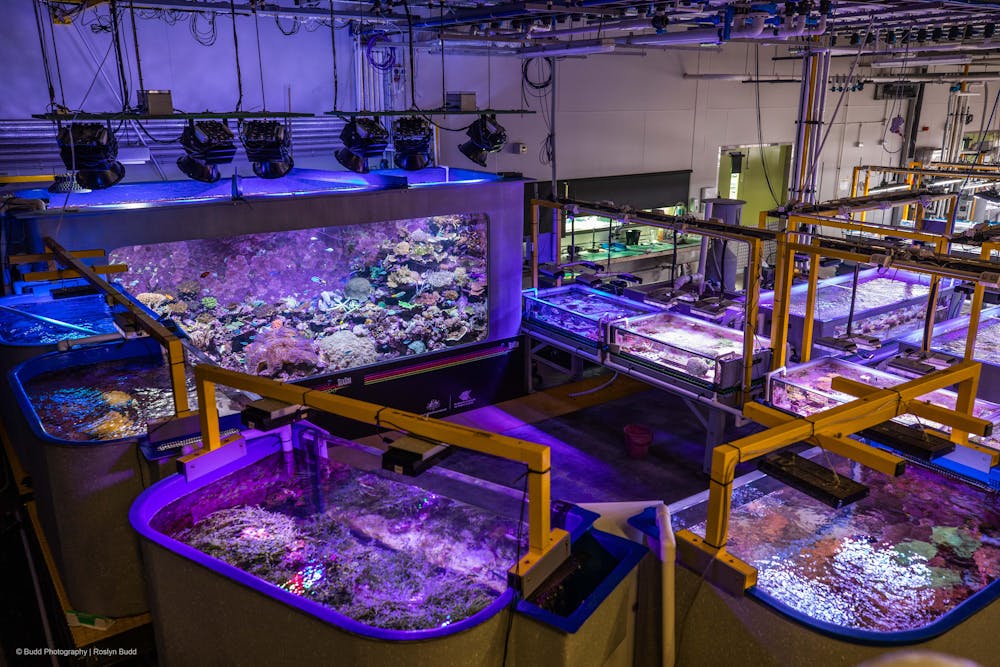
Seeding heat-tolerant corals onto the reef will require significant improvements in coral aquaculture – the process of raising healthy coral in an aquarium before transporting them to the Great Barrier Reef. While current methods are limited to producing and deploying a few thousand corals per year, new advanced methods are designed to produce tens of millions per year – faster and cheaper than ever before.
 Advances in reef interventions must be paired with cuts to emissions. Roslyn Budd/Budd Photography, Author provided
Another breakthrough relates to the ongoing development of new models and the data to calibrate them.
These are set to vastly improve our ability to predict where interventions are best deployed, and how well they’ll function. Early modelling results suggest even at a modest scale, well-targeted interventions could be enough to shift the state of individual reefs from terminal decline to survival over several decades.
4 conditions for lasting benefit
For these early breakthroughs to bring lasting benefit at such tremendous scales, four key conditions must be met:
-
interventions will have to be readily scalable and affordable. That means methods and technologies now being trialled in labs and on small patches of reef will have to be automated, mass-produced, up-sized and delivered in ways not previously considered feasible. All of this will take significant investment
-
interventions must be safe and acceptable to regulators and the public
-
a range of people, especially Traditional Owners of reef sea-country, must be involved in the effort. This includes through consultation, in decision-making and design
-
most importantly, global emissions must be brought rapidly under control, ideally to keep warming to under 1.5℃ this century.
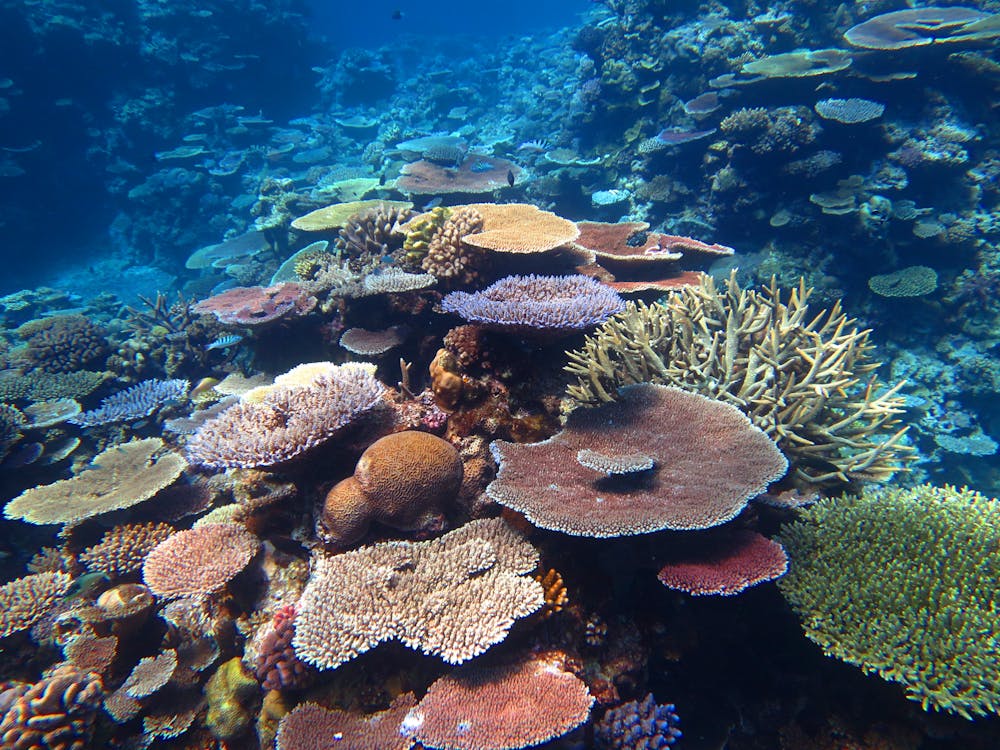 Much of the Great Barrier Reef was in the early stages of recovery following prior bleaching events. LTMP, Author provided
 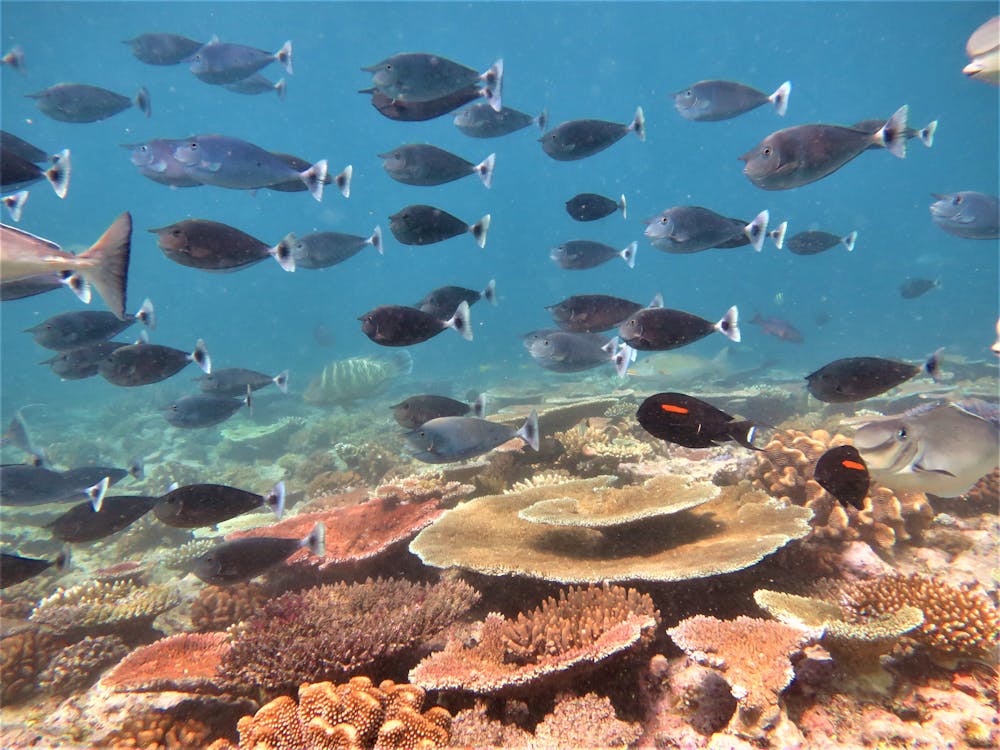 A healthy Great Barrier Reef is home to at least 1,625 species of fish. LTMP, Author provided
Over the coming months, the program will be conducting more trials on the reef. Alongside recent advances by other programs, such as approaches to control coral-eating crown of thorns starfish, there’s now real promise that a combined intervention at scale can be successful.
Saving the reef
Imagine a world where coral reefs have largely disappeared from the world. The few remaining reefs are a shadow of what they once were: grey, broken, covered in weeds and devoid of colourful fish.
Millions of people who’ve depended on reefs must turn to other livelihoods, which may contribute to climate-related migration[9]. Imagine, too, how we’d feel knowing it could have been prevented.
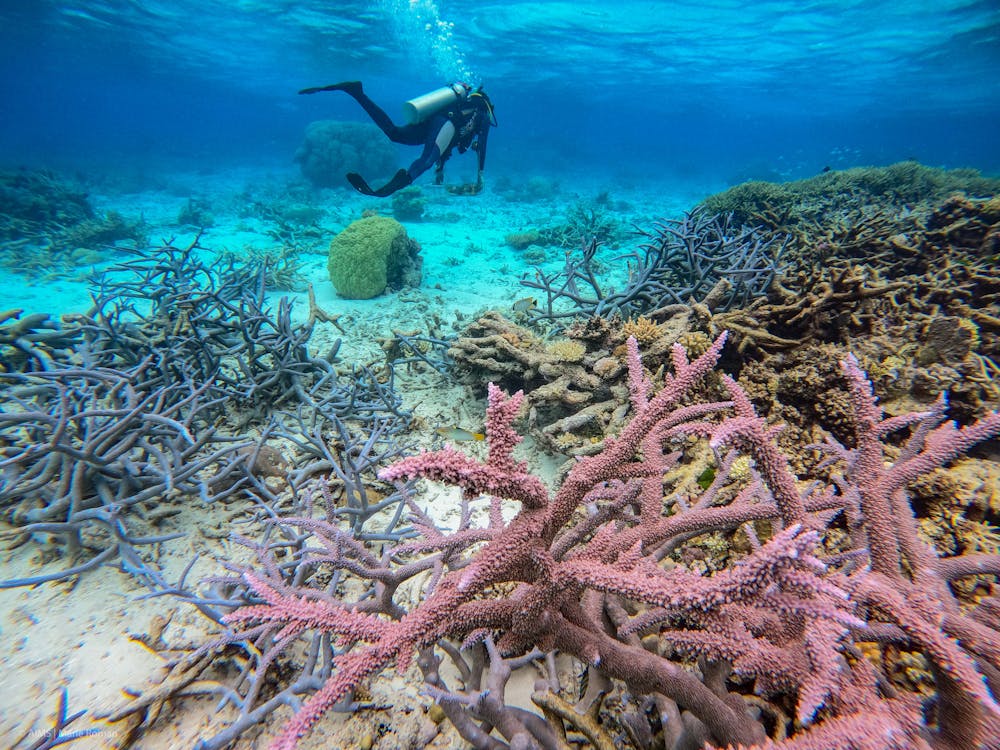 The program will be conducting more on-reef trials in coming months. Marie Roman, Author provided
We are hopeful for an alternative vision for the future of the world’s reefs. It’s one in which the amazing beauty and diversity, and the huge global economic benefits, are intact and thriving well into the next century.
The difference between these two possible futures depends on choices we make right now. To save our reefs, we must simultaneously mitigate global warming and adapt to impacts already locked in. Neither alone will be enough.
Read more: Mass starvation, extinctions, disasters: the new IPCC report’s grim predictions, and why adaptation efforts are falling behind[10]
References
- ^ scientists predict (theconversation.com)
- ^ Reef Restoration and Adaptation Program (gbrrestoration.org)
- ^ research and development (theconversation.com)
- ^ 3℃ higher (www.climatecouncil.org.au)
- ^ Adapt, move, or die: repeated coral bleaching leaves wildlife on the Great Barrier Reef with few options (theconversation.com)
- ^ accelerated the natural adaptation (www.nature.com)
- ^ If we can put a man on the Moon, we can save the Great Barrier Reef (theconversation.com)
- ^ novel seeding devices (www.researchgate.net)
- ^ climate-related migration (theconversation.com)
- ^ Mass starvation, extinctions, disasters: the new IPCC report’s grim predictions, and why adaptation efforts are falling behind (theconversation.com)