A new government would bring changes for the bureaucrats in the Canberra 'bubble'
- Written by: Michelle Grattan, Professorial Fellow, University of Canberra
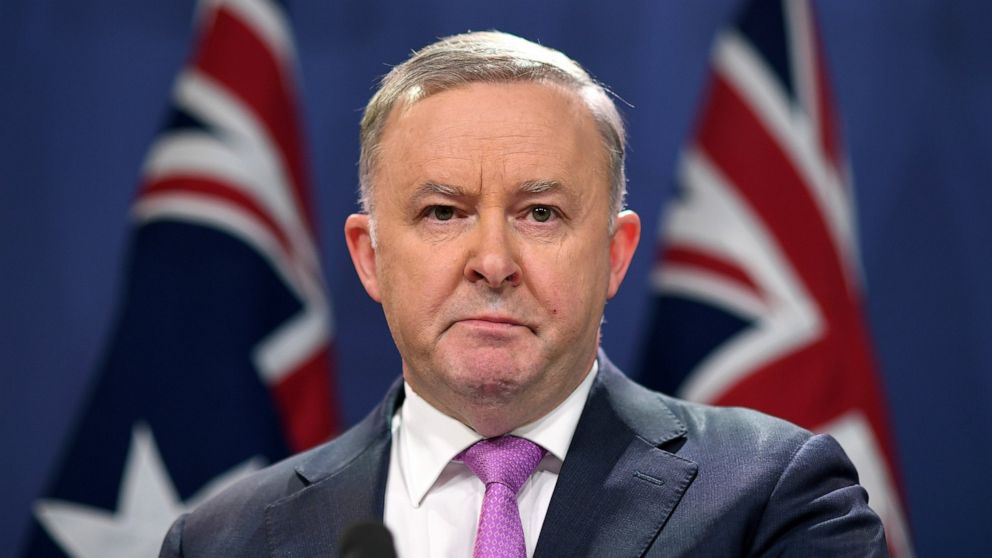
With a change of government a real prospect according to the opinion polls, public servants are starting to gossip about what an Albanese administration would mean for them.
For Canberra’s bureaucrats, it’s been a cold climate in the Morrison years. The prime minister told them early on to concentrate on implementation, not advice – at least not advice of any freewheeling kind.
Morrison’s notion of the “Canberra bubble”, with its negative connotation of being separate from the real world, embraces public servants as well as journalists. His government’s view of the bureaucracy is also influenced by Canberra being a Labor town – all three House of Representatives seats have ALP members. Ministers know the bureaucrats that come to their offices are likely Labor voters.
Admittedly, the pandemic softened the government’s attitudes to a degree. In particular, it was heavily reliant on treasury advice as it battled to keep the economy afloat.
A majority of public servants would likely view a Labor government positively (or at least welcome a change), although there would be some high-profile losers.
The occupant of the most powerful public service job in the country – secretary of the Department of the Prime Minister and Cabinet – would change quickly.
Phil Gaetjens, the present secretary, who was a former chief of staff to Morrison, and then head of treasury, has been highly controversial in the position.
Morrison has used him essentially for political jobs, such as the investigation into who in the PM’s office knew what when about the Brittany Higgins rape allegation (an inquiry which never ended, at least publicly).
The secretary of PM&C is seen as having a responsibility to stand up for the public service generally, as well as the role of serving the PM. Gaetjens’ critics would say he has failed to do the former.
Presumably Gaetjens would quit of his own accord, not waiting to be sacked, if Labor won.
One name speculated as a possible replacement is Mike Mrdak, a former secretary of the infrastructure department under both Labor (when Anthony Albanese was his minister) and the Coalition.
Read more: Gains for Labor in three post-budget polls, as budget has weak response compared with historical record[1]
Mrdak was one of a batch of secretaries given their marching orders in late 2019, when he headed the communications department, and he’s now in the private sector.
If Mrdak was appointed secretary of the PM’s department it would be a sort of parallel with the experience of Martin Parkinson, who was sacked as Treasury secretary by Tony Abbott, and later appointed by Malcolm Turnbull to head PM&C.
While Treasury secretary Steven Kennedy is mentioned by some as a possible head of PM&C, Jim Chalmers, who’d be Labor’s treasurer, would be anxious to keep him – and it would be counterproductive for Albanese to move him out of such a vital position in uncertain economic times.
The position of secretary of the finance department will be vacant whoever wins – Rosemary Huxtable has been intending to retire for some time.
A strong contender would be Jenny Wilkinson, a deputy secretary in Treasury, who previously headed the Parliamentary Budget Office. Her appointment would have the incidental advantage of replacing a woman with a woman. Also mentioned is David Fredericks, who is secretary of the industry department.
Eyes would be on what happened to the secretary of the foreign affairs and trade department, Kathryn Campbell. She came to her present role after being embroiled in the Robodebt disaster. It’s unlikely that Penny Wong, who would be foreign minister, and Campbell would be simpatico.
At Senate estimates last week, Wong pointedly asked Campbell, who was appointed last year, how she saw “the role of both foreign policy and diplomacy” in “advancing Australia’s interests and values”, in a probing inquisition that appeared rather uncomfortable for the secretary.
And what about Brendan Murphy? He was brought in as secretary of the health department by minister Greg Hunt, and was on the frontline of the vaccine rollout, of which Labor was very critical. Labor sees Murphy as politicised and anyway would probably be inclined to someone with a stronger policy background.
The implications for the public service of a change of government would be far wider than the fate of individuals.
Labor has said it would cut back on the use of outside consultants and contractors for public service work. The Morrison government uses these extensively, for a range of reasons – both ideological and as a way of containing public service numbers (although not necessarily costs, because outsourcing can be very expensive). In some cases, it is also a matter of handing work to mates.
Given how squeezed the bureaucracy is, less outsourcing would inevitably mean an increase in public service numbers. A Labor government would be expected to be less tough on wage rises, although tight finances would constrain it.
Labor would also go back to the Thodey review on public service reform. The Morrison government rejected key recommendations that would have put some guard rails around its behaviour in relation to the senior levels of the public service.
Read more: Politics with Michelle Grattan: Election expert Antony Green on the election map[2]
Andrew Podger, a former public service commissioner, urges that a Labor government should “strengthen the degree of independence of the public service” (recognising that independence can’t be unlimited, because it is there to serve the government of the day).
Public service independence has been undermined by the pressures of “professional politics”, Podger says. These include the role of ministerial staff, the pressure on senior bureaucrats to “please” their ministers, and the control by ministerial offices over the bureaucracy’s communications and publications and its engagement with external organisations including academia.
But would Labor want to dramatically change these things, which would mean ceding some of the tight control their ministers’ offices would otherwise have?
As Podger observes, “You can see the professional politics as much on the Labor side as the Liberal side”, with frontbenchers having had roles in political offices where they were in effect “apprentice politicians” waiting for seats.
Podger nevertheless welcomes comments by the shadow minister for the public service, Katy Gallagher, that Labor would revisit Thodey recommendations including to strengthen the role of the Public Service Commission.
He also hopes some on the Coalition side holding more traditional conservative views would support measures to strengthen the Westminster institution of the civil service.
But under a continued Morrison prime ministership any fundamental change of attitude would seem improbable.
When the election is called, the government goes into caretaker mode, during which by convention major decisions are not taken (except in consultation with the opposition).
Once the caretaker period starts the public servants begin compiling the “red” and “blue” books – the bureaucratic advice on the implementation of the opposition and government’s policies. If Labor wins, the new ministers will find those red books on their freshly polished desks.
References
- ^ Gains for Labor in three post-budget polls, as budget has weak response compared with historical record (theconversation.com)
- ^ Politics with Michelle Grattan: Election expert Antony Green on the election map (theconversation.com)